To protect vegetable plants from frost, cover vulnerable crops before sunset with breathable frost fabric or a properly supported cover.
Check soil moisture earlier in the day and water only if needed.
Harvest tender vegetables you cannot protect, and manage coverings as temperatures change.
Most ordinary covers provide only limited protection, so a prolonged hard freeze may still damage plants.
Even a small beginner vegetable garden can contain crops with very different cold tolerances.
Knowing which plants need protection, how cold the forecast may become, and what each covering method can realistically achieve will help you prepare before temperatures fall.
Frost dates and local growing conditions vary by region, so use your local weather forecast and agricultural extension guidance rather than relying on another area’s planting calendar.
What Frost Does to Vegetable Plants
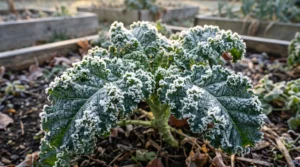
Frost forms when water vapor turns directly into ice on cold surfaces, often during clear, calm nights.
Freezing conditions can damage plants even without visible frost. Ice may form between plant cells and draw moisture out of them, damaging their membranes.
Injured leaves often become limp or water-soaked before turning brown or black.
Dead tissue cannot recover, although plants with less severe damage may survive.
Gardeners often use “frost” and “freeze” as if they meant the same thing, but the terms describe different levels of cold:
- Frost advisory: forecast lows of roughly 33 to 36°F. Clear, calm skies can still produce frost on plants at these temperatures, and a forecast of 36°F suggests a possible light frost.
- Freeze: air temperatures at or below 32°F.
- Hard freeze: 28°F or lower, these temperatures can kill many tender and unprotected garden plants, although established cold-hardy vegetables may survive.
Local temperatures can differ from the forecast. Cold air settles in low spots, so the bottom of a slope can be several degrees colder than the top.
Duration matters too. A brief dip to 31°F does far less harm than six hours at that temperature.
Which Vegetables Need Protection?
Vegetables differ in their ability to tolerate frost. Warm-season crops such as tomatoes, peppers and cucumbers are especially vulnerable, while many cool-season vegetables can survive colder conditions.
Cold-hardy plants may limit freezing injury through physiological adaptations, including changes in cell fluids and membranes.
Their actual tolerance still depends on the variety, plant maturity, growing conditions and how long freezing temperatures last.
| Group | General tolerance | Examples |
|---|---|---|
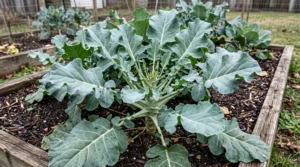
| More cold-hardy | Established plants may survive repeated frosts and some freezing conditions | Kale, collards, spinach, turnips, parsnips |
| Moderately frost-tolerant | Often tolerate light frost, but prolonged or severe freezes may cause injury | Broccoli, cabbage, carrots, beets, radishes, lettuce, peas, Swiss chard, potatoes (foliage can be damaged) |
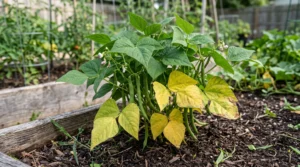
| Frost-sensitive | May be damaged or killed by light frost | Tomatoes, peppers, eggplant, cucumbers, squash, beans, melons, okra, sweet corn |
Michigan State University Extension’s freeze guide lists more vegetables by cold tolerance.
Treat these groupings as a starting point. Young seedlings and newly transplanted plants are less tolerant than mature ones, even when they belong to a hardy group.
A hardy vegetable also isn’t invincible: a hard freeze can still reduce the quality of crops that normally shrug off cold, though there is no need to rush to cover them every time frost threatens.
If you only have time to protect part of your garden, start with tomatoes, peppers, eggplant, squash and cucumbers.
Those are the plants a light frost can hurt.
How Much Protection Can You Expect?
Every method below adds a limited amount of warmth, and none is a guarantee.
Published numbers vary by cover material, how well it is installed, soil moisture, wind and the weather that night.
- Row covers deliver roughly 2 to 7°F of frost protection depending on the material.
- Heavier covers can reach up to about 8°F, but they let in less light.
- A plastic cover on a frame typically adds about 3 to 6°F or a little more in Colorado trials.
So if the forecast low is 30°F and your tomatoes are damaged at 32°F, a good cover gives you a fair chance.
If the forecast is 22°F, harvest what you can and don’t count on a blanket to save the rest.
7 Practical Ways to Protect Vegetable Plants From Frost
1. Cover Plants With Floating Row Cover
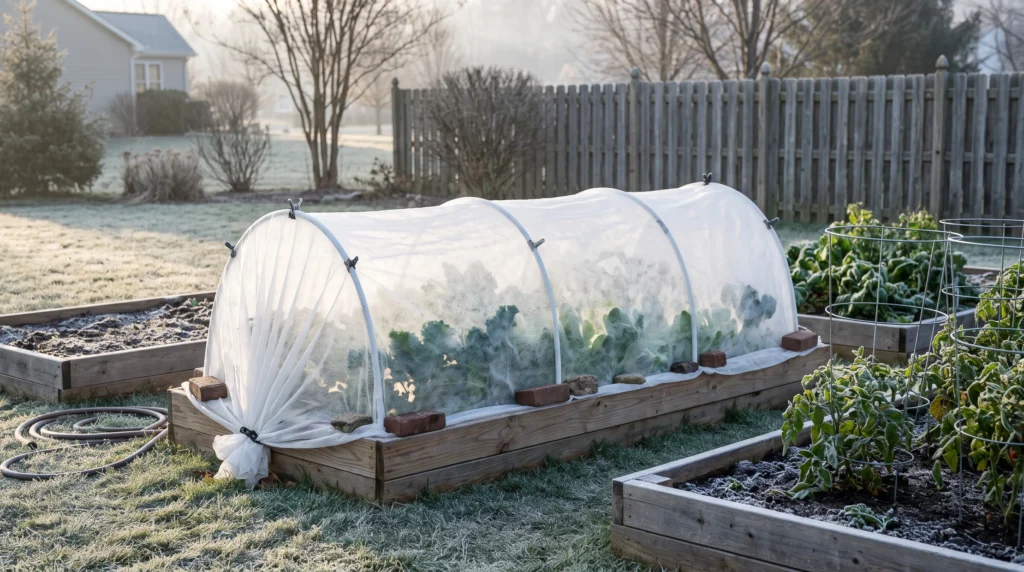
Floating row cover is a lightweight spun fabric you drape over plants or over hoops.
It traps a thin layer of warmth near the soil while still letting in air, water and some light. That makes it the most flexible all-purpose choice for beginners.
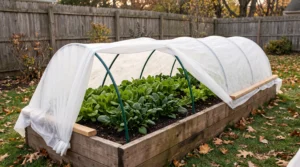
Weight matters. Lighter fabrics, sometimes sold mainly for insect protection, give little frost protection.
Covers from about 0.5 to 1.25 ounces per square yard add roughly 2 to 6°F in spring, and the fabric at the heavier end of that range still lets through about 70 percent of light.
Heavyweight covers of 1.5 to 2.2 ounces per square yard offer more protection, around 30 to 50 percent light transmission, so they suit hardy crops you want to carry through cold weather rather than plants growing in the middle of the season.
How to use it:
- Check soil moisture earlier in the day. If the soil is dry, water enough to moisten the root zone. Do not add more water if the soil is already moist or poorly drained.
- Lay the fabric over the plants late in the day, before the sun goes down, so it holds the soil’s stored heat.
- Leave extra slack so plants can grow, and anchor every edge with soil, boards, bricks or landscape staples so wind can’t pull it off.
- Check the weather the following morning. Remove temporary blankets and opaque covers when conditions are safe. Breathable row covers may stay over suitable crops during cool weather, but open them when temperatures rise, plants need pollinators, or maintenance is required. Ventilate plastic tunnels carefully to prevent overheating.
Row covers work better in fall than in spring, because the soil is still holding summer heat.
Avoid leaving them on warm, sunny days, since covers should come off once the outside temperature is high enough.
Remove them while crops like squash and cucumbers are flowering so pollinators can reach the blooms.
Mistake to avoid: letting wet fabric rest on leaves in a hard freeze. Use hoops or stakes if the forecast is well below freezing.
2. Build a Low Tunnel or Cold Frame
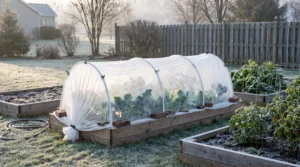
A low tunnel is a row cover or clear plastic stretched over hoops of wire, PVC or conduit.
The hoops hold the cover off the leaves, which matters on very cold nights, because leaves touching the cover can freeze.
Low tunnels also protect plants from wind and raise daytime temperatures for early or late growth.
Use one when you need more than fabric alone can provide, or when your bed has taller plants like tomatoes, peppers, broccoli or kale.
Place hoops every 3 to 4 feet so the cover doesn’t sag, and make sure the structure is tall enough for the plants at their current size.
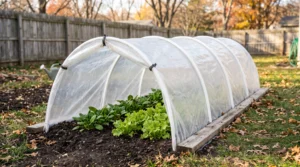
Clear plastic traps more heat than fabric, but it also overheats quickly in sunshine. Vent the ends or lift a side on sunny days.
A cold frame, which is a bottomless box with a clear lid, offers more frost protection than floating row covers but can overheat if it isn’t watched carefully. Open the lid on any day when the sun is out.
Mistake to avoid: leaving plastic closed all day. A sealed tunnel can cook plants on a sunny afternoon even when the air outside is cold.
3. Use Individual Plant Covers
When only a few plants need help, cover them one at a time.
Good options include upside-down buckets or pots, cloches, large clear plastic containers with the bottoms cut off, and fabric sheets or old blankets.
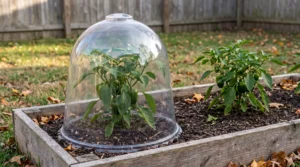
This is the right choice for a few tomato or pepper plants, young transplants, or a single squash hill.
Place the cover over the plant before sunset and pull soil or mulch around its base to seal out cold air.
For opaque covers such as buckets, remove them first thing the next morning so the plants get light.
Avoid plastic bags or sheeting laid directly over leaves, especially in a hard freeze.
Anything that touches foliage can transmit cold, and trapped moisture can freeze on the leaf. Stake a frame inside the cover or use a bucket large enough to clear the plant.
4. Mulch Around Hardy Crops and Roots
Mulch doesn’t warm the air around your plants. It insulates the soil, which helps protect the roots of crops that stay in the garden, like carrots, beets, parsnips, kale and garlic.
A layer of straw or shredded leaves about 3 to 4 inches deep also slows swings in soil temperature.
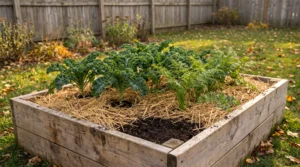
Mulch is most helpful for hardy crops and for late-season root vegetables you plan to harvest over several weeks.
It won’t save the tops of tender plants like tomatoes or peppers.
Apply mulch to bare soil that is moist but not soggy. Keep it a couple of inches back from the stems to discourage rot and pests.
In spring, pull it back from planting beds so the soil can warm.
Mistake to avoid: piling heavy mulch over leaves or crowns of plants that need air.
5. Water the Soil Before a Cold Night
Moist soil holds and releases heat better than dry soil, so watering dry soil before a frost can add a small amount of protection.
Watering ahead of freezing temperatures is a standard tip from Extension offices.
Check the soil before watering. If it is dry, water earlier in the day so moisture can soak into the root zone.
Avoid saturating already wet or poorly drained soil. Pre-frost watering may offer limited protection, but it should support—not replace—an appropriate plant cover.
6. Move Containers and Pick the Warmest Spot
Container plants lose heat faster than plants in the ground because the pot sits in cold air on all sides.
The simplest fix is to move them. Bring pots into a garage, porch, shed or against the south-facing wall of your house before dark.
If they are too heavy to carry, group them together near a wall and cover them with fabric or a blanket that reaches the ground.
A manageable small-space vegetable gardening setup also makes it easier to move or cover container crops when freezing weather threatens.
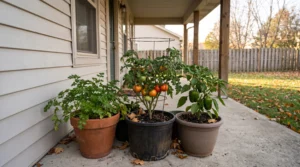
Masonry walls and paved areas absorb sun during the day and release some warmth at night, so a spot near the house is usually a few degrees milder than an open lawn.
Avoid the low corner of the yard where cold air pools.
7. Harvest Before the Cold Arrives
When the forecast is far below what your plants can survive, or you have more garden than covers, harvesting is the surest protection.
This is the best option for tender crops at the end of the season.
- Tomatoes and peppers: pick mature fruit and any that have started to change color. They can finish ripening indoors.
- Summer squash: pick before frost, since plants wilt and fruits deteriorate quickly afterward.
- Beans, cucumbers and eggplant: harvest everything that is usable.
- Winter squash and pumpkins: cut mature fruits with a few inches of stem and store them somewhere dry.
- Root crops and hardy greens: these usually can stay in the ground, and many taste sweeter after a light frost.
Which Method Should You Choose?
| Method | Best for | Approximate extra protection | Main limitation |
|---|---|---|---|
| Floating row cover | Beds of mixed vegetables | About 2–8°F depending on weight | Needs anchoring; remove on warm days |
| Low tunnel or cold frame | Taller plants, longer cold spells | Varies with cover material, structure and installation | Can overheat on sunny days; takes time to build |
| Individual covers | A few valuable plants | Small, varies | Only covers single plants |
| Mulch | Roots and hardy crops | Protects soil, not the leaves | Doesn’t help tender tops |
| Pre-frost watering | Any bed | Small | A minor help, not a stand-alone method |
| Moving containers | Potted plants | Varies by location | Only works for portable pots |
| Early harvest | Tender crops in a deep freeze | Complete for harvested produce | Ends the harvest |
The figures are rough ranges from Extension sources, and your results will depend on the weather and your setup.
A Frost-Night Example: A 4 × 8-Foot Raised Bed
Here is how a small bed might be prepared. This is a hypothetical example, not a test result.
Suppose you have a 4 × 8-foot raised bed with one compact tomato plant, a few kale plants, and a short row of carrots.
Two pepper plants are growing in large containers nearby. The forecast calls for a low of 31°F, with clear skies and light wind.
The tomato and peppers need the most protection, while established kale and carrots generally tolerate light frost.
- Mid-afternoon: Harvest ripe tomatoes and peppers. Check soil moisture and water only if needed.
- Late afternoon: Move the pepper containers into a sheltered, frost-free location.
- Before sunset: Place a suitable cover over hoops surrounding the tomato plant and secure its edges to the ground.
- At dusk: Check that the cover is firmly anchored and not pressing against the tomato foliage.
- Next morning: Check temperatures. Remove temporary coverings when safe, or ventilate as needed.
Preparation Checklist
- Check your local forecast each day during frost season, and watch for clear, calm nights after a cold front, which are the highest-risk conditions.
- Keep row cover, hoops, clips or weights, and a few buckets in one place.
- Know your crops’ tolerance. Note which are tender and which are hardy.
- Harvest ripe produce the afternoon before the cold night.
- Check soil moisture earlier in the day, and water only if the soil is dry.
- Cover before sunset, and anchor all edges.
- Move container plants into shelter.
- Remove or vent covers the next morning once temperatures rise above freezing.
- Look up your local average first and last frost dates through your state’s Cooperative Extension office, since frost dates differ widely from one zone and region to another.
What if the Forecast Gets Colder?
Adding a second cover layer gives a small gain, but results from stacked row covers vary, so don’t rely on it.
If your forecast low is more than about 5 to 8°F below the damage point of your crops, harvest what you can, move pots indoors, and accept that some plants may not make it.
For extra protection, a heavier fabric over hoops with a blanket or second sheet on top for the night works better than a single thin sheet, but remove the extra layers the next morning.
After the Frost: Check Plants Before You Cut Anything
Frost damage usually appears within a day or two. Damaged leaves first look water-soaked, then wilt and turn white, brown or black. Fruits can look spotted, soft or mushy.
Follow these steps:
- Wait before removing plants. Some will bounce back, especially hardy crops and plants that were only lightly nipped.
- Let frozen produce thaw before harvesting. Root crops like beets and carrots that have frozen should be left until they thaw, then used promptly.
- Inspect frost-damaged produce carefully. Discard vegetables that are moldy, slimy, spoiled or badly deteriorated. Sound produce with minor damage may be suitable for prompt cooking or freezing. Do not can tomatoes harvested from dead or frost-killed vines. Always follow tested home-canning instructions for safe tomato preservation.
- Compost damaged squash fruit. It won’t store well.
-
Check soil moisture. Plants recovering from cold stress still need water, but only water when the soil begins to dry. Avoid keeping cold, poorly drained soil excessively wet.
- Replant if needed. If seedlings are lost and the season is long enough, replace them with hardier crops.
Dead tender plants like tomatoes, peppers and squash won’t regrow once the stems have turned black and mushy.
Hardy kale, spinach and carrots often keep growing after a hard frost.
Common Frost-Protection Mistakes
| Mistake | Why it causes trouble | Better approach |
|---|---|---|
| Covering after dark | Soil heat has already escaped | Cover before sunset |
| Leaving covers on all day | Plants overheat, and blossoms can’t be pollinated | Remove or vent covers in the morning |
| Using unanchored covers | Wind blows them off and exposes plants | Anchor all edges |
| Letting plastic touch leaves | Cold transfers through the plastic | Use hoops or stakes |
| Covering only the plant tops | Cold air sneaks in at ground level | Extend cover to the soil |
| Ignoring local frost dates | Planting or covering at the wrong time | Check Extension frost dates |
| Counting on a cover in a hard freeze | Most covers add only a few degrees | Harvest or move plants indoors |
FAQs
At what temperature should I cover my vegetables?
For tender crops like tomatoes, peppers and squash, prepare to cover them when the forecast low is around 36°F or lower, especially on clear, calm nights when frost can form even if the reported air temperature remains above freezing. Hardy vegetables usually need protection only when a harder freeze is expected or when plants are young seedlings.
Can I use a bedsheet or blanket?
Yes. A sheet or blanket is a reasonable one-night solution, especially if it’s supported on stakes or a frame so it doesn’t flatten the plants. Avoid plastic tarps lying directly on foliage, and remove covers in the morning.
Will frost kill my tomato plants?
A light frost will often damage or kill tomato foliage. Tomatoes are among the vegetables considered tender, so protect them or pick the fruit when frost is in the forecast.
Do I need to cover cold-hardy vegetables?
Usually not. Kale, spinach, collards and carrots can handle light frost, and many taste sweeter afterward. Young seedlings and very hard freezes are the main exceptions.
How do I know my local frost dates?
Average frost dates vary by location and year, and growing zones don’t predict them exactly. Your local Cooperative Extension office can give you dates for your county, and your daily forecast is the best guide for a specific night.
Conclusion
Frost protection comes down to three decisions: which plants are worth protecting, how cold the forecast really is, and whether a cover will realistically close the gap.
Protect tender plants with a properly anchored cover on mild-frost nights, let hardy crops handle the cold, and harvest anything you can’t save.
Keep a few covers on hand before the first cold snap, and your garden will be ready when the forecast turns.