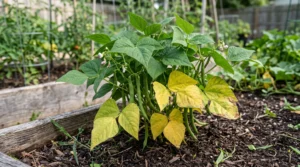
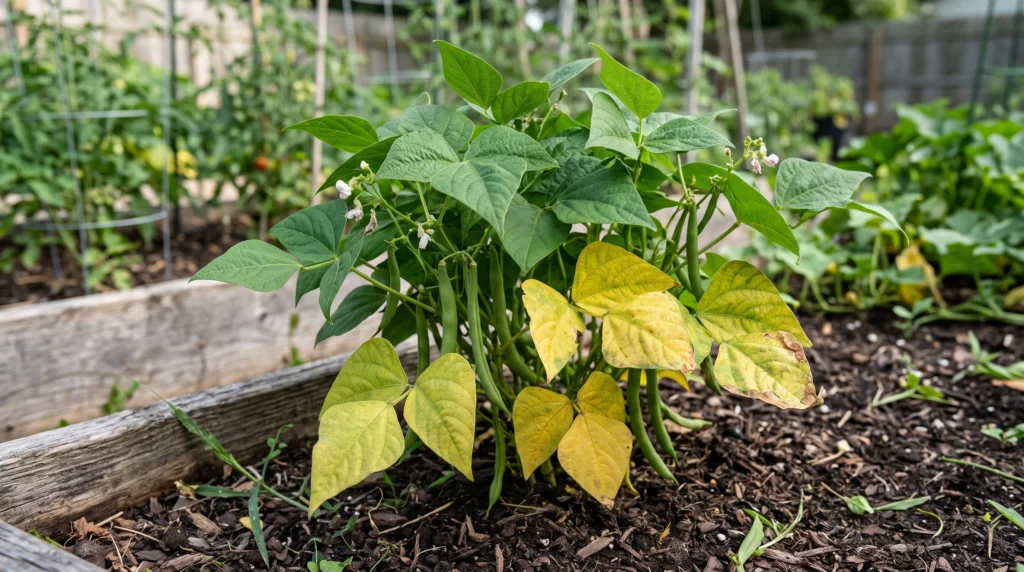
Green bean leaves turning yellow can be worrying, especially when your plants looked perfectly healthy just a few days ago.
You might be wondering whether to water, feed, spray, or pull them.
Before doing any of those things, take a closer look. Yellow leaves are a symptom, not a diagnosis, and where the yellowing starts can help you understand what’s happening.
Green bean leaves can turn yellow from natural aging, too much or too little water, nutrient problems, heat stress, spider mites, or disease.
Yellow lower leaves may simply be aging, while fine pale speckles can point to mites. Check soil moisture, leaf undersides, and any spots or distorted growth before you treat anything.
What Does the Yellowing Pattern Tell You?
Before adding fertilizer or changing how you water, take a close look at the affected leaves.
Where the yellowing begins—and whether it appears evenly, between the veins, or alongside spots—can help narrow down the possibilities.
These patterns are clues rather than definite diagnoses, but they can save you from treating the wrong problem.
Only the Bottom Leaves Are Turning Yellow
Older leaves near the base get the least light, and they’re the first ones a plant lets go.
A few yellow leaves low on the plant, with healthy growth above and pods still forming, are usually not a worry.
Yellowing that climbs the plant or spreads quickly points to something more.
New Leaves Are Turning Yellow
Yellow on new growth deserves a closer look. Nutrient availability problems and roots that can’t take up water or nutrients are two possible causes.
Guessing can send you down the wrong path, so a soil test is a better first step than a bottle of fertilizer.
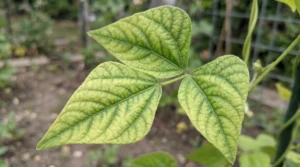
Leaves Are Yellow Between Green Veins
Chlorosis is the term for leaves that lose their green color.
When the tissue between the veins turns yellow while the veins remain green, nutrient availability may be involved.
But poor root health and unsuitable soil conditions can produce similar symptoms.
Notice whether older or younger leaves are affected, since that can help narrow down the possibilities.
Green beans generally grow well in slightly acidic to near-neutral soil.
A soil test can help determine whether nutrient availability or soil pH needs attention.
Don’t add fertilizer or soil amendments based on leaf color alone.
Yellow Leaves Have Tiny Pale Speckles
Fine pale dots that blur into a yellow, bleached, or bronzed look often point to spider mites, especially in hot, dry weather.
Flip a few leaves over before you decide. The damage shows on top, but the mites sit underneath.
Yellow Leaves Have Brown Spots or Damaged Areas
Brown spots ringed in yellow may mean a bacterial leaf disease, though spots alone can’t confirm it.
Look at whether the spots are scattered or spreading from plant to plant.
Rusty pustules and a mottled, twisted look are other possibilities, covered below.
Green Bean Leaves Turning Yellow: What Causes It and What Should You Do?
Natural Aging of Older Leaves
Lower bean leaves naturally yellow and die, and stressful growing conditions can speed that up.
A plant that is aging normally still looks healthy overall. Upper leaves stay green, new growth looks normal, and pods keep forming.
Yellow lower leaves on a plant that is still making beans are not a sign it is finished.
Do nothing at first. Don’t fertilize or spray a plant just because its bottom leaves have yellowed.
Spraying before you know what you’re treating can add injury of its own.
Once a leaf is fully brown, you can pinch it off. Widespread or fast yellowing is not normal aging, though, so move on to the other checks.
Too Much Water or Poor Drainage
Saturated soil leaves less oxygen around the roots, and roots that can’t get enough oxygen don’t work well.
Leaves may turn pale or yellow, growth slows, and the plant can wilt even though the soil is wet.
To check, push a trowel several inches into the soil. Look for soil that stays soggy for days, water standing on the surface, or a recent run of heavy rain.
In containers, make sure the drainage holes aren’t blocked.
If the soil around your green beans is saturated, hold off on additional watering until excess moisture drains and the root zone begins to dry.
Check the soil again before watering rather than following a fixed schedule.
If water regularly collects around your plants, improving drainage can help prevent future problems.
Raised beds or improvements to soil structure may be useful, depending on your garden conditions.
Avoid digging around established roots unnecessarily.
Wet soil doesn’t automatically mean root rot.
If the plant continues declining despite better drainage, investigate other symptoms before assuming a disease is responsible.
Healthy new growth and yellowing that stops spreading are encouraging signs.
Too Little Water and Drought Stress
Beans need steady moisture. Dry soil near the roots can slow growth and make leaves droop and yellow, especially in hot weather.
Check the soil beside the plant with a trowel, taking care not to damage the roots.
If the soil is dry through much of the root zone and the plant is wilting, inadequate moisture may be contributing to the problem.
Sandy soil needs water more often than heavier soil, and containers dry out faster still, so no single schedule fits every garden.
Water until moisture reaches the root zone, then check again before the next watering.
A layer of herbicide-free straw or grass clippings slows evaporation.
Light daily sprinkling wets only the surface and is not a substitute. Watch new growth to see whether the plant responds.
Nutrient Deficiencies or Nutrient Availability Problems
Nutrient yellowing is possible, but it’s easy to guess wrong. Beans are legumes, and bacteria living on their roots help supply nitrogen.
Bean plants don’t need as much fertilizer as many other vegetables.
Applying more nitrogen than the plants need can encourage excessive leafy growth without solving the underlying cause of yellowing.
A nutrient problem may cause pale foliage and slow growth, but the pattern depends on which nutrient is involved.
Some deficiencies affect older leaves first, while others appear in younger growth.
Poor drainage, damaged roots, or unsuitable soil conditions can produce similar symptoms by interfering with nutrient uptake.
Review what you’ve already applied to the soil and consider a soil test before adding more fertilizer.
If testing identifies a deficiency, follow the recommendations for your soil and crop.
Extra fertilizer won’t correct yellowing caused primarily by waterlogged or damaged roots.
Heat Stress and Hot Weather
Hot weather can scorch bean leaves and leave dead spots with yellow edges, and heat plus dry soil stresses the whole plant.
Suspect heat when yellowing starts during or after a hot spell, the soil dries fast, and leaf edges or spots look scorched.
Heat can also cause blossoms to drop before pods form, so green beans flowering but not producing pods is a related problem with its own causes.
Don’t blame heat for every yellow leaf that shows up in summer.
Dry soil and spider mites often arrive with hot weather, and both look similar.
Keep soil moisture even, mulch the bed, check leaf undersides for mites, and skip fertilizer while plants are under severe stress.
Spider Mites and Other Sap-Feeding Pests
Spider mites cause fine speckling, yellowing, and later bronzing of bean leaves, often during hot, dry weather.
Heavy infestations can make leaves drop, and you may see fine webbing.
Mites live on the underside of the leaf, so look there first.
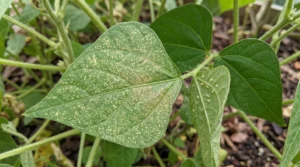
To check, flip several yellow leaves and look with a hand lens, or tap a leaf over a sheet of white paper and watch for tiny moving specks.
A plant with even yellowing and no speckles is less likely to have mites.
If you find spider mites, first check how widespread the infestation is.
A directed spray of water to the undersides of leaves may help dislodge mites, but avoid leaving foliage wet for extended periods, especially if leaf disease is suspected.
For persistent infestations, an insecticidal soap may be appropriate if its label specifically permits use on edible green beans.
Follow all label directions, including application timing and precautions for plants stressed by heat or drought.
Avoid homemade chemical mixtures and don’t spray simply because the leaves look yellow.
Also check for aphids. These small, soft-bodied insects often gather on tender shoots or leaf undersides.
They may cause leaves to curl or distort and can leave behind sticky honeydew.
Diseases Affecting Green Bean Leaves
Several green bean diseases can cause yellowing, spotting, or distorted leaves. Because some symptoms overlap, a few yellow or spotted leaves aren’t enough to identify a particular disease.
- Bacterial blights: Some bacterial diseases cause water-soaked spots that later become brown, sometimes surrounded by yellow margins or halos. Infected seed, splashing water, and contact with wet foliage can contribute to their spread.
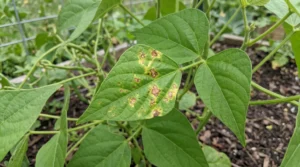
- Rust: Bean rust produces small, raised, reddish-brown pustules on leaves, sometimes accompanied by yellowing and premature leaf drop. Look for the characteristic pustules rather than assuming ordinary brown spots mean rust.
- Mosaic viruses: Certain bean viruses cause irregular light- and dark-green or yellow-green patterns, sometimes accompanied by curling, wrinkling, or distorted growth. Similar symptoms can occur for other reasons, so appearance alone may not confirm a viral infection.
If you notice suspicious spots, spreading damage, or distorted new growth, compare the symptoms with reliable photographs from a university Extension service. Avoid handling the plants while their foliage is wet if bacterial disease is suspected.
If a viral disease is identified with reasonable confidence, removing infected plants may help limit further spread. If you’re unsure, consult your local Cooperative Extension office or plant diagnostic clinic before removing an otherwise productive plant.
Don’t automatically apply fungicides. Bacterial, fungal, and viral diseases are different problems and require different management approaches.
How Can You Check Your Green Bean Plant Before Treating It?
Before trying a treatment, spend a few minutes checking your plant. A trowel and a close look at the leaves are usually enough to identify the next sensible step.
- Check where the yellowing begins. A few older lower leaves may simply be aging. Yellowing that spreads quickly, affects new growth, or comes with spotting needs closer attention.
- Check moisture near the roots. If the soil is unusually dry, investigate drought stress. If it remains saturated, look at drainage before adding more water.
- Turn over several affected leaves. Fine pale speckles, tiny moving mites, or webbing suggest spider mite activity. Clusters of soft-bodied insects and sticky residue may indicate aphids.
- Look for spots or distorted growth. Brown lesions, rust-colored pustules, and irregular mottling may suggest disease, but appearance alone doesn’t always confirm the cause.
- Review recent growing conditions. Did the yellowing appear after heavy rain, a heat wave, a dry spell, or a fertilizer application? The timing can help explain what changed.
- Choose your next action based on the evidence. Correct an identifiable moisture problem, manage a confirmed pest infestation, or seek advice about suspicious disease symptoms. Avoid making several unrelated changes at once.
After addressing the likely cause, continue monitoring the plant.
Healthy new growth and yellowing that stops spreading are encouraging signs, although recovery depends on the underlying problem.
If yellowing continues spreading, new leaves become severely distorted, or the plant declines despite suitable growing conditions, contact your local Cooperative Extension service or plant diagnostic clinic for help.
What Do Yellow Green Bean Leaves Look Like With Each Cause?
If you’re still unsure which cause fits your plant, use this chart to compare the symptoms with what you should inspect next.
More than one problem can affect a green bean plant at the same time, so consider the clues together instead of relying on a single leaf.
| Visible symptom | Possible explanation | What to check |
| A few older lower leaves turn yellow | Normal aging or mild stress | Overall plant health and new growth |
| Yellow leaves with persistently wet soil | Waterlogging or root stress | Drainage and soil moisture |
| Yellowing with dry soil and wilting | Drought stress | Root-zone moisture |
| Yellow tissue between greener veins | Possible nutrient availability or root problem | Leaf position, soil pH, soil history |
| Fine yellow-white speckles | Possible spider mites | Undersides of leaves |
| Brown lesions with yellow margins | Possible bacterial or other leaf disease | Lesion shape and spread |
| Patchy yellow-green leaves with distortion | Possible virus or other disorder | New growth, pattern, and plant condition |
These are clues, not confirmed diagnoses. Use them to decide what to check next.
Can Yellow Green Bean Leaves Turn Green Again?
It depends on how badly the leaf has been affected and what caused the yellowing.
Leaves with mild discoloration may regain some green color when the underlying problem is corrected. However, severely yellowed or damaged leaves often won’t recover fully.
Instead of judging recovery by the color of older leaves alone, watch for healthy new growth, continued flowering or pod development, and yellowing that stops spreading.
These are encouraging signs that the plant may be recovering.
If yellowing keeps moving up the plant after you’ve fixed the likely cause, or new leaves come in spotted or distorted, go back to the checks.
Persistent yellowing or distorted new growth can have several causes, including disease, so consider seeking help from your local Extension service if the symptoms continue.
Should You Remove Yellow Leaves From Green Bean Plants?
Usually, there’s no need to remove every yellow leaf from a green bean plant.
A partly yellow leaf may still contribute to photosynthesis, and removing too much foliage can reduce the plant’s ability to grow and produce pods.
If only a few older leaves are yellowing while the rest of the plant looks healthy, monitor them. Fully dead leaves can be removed carefully when necessary.
When disease is suspected, avoid stripping off large numbers of leaves without identifying the problem.
Some diseases require specific sanitation measures, while others cannot be controlled simply by removing affected foliage.
Yellow leaves alone are not a reason to pull up the entire plant.
If it is declining rapidly, developing widespread lesions, or showing severely distorted growth, seek a more specific diagnosis before deciding whether removal is appropriate.
How Can You Prevent Yellow Leaves on Green Beans During Summer?
- Keep soil moisture steady. Check with a trowel before you water instead of following a rigid schedule. Rainfall, heat, and soil type change the need.
- Improve drainage. Beans do best in well-drained soil. Use containers with drainage holes.
- Mulch. Herbicide-free straw or grass clippings help hold moisture and even out swings.
- Check plants during hot, dry spells. Look under the leaves for mites before damage builds.
- Fertilize only when needed. Extra feeding doesn’t fix an undiagnosed problem, and beans usually need little.
- Keep the garden clean. Rotate bean crops, clear diseased debris, water at the base, and avoid handling wet plants.
- Choose suitable conditions. Give beans full sun and room for air to move. Check the seed packet for variety needs and your local Extension office for planting dates.
Conclusion
Yellow leaves don’t always mean your green beans are in trouble. Sometimes older foliage is simply aging.
In other cases, the plant may be responding to moisture problems, pests, or disease.
The best approach is to look for clues before reaching for a treatment.
Check where the yellowing appears, examine the soil, and inspect the leaves closely.
Once you have a clearer idea of the cause, you can take the appropriate next step without creating another problem for your plants.