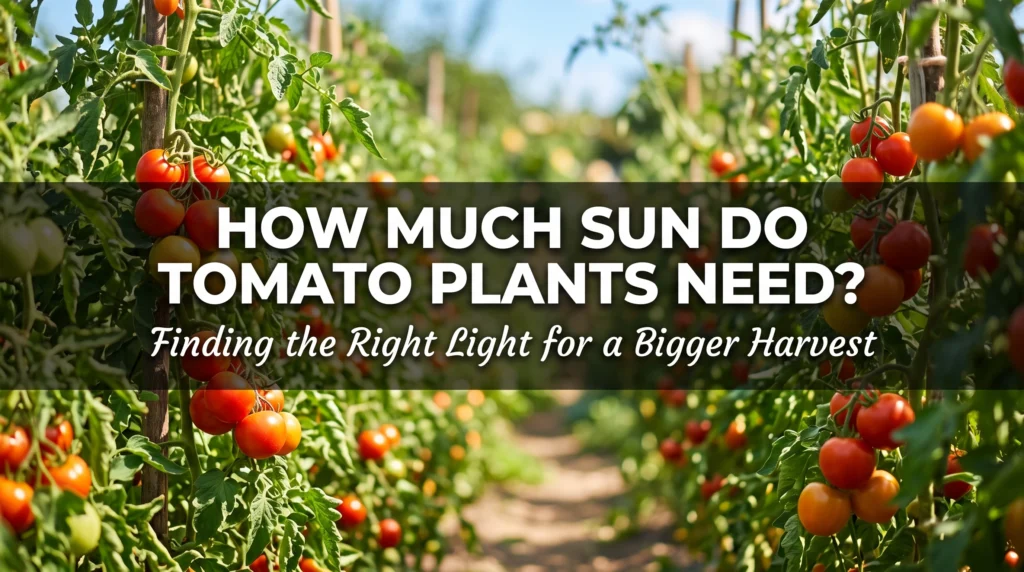
Tomato plants generally need at least 6 hours of direct sunlight each day, with 6 to 8 hours being a strong target for productive growth. That’s the short answer.
But here’s the part most articles skip: that number doesn’t mean the same thing for every garden.
A hot backyard in Arizona and a mild yard in Oregon don’t play by the same rules. More sun isn’t always better.
Sometimes it’s actually too much.
So let’s go past the basic number and figure out what it really means for your garden.
If you are just getting started with tomatoes from scratch, our complete beginner’s guide to growing tomatoes is a good place to begin
How Many Hours of Sun Do Tomatoes Need?
Six hours of direct sunlight is the baseline. Below that, tomato plants tend to struggle to produce a good harvest.
Six to eight hours is the sweet spot for most gardens. That’s enough light to fuel strong growth and plenty of fruit, without pushing the plant into extreme stress.
More than 8 hours can work great too — as long as your area doesn’t get brutally hot. In mild or moderate climates, extra sun usually just means extra tomatoes.
Here’s a simple way to think about it:
| Direct sunlight | What to expect |
|---|---|
| Under 4 hours | Likely too little light for a productive tomato crop |
| 4–5 hours | Plants may grow, but you’ll likely get fewer tomatoes |
| 6 hours | Generally enough for a decent harvest |
| 6–8 hours | Strong target for a productive plant |
| 8+ hours | Can work great where it doesn’t get too hot |
Think of this table as a rough guide, not a science lab result. Your soil, water, and local weather all play a part too.
Do Tomatoes Need Direct Sunlight?
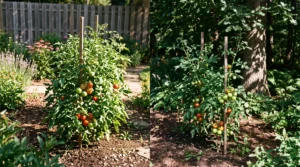
Yes — and this trips a lot of people up. Direct sunlight means the sun is hitting the plant with nothing in the way. No tree branches. No shadow from the house. Nothing blocking those rays.
This is different from a spot that just looks bright. A patio that’s shaded by an awning can feel sunny to your eyes but barely give your tomato plant any real light.
Here’s the difference in plain terms:
- Direct sunlight: nothing blocking the sun; full strength light hits the leaves.
- Bright shade: open sky above, but no direct sun hitting the plant.
- Dappled light: sunlight flickering through tree leaves, changing all day.
- Indirect light: light bounced off walls or reflected surfaces, much weaker than direct sun.
Direct sunlight is what you should count toward your 6 to 8 hours target. Filtered or indirect light can still contribute to photosynthesis, but it generally does not provide the same intensity as direct sun.
Can Tomatoes Grow in Partial Shade?
Yes, tomatoes can grow in partial shade. But less light usually means less fruit.
The plant might look healthy and green, and it may even flower, but the harvest often comes up short.
There’s a big difference between getting 4–5 hours of sun and sitting under heavy shade all day.
Let’s break down the different types of shade you might be dealing with.
Light Afternoon Shade
This one can actually be a good thing, especially if you live somewhere hot.
A little shade in the late afternoon, after the plant has already soaked up hours of morning sun, can protect it from the harshest heat of the day.
Heavy Shade
This is the real problem. If your tomato plant sits under a big tree or next to a tall fence most of the day, it’s not getting what it needs. Expect skinny stems, fewer flowers, and a light harvest.
Dappled Shade
Sunlight that flickers through leaves might look pretty, but a few hours of dappled light is not equivalent to a few hours of direct sun.
Don’t count it the same way when estimating your plant’s daily sunlight.
What Happens If Tomato Plants Don’t Get Enough Sun?
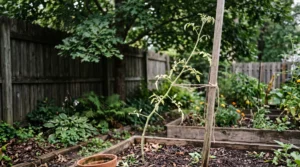
When a tomato plant doesn’t get enough direct light, the effects can show up in several ways. Here’s what to watch for.
- Leggy growth. The plant stretches toward whatever light it can find, leaving you with tall, thin stems and more widely spaced leaves instead of compact, sturdy growth.
- Reduced flowering. Limited light can reduce flowering, which may mean fewer opportunities for the plant to produce fruit.
- Fewer fruits. Even when flowers appear, insufficient light can reduce overall fruit production and leave you with a smaller harvest.
- Slower development. Plants growing in low light may develop more slowly, so both plant growth and fruit development can take longer.
One important caution: don’t assume “not enough sun” is the cause every time you spot a problem. Yellow leaves are a good example.
They can be associated with inadequate light, but yellowing can also result from overwatering, nutrient problems, pests, or disease. Treat sunlight as one possible cause, not an automatic diagnosis.
Can Tomato Plants Get Too Much Sun?
Here’s the twist nobody tells you: the real danger usually isn’t sunlight — it’s heat.
A healthy tomato plant can handle full sun just fine. What it struggles with is extreme heat that often comes along with it. When temperatures climb too high, a bunch of problems can show up:
- Flowers drop off before they ever turn into fruit.
- Pollination struggles, so fewer flowers turn into tomatoes at all.
- Sunscald shows up — pale, papery patches on fruit that’s been directly exposed to intense sun, especially when there isn’t enough leaf cover to shade it.
- Ripening slows down or stalls out completely in extreme heat.
- The plant loses water faster, which adds even more stress.
So it’s not really “too much sunlight kills tomatoes.” It’s more like extreme heat piles on more stress than the plant can handle. That’s an important difference, because it changes what you actually do about it (more on that soon).
Morning Sun vs. Afternoon Sun for Tomatoes
There’s no single right answer here — it depends on your climate.
In Moderate Climates
If your summers are mild or average, aim for as much direct sun throughout the day as you can get. Morning, midday, and afternoon sun are all doing good work for your plant.
In Very Hot Climates
If you live somewhere that gets brutally hot in summer, a helpful pattern is morning sun with some filtered protection in the afternoon. According to the University of California Agriculture and Natural Resources, giving tomatoes morning light and shielding them from the harshest afternoon rays can help ease heat stress during extreme conditions.
Morning sun still gives the plant plenty of energy. The afternoon break just takes some pressure off during the hottest part of the day.
How Hot Weather Changes Tomato Sunlight Needs
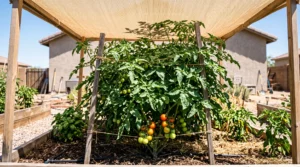
Heat doesn’t cancel out your tomato plant’s need for light. It just means you may need to manage the heat alongside the sun.
When temperatures get too high, tomato plants can run into:
- Blossom drop, where flowers fall off before making fruit
- Poor pollination, since pollen doesn’t perform well in extreme heat
- Weak fruit set, meaning fewer flowers actually become tomatoes
- Sunscald on exposed fruit
- Slower ripening, or fruit that stalls out and won’t turn red
- More water loss, leaving the plant thirsty and stressed
The Penn State Extension points to high heat, especially hot nights, as a major factor behind blossom drop and poor fruit set.
Exact temperature thresholds can shift depending on the variety and the growing conditions, so treat any single number as a general guide rather than a hard rule.
How to Protect Tomatoes From Extreme Heat
If your garden gets plenty of sun but your summers run hot, here’s how to help your plants cope.
Provide Afternoon Shade
A few hours of shade during the hottest part of the day — usually early to mid-afternoon — can take the edge off extreme heat without starving the plant of light.
Use Shade Cloth Carefully
Shade cloth is a simple, low-cost tool for hot climates. There’s no single “correct” percentage that works everywhere, so it’s worth testing what your plants respond well to. The goal is to soften the harshest sun, not block it out completely.
Protect the Fruit With Healthy Leaf Cover
Leaves aren’t just there for looks. They shade the fruit and help prevent sunscald. Avoid over-pruning your plant in hot weather — that leafy canopy is doing real work.
Mulch the Soil
A layer of mulch around the base of the plant keeps the soil cooler and holds in moisture longer. That means less stress on the roots during a heat wave.
Keep Watering Consistent
Heat pulls water out of plants fast, and inconsistent watering makes things worse. Container tomatoes have it even harder — pots heat up quickly and dry out faster than garden soil, so they often need extra attention when the temperature spikes.
Choose Varieties Appropriate to Your Climate
Some tomato varieties handle heat better than others, but picking a “heat-tolerant” variety isn’t a magic fix. Good sun management and consistent care still matter, no matter what you plant.
Where Is the Best Place to Plant Tomatoes?
Don’t just pick a spot because it “looks sunny.” Sunlight moves throughout the day, and so do shadows.
Take a walk around your yard and think about what’s nearby:
- Trees that fill out with leaves as summer goes on
- Fences or walls that block low morning or evening sun
- Buildings that cast long shadows in certain seasons
- Balconies with railings or overhangs
- A neighbor’s tree or structure just over the fence line
Here’s a simple rule worth repeating: watch your planting spot throughout the day before you commit your tomato plants to it. A spot can be soaking in sun at 10 a.m. and completely shaded by noon.
How to Check How Much Sun Your Garden Gets
You don’t need fancy tools for this. Just a bit of patience and a notebook (or your phone’s notes app) will do the job.
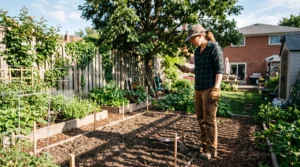
Perform a Simple Sunlight Audit
What you’ll need: a notebook or phone, and a spot to observe. Time: about 10–15 minutes, spread across the day. Make it easier: just check the spot three times — morning, noon, and afternoon — and jot down whether it’s sunny or shaded. Make it harder: check every hour for a full day and track exactly when direct sun hits the ground.
- Pick the spot you’re thinking about planting in.
- Check it in the morning and note if it’s in direct sun.
- Check again around midday.
- Check once more in the afternoon.
- Write down every time direct sunlight actually reaches that spot.
- Add it up to estimate your total hours of direct sun.
That’s it. No special gadgets required. If you want, there are sun-tracking apps that can help too, but a notebook works just as well.
What If Your Garden Doesn’t Get 6 Hours of Sun?
First — don’t panic. You’ve got options.
- Move container tomatoes to the sunniest spot you have, and shift them again if the light changes with the seasons.
- Trim back small branches that are blocking light, if that’s realistic and safe to do.
- Pick your sunniest available spot, even if it’s not perfect.
- Choose a variety suited to your growing conditions and accept that a lower light location may produce a smaller harvest.
- Accept a smaller harvest and enjoy what you get — some tomatoes beat no tomatoes.
- Consider growing something else that thrives in shade, like leafy greens.
One thing worth saying clearly: you don’t need to cut down a healthy, mature tree just to squeeze in a tomato plant. Sometimes the smarter move is picking a crop that actually fits the light you have.
Do Container Tomatoes Need More Sun?
No — container tomatoes need the same amount of sun as tomatoes in the ground. Six hours of direct light is still your benchmark.
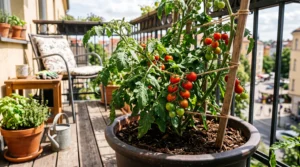
What containers give you is flexibility. You can move the pot around to chase the best sunlight, especially as the seasons change and shadows shift.
The tradeoff? Pots dry out faster than garden soil, especially in full sun and wind.
According to Iowa State University Extension and Outreach, container tomatoes need consistent watering to stay healthy, since they have less soil to hold moisture.
If you are growing in pots, look into growing tomatoes in containers to keep them happy.
Why Are My Tomato Plants Not Producing Fruit?
If your plant looks green and healthy but isn’t giving you tomatoes, sunlight might be part of the story — but it’s rarely the whole story.
Before you blame the sun, run through this checklist:
- Sunlight — is the plant really getting 6+ hours of direct light?
- Temperature — are days or nights running too hot or too cold?
- Watering — is it consistent, or feast-and-famine?
- Nutrition — is the soil giving the plant what it needs?
- Pollination — are bees or wind able to reach the flowers?
- Variety — is this type of tomato suited to your climate?
- Overall health — any pests, disease, or stress signs?
Here’s the key insight: a tomato plant can get plenty of sunlight and still fail to set fruit if the temperature isn’t cooperating. Heat and cold both interfere with pollination, even when the light is perfect.
So if your sun-soaked plant isn’t producing, look at the thermometer next.
Situational Matching Guide
Not every garden is the same, so here’s a quick way to match your situation to the right move.
- If you have 8+ hours of sun and mild temperatures → stay put, you’re in a great spot.
- If you have 6–8 hours → you’re in a strong range. Focus on watering and feeding rather than chasing more sun.
- If you have 4–5 hours → expect a smaller harvest, and use the sunniest spot available.
- If you have under 4 hours → look for a better location, or pick a shade-tolerant crop instead.
- If you have plenty of sun but brutal heat → don’t add more light, focus on afternoon shade and steady watering.
- If you only have 10–15 minutes to spare → do the quick sunlight audit before making any big changes.
- If you’re feeling overwhelmed → pick the one change that will help the most, and start there.
- If your budget is tight → work with the natural sun and shade you already have before buying gear.
- If you’ve got time to fine-tune things → track both sunlight and temperature together for the clearest picture.
- If you’re ready to go deeper → stop counting hours alone, and look at light, heat, water, and plant health as a team.
Frequently Asked Questions
How many hours of sun do tomatoes need?
At least 6 hours of direct sunlight, with 6 to 8 hours being the sweet spot for most gardens.
Do tomatoes need full sun?
Generally, yes. Full sun gives tomato plants the energy they need to grow strong and produce well, as long as extreme heat isn’t a factor.
Do tomato plants need direct sunlight?
Yes. Bright shade or dappled light helps a little, but it doesn’t replace real, direct sun hitting the leaves.
Can tomatoes grow with only 4 hours of sun?
They can grow, but you’ll likely see a smaller harvest than a plant getting 6 or more hours.
Can tomatoes grow in partial shade?
Yes, but expect reduced production. Light afternoon shade in hot climates can actually help, while heavy shade all day tends to hurt.
Can tomato plants get too much sun?
The bigger issue is usually extreme heat, not sunlight itself. A healthy plant handles full sun fine, but intense heat can cause real problems.
Is morning or afternoon sun better for tomatoes?
It depends on your climate. In mild areas, both work great. In very hot areas, morning sun with some afternoon protection can help reduce stress.
Why are my tomato plants tall and thin?
Low light is one common cause, but check your spacing, temperature, and overall care too before assuming it’s just about sun.
Conclusion
Give your tomato plants plenty of direct light — but don’t assume more sun always equals a better plant.
Aim for at least 6 hours of direct sunlight, with 6 to 8 hours being a strong target for productive growth. If your summers run hot, managing that heat matters just as much as chasing extra sunlight.
If your current spot isn’t cutting it, you’ve got real options: move your containers, find a sunnier corner, add some afternoon shade, or choose a plant that’s a better fit for the light you’ve got.
There’s no single perfect answer — just the one that works best for your garden.