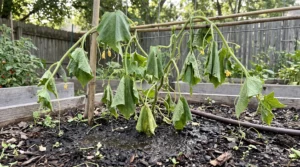
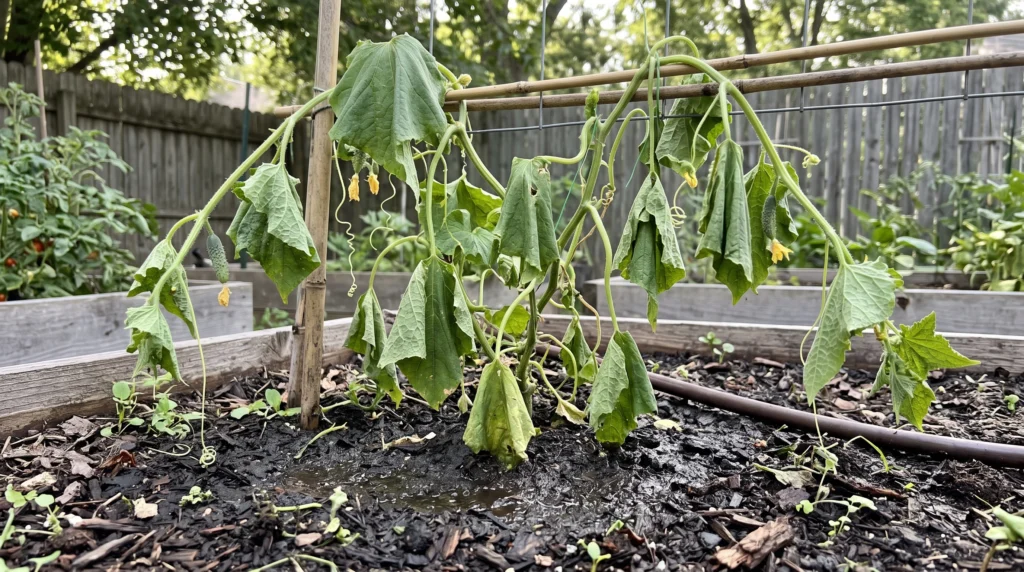
If your cucumber is drooping with wet soil, hold off on the watering can.
A wet root zone can still leave a plant looking thirsty.
The roots may be short of air, the drainage may be poor, or hot weather may be pulling water out of the leaves faster than the roots can send it up.
Wilt disease and root damage can look the same at first glance.
With cucumber drooping and wet soil, the first question is not “Does it need more water?” It is “Why can’t the plant keep its leaves firm when water is right there?”
The short answer is that a cucumber can wilt in wet soil when its roots can’t take up water well, or when the leaves lose water faster than the roots can replace it.
Common causes include soggy soil, poor drainage, damaged roots and midday heat.
Bacterial wilt is another possibility and needs closer attention.
The timing, the pattern and the look of the plant will usually point you to the right cause.
Your 60-Second Check
Answer these before you touch the hose:
- Does the plant droop only during the hottest part of the day?
- Does it perk up by evening or early morning?
- Does the soil feel damp, wet or soggy a few inches down?
- Is one vine affected, or the whole planting?
- Do you see yellow leaves, dark spots on the stem, beetles or a weak base?
- Is the plant in a container or in poorly drained ground?
Keep your answers in mind. They will make the sections below much easier to use.
Wet Soil Does Not Always Mean the Plant Can Use the Water
A plant wilts when it loses more water than it takes in. Leaves release water vapor through tiny pores, and this is called transpiration.
The roots have to keep pulling water up to replace it.
If the roots can’t keep up, the leaves go soft and hang down.
That can happen in dry soil, but it can also happen in wet soil.
Roots need air as well as water.
Healthy soil has spaces that hold oxygen around the roots.
When soil stays saturated, those spaces fill with water and the roots get less oxygen.
That can reduce normal root function and make it harder for the plant to move water upward, so the leaves may droop even though the soil is already wet.
So a wet soil surface tells you very little.
What matters is whether the roots are healthy, whether they can breathe, and how much water the leaves are losing that day.
First, Check Whether It Is Temporary Heat Wilt
Cucumbers have large, thin leaves that lose water quickly.
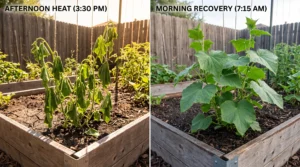
On a hot afternoon, the leaves can go limp even when the soil is moist.
Water loss briefly beats uptake. When the air cools in the evening, the leaves firm up again.
If your plant perks up by evening or early morning and the soil is not waterlogged, heat stress is the better explanation.
You can find a full breakdown of that pattern in our article on why cucumber leaves wilt during the day and recover at night.
Here, the difference matters in one way. If the plant fully recovers as temperatures fall and the root zone is already moist, extra watering is usually unnecessary.
A plant that stays droopy through the cool of the morning is a different case, and the rest of this article is mainly for that plant.
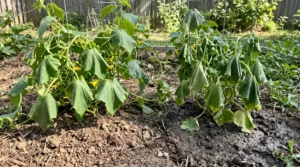
Could the Soil Be Too Wet?
Overly wet soil is one of the main reasons for this problem, and it is easy to miss because the gardener is trying to help.
You see drooping leaves, you water, the soil stays wet, and the leaves droop more.
Wet soil becomes more suspicious when the plant stays droopy after temperatures cool and the root zone remains saturated. Other clues point the same way:
- Water puddles after you irrigate.
- The soil stays soggy for long stretches.
- Lower leaves turn yellow.
- Growth slows or stops.
- The plant looks weak overall, not just limp.
Not every drooping plant in wet soil is overwatered.
A cucumber can also droop in wet soil because of heat, disease or an injured stem.
Soggy soil is one suspect among several, so confirm it before you change your routine.
What Waterlogged Soil Feels Like
You can often judge this by touch and smell, without digging up the plant.
Push a finger or a thin trowel several inches into the soil a little way from the stem.
Waterlogged soil often feels unusually heavy and stays wet well below the surface.
In finer soils it may feel sticky or clump together, while in containers the pot may remain heavy long after watering.
In a planting hole or low spot, water may sit on top.
In a pot, check whether the drainage holes are blocked or the pot is sitting in a saucer full of water.
A sour or stale smell is another warning sign.
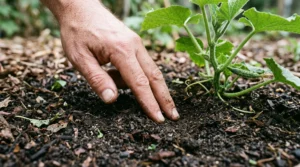
Avoid digging aggressively around the plant just to check the roots.
Cucumbers have many roots close to the soil surface, and unnecessary digging can damage them and add more stress.
Poor Drainage Can Create the Same Problem
Sometimes the gardener is not overwatering at all.
The soil just can’t get rid of the water it receives. Wet roots from poor drainage can happen even with a careful watering routine.
Some common reasons:
- Clay soil drains slowly and holds water between rains or waterings.
- A low spot in the bed collects runoff.
- A raised bed has settled and become compacted over time.
- A pot has too few drainage holes, or the holes are blocked.
- A dense potting mix holds more moisture than cucumber roots like.
This matters because the fix is different. Cutting back on water helps if you were watering too often.
It won’t solve the problem if the bed itself holds water for days.
A simple check is to watch what happens after watering or rain.
If water sits on the surface or the root zone stays saturated long after the surrounding soil has started to drain, poor drainage moves higher on the list.
If the soil drains well and does not stay soggy, look for another cause.
Start with the easy steps. Empty any standing water from saucers. Clear blocked drainage holes.
Stop walking on or pressing down the soil around the plants.
Wait until you know the cause before you improve drainage with big changes such as digging in new material.
Heavy work around the roots of a stressed plant can do more harm than good.
Can Damaged Roots Make a Wet-Soil Cucumber Droop?
Yes. Roots that cannot take up water normally can leave the plant wilted even when plenty of moisture is present in the soil.
Roots can be damaged by:
- long periods in saturated soil
- transplant stress or rough handling at planting
- digging or hoeing too close to the plant
- soil pests that chew the roots
- root rot
- a pot that is too small and packed with roots
Root damage often causes more persistent stress than simple afternoon heat wilt.
The plant may stay droopy through cooler parts of the day, new growth may slow and older leaves may begin to yellow.
If damaged roots are already exposed, unhealthy tissue may look dark, soft or decayed instead of firm and healthy.
Avoid pulling up a plant that looks otherwise healthy just to inspect the roots.
Pulling it up can end a plant that might have recovered. Save root inspection for a plant that is clearly failing.
When Should You Suspect Bacterial Wilt?
Bacterial wilt disrupts water movement through the plant’s vascular tissue, the network of tubes that carries water through the stems and leaves.
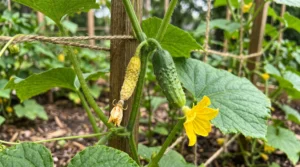
Cucumber beetles can spread the bacteria while feeding, which is why beetle activity matters when a cucumber suddenly begins to wilt.
The pattern may differ from simple heat wilt.
Wilting can begin on one leaf, part of a vine or one entire vine and may continue even after temperatures cool.
The problem often becomes more noticeable over time rather than disappearing overnight.
If one vine or part of the plant stays wilted while the soil is moist and cucumber beetles are around, disease should move higher on your list.
Drooping alone does not prove bacterial wilt, though. Many other problems cause the same look, so pair the symptom with the other clues.
Could Root or Crown Rot Be Involved?
Soil that stays wet for a long time can increase the risk of root problems, including rot.
Rot can also affect the crown, where the stem meets the soil.
Several different organisms can cause similar symptoms, and it can be difficult to tell them apart from appearance alone.
For a home gardener, the useful step is spotting the signs.
Look for:
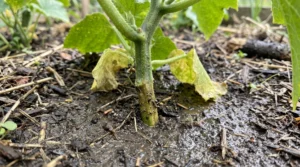
- dark or soft tissue at the base of the stem
- yellowing lower leaves
- a weak or narrowed stem near the soil line
- poor growth for no clear reason
- a plant that collapses even though the soil is moist
If you see these signs, take the plant seriously. Our overview of common vegetable garden diseases can help you compare what you see.
If overly wet soil is contributing to root stress, correcting the drainage problem and avoiding further saturation can help protect the remaining healthy roots.
Once root or crown tissue is badly rotted, recovery becomes much less likely.
Avoid treating every wilted plant as root rot unless the symptoms around the stem base or roots support that diagnosis.
What If Only One Cucumber Vine Is Drooping?
The pattern across your garden is one of your best clues.
When one plant droops and its neighbors look fine, think about something local to that plant.
It might have root damage from planting. A stem could be injured.
A single spot could have bad drainage.
Pests might be feeding on that plant. Bacterial wilt is also possible, since it can begin on a single vine.
When many plants droop together, the cause is more likely to be shared.
Think about weather, heat, watering habits, a bed that drains badly, or stress across the whole root zone.
Neither pattern gives a final diagnosis, but it tells you where to look next.
One affected plant points more toward a local problem with that vine, stem or root zone.
Several plants showing the same symptoms at the same time make shared conditions such as heat, watering or drainage more likely.
What If the Plant Is in a Container?
Containers dry out and heat up differently from ground soil, and they have their own ways of going wrong.
Check these first:
- Are the drainage holes open and large enough?
- Is the pot sitting in a saucer of standing water?
- Has the potting mix packed down and turned dense?
- Are the roots crowded, with little soil left?
- Is the pot black or in full sun, so the roots are getting hot?
- Is the plant being watered over and over without time to drain?
A container can be wet at the bottom even when the surface looks dry.
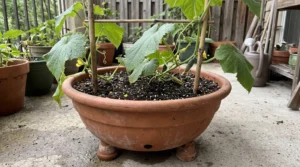
Watering only because the top layer feels dry can keep the lower root zone saturated.
Check deeper into the mix and use the weight of the container as another clue before watering again.
Should You Water a Drooping Cucumber When the Soil Is Already Wet?
Usually, no. If the root zone is already wet, adding more water can worsen saturation and make it harder for stressed roots to recover.
Instead of watering, do these things:
- Check the moisture a few inches below the surface.
- Check how well the soil or pot drains.
- Compare how the plant looks in the morning and in the afternoon.
- Look over the stems and leaves.
- Look for cucumber beetles and other disease clues.
- Wait to water again until the root zone is no longer wet.
There is no single watering schedule that fits every garden.
Soil type, pot size, weather and plant size all change how fast the soil dries.
Check the soil before watering instead of following a fixed schedule.
Quick Guide: What You See and What It May Mean
| What you see | More consistent with | What to check |
|---|---|---|
| Droops in afternoon, recovers by morning | Temporary heat wilt | Temperature and recovery pattern |
| Stays wilted while soil is soggy | Root-zone stress or poor drainage | Soil wetness and drainage |
| One vine wilts, others look fine | Local root or disease problem | Stem, roots, beetles |
| Lower leaves yellow, growth slows | Root stress | Drainage and root zone |
| Stem or base looks dark or soft | Crown or root problem | Base of the plant |
| Beetles present, wilt persists | Bacterial wilt possible | Beetle activity, symptom spread |
| Container stays wet for days | Poor drainage | Holes and potting mix |
| Whole bed droops in extreme heat | Heat plus water-balance stress | Time of day and weather |
No single symptom proves the cause. Look at the pattern across the whole plant.
What Should You Do Right Now?
Work through this list in order. It moves from the easiest checks to the more serious ones.
- Stop automatic watering. Skip the routine until you have checked the soil.
- Check moisture a few inches down. The surface can mislead you.
- See if the plant recovers in cooler conditions. Look again in the early morning.
- Inspect drainage. Look at saucers, drainage holes, puddles and low spots.
- Check the base of the stem. Look for dark, soft or narrowed tissue.
- Look for cucumber beetles and other pests. Check leaves and flowers.
- Compare the sick plant with healthy ones nearby. Note what is different.
- Let the root zone drain and lose some excess moisture before watering again. Be patient here.
- Move to disease diagnosis if the wilt continues. Persistent wilting with moist soil needs a closer look.
If temporary heat or mild root-zone saturation is the cause, the plant may improve once temperatures fall or excess moisture drains away.
When Is the Problem More Serious?
Look closer, and act sooner, if you notice any of these:
- The plant never recovers, even in the cool of the morning.
- The wilting gets worse each day.
- Leaves yellow quickly.
- Stems turn soft or change color.
- One side of the vine collapses.
- The roots or soil smell foul.
- Cucumber beetles are active on the plants.
- The plant has stopped growing altogether.
Several of these signs together make a more serious root, stem or disease problem more likely than simple afternoon heat stress.
FAQs
Why is my cucumber wilting even though the soil is wet?
Wet soil can still stress a cucumber if the root zone is short of oxygen, drainage is poor, heat is increasing water loss or disease is interfering with water movement.
Can overwatering make cucumber leaves droop?
Yes. If the root zone stays saturated, the roots may struggle to function normally and the leaves can droop.
How do I know if the wilt is bacterial?
Wilting that doesn’t recover, collapse on part of the plant and beetle activity all raise concern. Drooping alone does not confirm bacterial wilt.
What to Remember
A drooping cucumber in wet soil is not automatically thirsty. Start by checking whether the plant recovers when it cools down, then look at drainage, how saturated the root zone is, the health of the stem and any signs of pests. The biggest mistake is adding more water before you know why the plant can’t use the moisture already there.