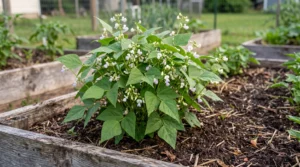
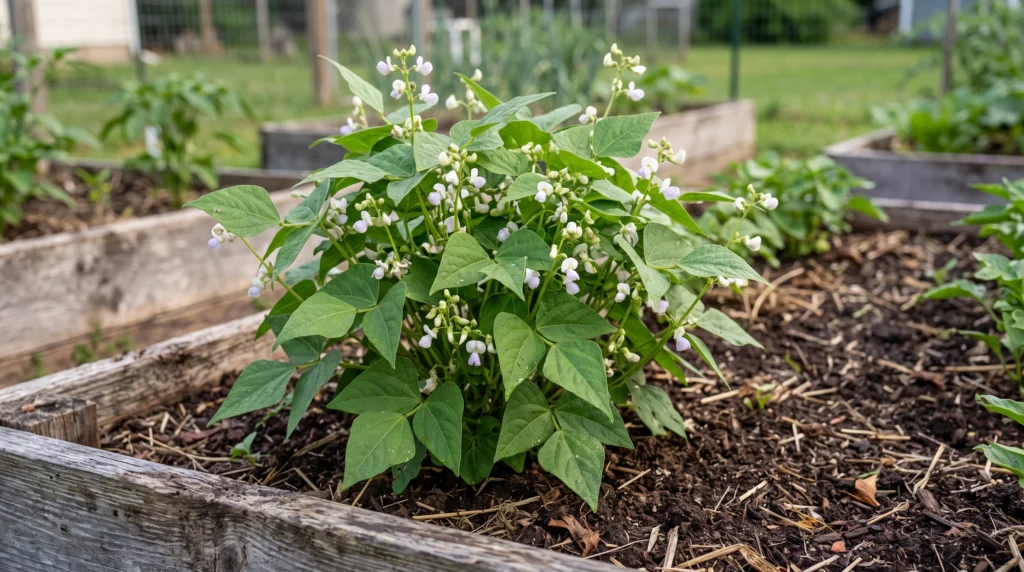
Beans that flower but never set pods can feel like a trick.
The plants look healthy. New blooms keep opening. Yet the flowers drop, dry up or fade away without leaving a bean behind.
Green beans flowering but no pods usually points to heat, dry soil or hot wind during bloom.
Too much nitrogen can also produce lush plants with few pods.
Bush and pole green beans pollinate themselves, so missing bees are rarely the first cause.
Check recent weather, moisture around the roots and how leafy the plants look. Plants often set pods again once the stress passes.
That is frustrating, but it rarely means the crop is lost. The job is to work out which problem you have before you change anything.
What Are the Flowers Actually Doing?
Before you add fertilizer or change your watering, spend a few minutes with the flowers and any tiny pods beneath them.
What you see tells you where to look.
Flowers that open and then drop, with no tiny bean at the base, point to weather and water first.
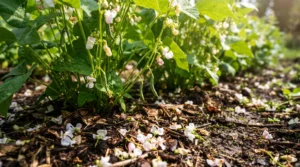
Hot days, warm nights, dry soil and drying wind all cause this, even when the leaves look fine.
A tiny pod that starts and then yellows or shrivels means the flower got further along before something stopped it.
Heat and uneven watering are the usual suspects.
A tiny pod alone doesn’t prove the flower was fully pollinated, so don’t read too much into it.
Plants that are dark green and thick, with few pods for their size, point to feeding.
Too much nitrogen pushes beans to grow leaves instead of pods.
Petals or buds that look chewed, spotted or twisted during mild weather call for a close look at the flowers for insects. Don’t blame insects until you find some.
Which Cause Matches What You See?
| What you see | Check first | Likely cause |
| Flowers drop during a hot spell | Highs and nights over the past two weeks | Heat stress |
| Flowers drop after the soil dries out | Soil several inches down | Water stress |
| Tiny pods form, then shrivel | Weather and watering during bloom | Heat or water stress |
| Dark, leafy plants with few pods | Fertilizer, manure, potting mix | Too much nitrogen |
| Yellow leaves while the soil stays wet | Drainage | Soggy roots |
| Flowers look chewed or twisted in mild weather | Flower clusters up close | Insect feeding |
| Climbing beans, few bee visits | Which bean you planted | Runner bean pollination or hot nights |
| Plants gave beans, then slowed | Mature pods left hanging | Pods slowing new growth |
Treat the table as a starting point, not a final answer.
Heat and dry soil, for example, often happen together.
Is It Too Hot for the Flowers to Set Pods?
Heat is the first thing to check.
Temperatures above about 90°F (32°C), along with drought, are common causes of flower drop and poor pod set in green beans.
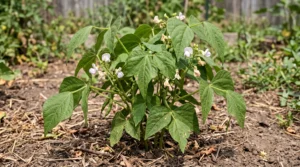
That number is a rough guide, not a cliff. Some sources put the trouble point near 85°F, and others closer to 95°F.
Variety, humidity and soil moisture all move the line. Dry air or dry soil makes hot weather harder on the flowers.
Nights count as much as days.
In snap bean trials, nights that stayed above about 68°F (20°C) caused damage to the flower parts of heat-sensitive varieties.
That doesn’t mean every green bean quits at 68°F.
It does mean a run of warm nights can hurt the plants even when the days are not extreme.
Other work found that warm nights cut pod production far more than warm days did.
The damage can start roughly ten days before a flower opens, and that delay causes a lot of confusion.
Flowers dropping today may have been hurt by hot nights last week, long before you changed anything.
Why does heat cause this? High temperatures can damage pollen, interfere with fertilization, and prevent flowers from developing into healthy pods.
Look back over the last week or two and ask:
- Was there a heat wave?
- Did the nights stay warm?
- Did bloom start just before or during the hottest days?
If the plants are otherwise healthy, keep the soil evenly moist and mulch if it dries fast.
Skip extra fertilizer while the plants are stressed. Don’t pull them because one round of flowers failed.
Watch the next round instead.
Has the Soil Dried Out During Flowering?
Dry soil is the second big suspect, and it often teams up with heat.
Beans that dry out between waterings can set no pods, and hot, windy days can dry the plant even when the soil looks moist.
The surface can fool you.
A light shower may leave the top damp while the soil around the roots is dry.
Push a finger a few inches into the soil beside the plant, taking care not to tear up the roots.
If it feels dry down there, the plant has been short of water.
Containers, raised beds, sandy soil and windy spots dry out fastest.
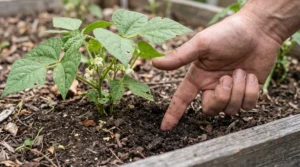
A common starting point for vegetable beds is about an inch of water a week, counting rain and watering together.
Weather, soil and containers change that a lot, so let the finger test decide, not a calendar.
- Water slowly and deeply so the soil around the roots gets wet, not just the surface.
- Apply water near the base of the plants when you can.
- Check containers more often during hot or windy weather.
- Spread mulch to slow drying, and keep it a little away from the stems.
- Avoid swings between bone dry and soaked, which are hard on the plant.
Wind can hurt on its own. In breezy gardens, a taller crop such as corn planted nearby can break the drying wind.
Can Too Much Water Cause Trouble Too?
It can, but it is a less likely cause during bloom. Roots need air as well as water.
Soil that stays soggy for days stresses them, and yellow leaves, weak growth or wilting in wet soil point that way.
If you see those signs, fix the drainage instead of watering more.
Extra water won’t help roots that are already drowning.
Are the Plants Too Lush for Their Own Good?
Beans make much of their own nitrogen with help from bacteria that live in small lumps on their roots.
They need less feeding than most vegetables.
Heavy nitrogen feeding gives lush leaves and few pods, and extra nitrogen can also delay flowering.
So green beans flowering but no pods, on big, dark, leafy vines, often means the bed is too rich.
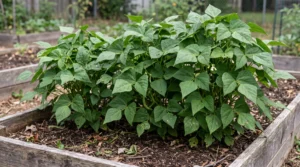
Think back over what the plants have received:
- fresh manure
- a high-nitrogen fertilizer
- frequent liquid feeds
- lawn fertilizer washing into the bed
- potting mix with fertilizer already mixed in
- heavy feeding after a hungry crop like corn
If any of those fit, stop feeding for now. Don’t reach for a bloom booster either.
Phosphorus or potassium won’t fix a problem those nutrients didn’t cause.
A soil test shows what is really in the bed, and guessing can push the problem further.
For more guidance on choosing nutrients for different vegetables, read our guide to the best fertilizer for vegetable gardens.
It explains why green beans usually need less fertilizer than heavy-feeding crops.
Do Green Beans Need Bees to Set Pods?
Usually not. Bush and pole green beans belong to the species Phaseolus vulgaris.
Beans like these are self-pollinating, so they do not need insects to set pods in most cases.
Each flower holds male and female parts inside a curled petal called the keel.
The flower can pollinate itself, and it often has done so by the time it opens.
Bees and other insects may visit green bean flowers, but common bush and pole beans generally pollinate themselves without outside help.
If your plants are flowering but producing no pods, check recent temperatures and soil moisture before blaming a lack of pollinators.
You don’t need to shake the flowers, hand-pollinate them, or spray them with water to help pods develop.
Those steps aren’t normally necessary for common green beans.
Focus instead on keeping the plants healthy and reducing avoidable stress.
Are You Growing Runner Beans?
Runner beans are a different species, Phaseolus coccineus.
A climbing bean is not always a runner bean, since many pole green beans are common beans.
Check the seed packet if you are not sure.
Runner beans depend more on pollinating insects than common green beans do.
If you’re growing runner beans and seeing plenty of flowers but few pods, consider pollinator activity along with the weather.
Hot conditions can also interfere with pod development, so a lack of bees isn’t necessarily the only explanation.
Could Insects Be Feeding on the Flowers?
Sometimes. The tarnished plant bug sucks juice from buds and flowers, and its feeding makes bean flowers drop.
It is about a quarter inch long, pale green-yellow or reddish brown, and it hides easily.
Tap a flower cluster over a sheet of white paper.
Young bugs are easier to spot against a white surface.
Identify the pest before you treat. Not every insect on a flower is a problem.
Weather is a far more common cause of missing pods, and spraying blooming plants can harm helpful insects without bringing a single bean.
If you do find bugs, ask your local extension office what is labeled for your area.
Is Some Flower Drop Normal?
Yes. Not every green bean flower will turn into a pod, even when the plant is healthy.
Finding a few fallen flowers beneath your plants isn’t usually a reason to worry. What matters is whether some flowers are developing into beans.
Look closely at the plants over several days. If small pods are appearing and getting longer, your plants are producing.
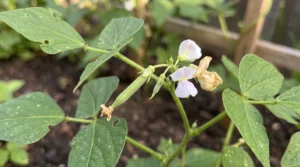
But if nearly every flower drops and no pods develop, it’s time to investigate the growing conditions.
Heat, moisture problems, and excessive nitrogen are good places to start.
If you’re already seeing healthy pods, there’s usually no need to change everything just because a few flowers have fallen.
Will the Plants Start Setting Pods Again?
Often, yes, as long as the plants stay healthy and the season is long enough.
Heat-stressed beans commonly show what growers call a split set.
Pods come in two rounds with a gap between.
The older lower pods survive, and a new flush forms when the weather cools.
Many heat-stressed vegetables resume production once temperatures ease.
Nobody can promise a date, so watch the next round of flowers.
Tiny pods at the base of fresh flowers that keep lengthening are a better sign of recovery than any calendar deadline.
What If the Plants Slowed Down After Giving Beans?
That is a different problem from never setting a pod.
Mature pods left on the plant use energy that would otherwise support new growth and production.
Check your plants every few days during the harvest. Pick beans while they’re young and tender, before the seeds inside become swollen.
Hold the stem with one hand and gently remove the pod with the other so you don’t damage the plant. Remove any pods that have become oversized or tough.
Regular picking can encourage continued production, but it can’t fix every problem. Heat, disease, and the natural aging of the plant can also slow down the harvest.
For more picking tips, read our guide to when and how to harvest vegetables.
What Should You Do Today?
If you have green beans flowering but no pods right now, work through this order:
- Watch the flowers. Are they dropping cleanly, or are tiny pods forming and shrinking?
- Review the last one to two weeks of weather, including warm nights, dry spells and strong wind.
- Check the soil several inches down. Water dry soil deeply. If it stays soggy, look at drainage.
- Look at the leaves. Dark, dense growth points to nitrogen, so think about what you have fed.
- Confirm which bean you planted.
- Check the flower clusters up close for insects.
- Fix only what you actually find.
- Watch the next flush of flowers.
Changing everything at once, with more water, more fertilizer and a spray, makes it hard to tell what helped and what made things worse.
How Can You Improve Pod Set Next Season?
Timing helps most. Try to plant so that bloom misses your hottest weeks.
The days to maturity on the seed packet usually count to the first harvest, not the first flower, so allow for that when you work backward from your hot season.
Where the climate allows, a later planting for a fall harvest can bloom in cooler weather, as long as enough frost-free time remains.
Variety matters too.
Snap bean trials show big differences between varieties under heat, so look for ones sold as heat tolerant, and check which varieties do well in your region.
Then keep the basics steady:
- mulch to hold moisture and cool the soil
- skip heavy nitrogen, and test the soil before you feed
- give beans full sun and room to breathe, since beans grown in dim light set fewer flowers and pods
- pick pods often once they start
Can Green Beans Still Produce Pods After Their Flowers Fall Off?
Yes, they often can.
If your green beans are flowering but not producing pods, start by checking recent temperatures, soil moisture, and fertilizer use.
Hot weather and water stress can interfere with pod development even when the leaves look healthy.
Don’t remove an otherwise healthy plant just because one round of flowers failed.
Correct any watering or drainage problems, avoid unnecessary fertilizer, and give the next round of flowers a chance.
If the weather improves and your plants remain healthy, you may begin seeing new pods develop.
The goal isn’t to save every flower. It’s to give your green beans the conditions they need to turn more of those flowers into a healthy harvest.