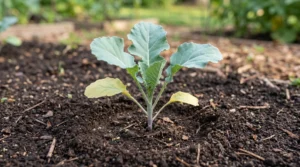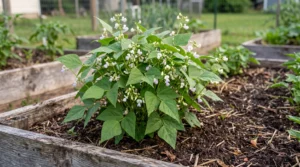
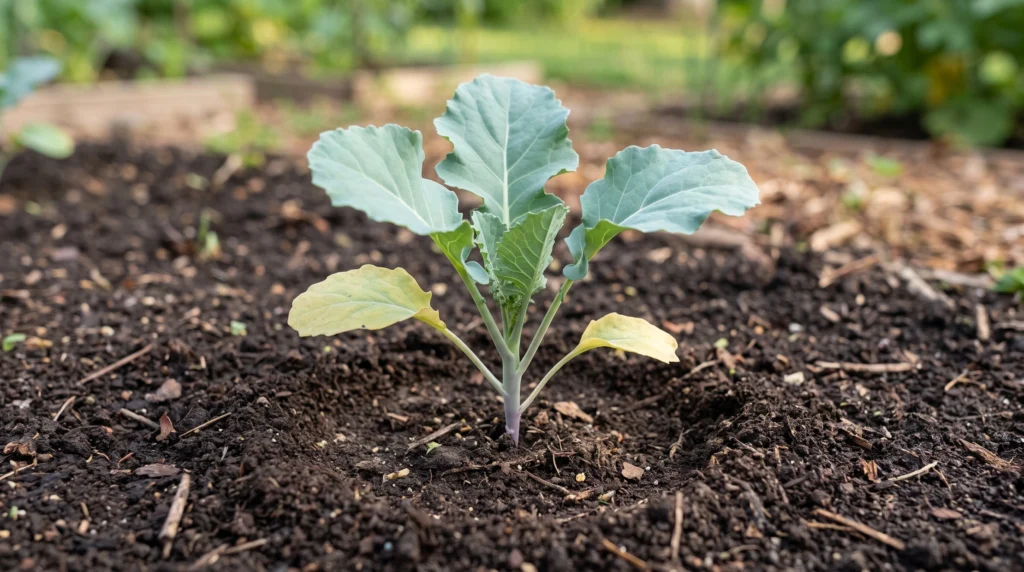
Broccoli seedlings often turn a little yellow after transplanting because their roots were disturbed and the plants are adjusting to new sun, wind, and soil moisture.
A few yellow lower leaves, with healthy new growth in the center, can be temporary.
Yellowing that spreads, soggy soil, steady wilting, or odd leaf markings point to a problem that needs a closer look.
The trick is not to guess.
Yellow leaves can come from several causes, and some fixes make the wrong problem worse.
A few quick checks will tell you where to start.
Is Yellowing After Transplanting Normal for Broccoli?
Sometimes, yes. Nursery seedlings and indoor-grown plants live a sheltered life.
When they go straight into the garden, they meet stronger light, moving air, and a different kind of soil.
Yellow lower leaves and slow growth can be signs of transplant shock.
If the stress is mild, the plant may recover as its roots establish and healthy new growth develops.
Where the yellow shows up matters most.
- Older, lower leaves turning yellow while the center stays green: This is the pattern most likely to be mild stress. The plant is giving up a few leaves while its roots catch up.
- Yellow new growth in the center: Look harder at the roots, the soil, and the weather.
- The whole plant fading, or yellow spreading to more leaves each day: This is not simple transplant adjustment, and you should work through the checks below.
Not every stressed seedling bounces back. Treat a little yellowing as a reason to watch closely, not as proof that all is well.
What Is Causing Your Broccoli Seedlings to Turn Yellow?
Transplant Shock and Disturbed Roots
Roots are how a seedling takes in water.
Lifting a plant out of its pot can tear fine root tips, and those roots need time to grow into new soil.
Until they do, the plant can’t drink as well as the leaves need it to.
The plant often responds by sacrificing older leaves. Those leaves turn pale yellow, then drop or dry out.
Rough handling makes this worse.
Pulling a seedling out by the stem, breaking up the root ball, or planting it much deeper or shallower than it grew in the pot all add stress.
A tight, circling root mass from a crowded cell tray can also be slow to spread out.
Too Much or Too Little Water
Both extremes can look alike, so check the soil before you pick up the hose.
Too much water.
Soil that stays saturated leaves little air around the roots, and roots that can’t breathe don’t work well.
The plant may yellow and wilt even though the soil is wet.
Soggy soil, heavy clay, a low spot where water pools, or a daily watering habit are the usual clues.
Wet soil that drains is fine. Soil that stays like a sponge for days is not.
Too little water.
A new transplant has a small root ball, and the soil around it can dry out while the bed a few inches away still feels damp.
Wilting, curled leaves, and dry crumbly soil near the stem point this way.
Don’t trust the surface alone.
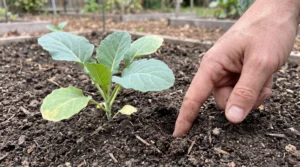
Push a finger or small trowel a few inches into the soil right beside the root ball.
If the soil around the root ball feels dry, water gently until the root zone is adequately moist.
If it is already moist, check again before adding more water.
When the soil stays saturated or water collects around the plant, investigate drainage rather than continuing to water.
No single schedule fits every garden. Sandy soil dries fast, clay holds water longer, and rain, wind, and heat change the answer from week to week.
Sudden Exposure to Sun, Wind, or Temperature Changes
Seedlings raised indoors or in a greenhouse haven’t built up a tough outer layer on their leaves.
A few days of bright sun, hard wind, or a cold snap right after planting can bleach or yellow leaves.
Environmental injury tends to show up soon after the change, often on the leaves that took the most exposure.
Pale or bleached patches facing the sun, or ragged leaves after a windy day, suggest weather.
Weather damage often appears soon after a stressful event, while some plant diseases produce distinctive spots, lesions, or patterns that continue developing over time.
These clues can help narrow the possible cause, but they are not enough to confirm a disease on their own.
Hardening off is the fix for next time.
It means introducing seedlings to outdoor conditions in stages before planting.
More on that below.
Poor Nutrient Availability
Yellow leaves can mean a plant isn’t getting enough of a nutrient.
Nitrogen is the one people think of first, because low nitrogen often shows up as paler, older leaves.
But yellow color alone doesn’t prove a deficiency.
A newly transplanted seedling may not be able to take up nutrients well even if the soil has plenty.
Damaged roots, soggy soil, or stress can all block uptake.
In that case, the problem is access, not supply.
More fertilizer won’t fix a root that isn’t working, and too much can burn tender roots.
Fertilizer makes more sense when growth has been pale and slow for a while, the soil is poor or was never improved, and the water and root checks come back normal.
A soil test is the best way to know what’s actually missing.
If you’re choosing a vegetable garden fertilizer, match it to what the soil and plants need instead of reaching for whatever is on the shelf.
Skip Epsom salts unless a soil test or clear symptoms point to low magnesium. Adding them without evidence won’t help and can upset the soil balance.
Pests, Disease, or Root Damage
Yellowing soon after transplanting often points to growing conditions or transplant stress, but pests and diseases can produce similar symptoms.
Certain patterns deserve closer attention because they may indicate a problem beyond ordinary transplant adjustment.
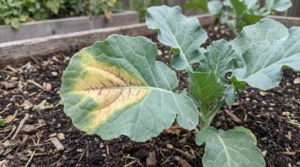
- Yellow triangles or V-shapes starting at the leaf edge. Black rot is a bacterial disease of cabbage-family crops that can cause yellow triangles along leaf margins. Darkened veins inside the yellow area add to the concern.
- Yellowing on one side of the plant, or decline that keeps getting worse despite good care.
- Stunted plants with swollen or lumpy roots. This can point to clubroot, a soil disease of the cabbage family.
- Plants that wilt and fade although the soil moisture is right. Cabbage maggots feed on roots and can weaken or kill young plants.
- Chewed leaves, tiny holes, or caterpillars. Flea beetles and cabbage worms can add damage on top of transplant stress.
Look at the undersides of leaves and the base of the stem.
If a plant looks hopeless, lift it gently and check the roots.
Healthy roots are pale and firm. Brown, mushy, swollen, or tunneled roots tell you something is wrong below ground.
Yellow color on its own never proves a disease.
If symptoms match black rot or keep spreading, a sample or photos sent to your state Extension office or plant diagnostic clinic can confirm what you’re dealing with.
How Can You Tell What’s Wrong With Your Broccoli?
Start with the leaves, then move to the soil.
This table pairs common patterns with the next thing to check. It is a guide, not a diagnosis.
| What you see | Likely cause | What to check | Next step |
| A few yellow lower leaves, green center, soil feels right | Mild transplant stress | New growth in the center | Watch and wait; keep soil evenly moist |
| Yellow and wilting, soil soggy | Too much water or poor drainage | Does water drain away? | Stop watering; let the soil dry; improve drainage |
| Wilting, curled leaves, dry soil by the root ball | Too little water | Soil a few inches down beside the plant | Water slowly and deeply |
| Pale or bleached patches after sun, wind, or cold | Weather injury | Recent weather; whether plants were hardened off | Shade or cover for a few days |
| Slow, pale, older leaves; water and roots look fine | Low nutrients | Soil test; recent feeding | Feed lightly based on need |
| Yellow V-shapes from the leaf edge, dark veins | Possible disease such as black rot | Spread to other plants | Avoid handling wet foliage and seek a local diagnosis before deciding whether to remove the plant |
| Stunted plant, swollen or damaged roots, fading despite good care | Root pests or soil disease | Lift one plant and check roots | Seek diagnosis; avoid replanting in the same spot |
What Should You Do When Broccoli Seedlings Turn Yellow?
Work from the simplest check to the most involved. Change one thing at a time, so you can tell what helped.
- Look at where the yellow is. Lower leaves only is a better sign than yellow new growth or a fading plant.
- Check whether it’s spreading. Note how many leaves are affected, and look again the next day.
- Feel the soil beside the root ball. Water only if it’s dry. Hold off if it’s soggy.
- Check drainage. If water stands around the plants, loosen the surface, pull mulch back from the stems, and consider adjusting the bed. Raised rows can help in heavy soil.
- Think about the weather. If harsh sun, wind, or a cold night hit right after planting, shade cloth or a lightweight row cover can take the edge off. Anchor it well, because a loose cover that flaps in the wind can do more harm than good.
- Inspect for insects and odd markings. Look at both sides of the leaves and at the base of the stem.
- Look for fresh growth. New green leaves in the center are the best sign the plant is settling in.
- Act on what you found. Water, drain, shelter, or feed, depending on the cause.
Some mistakes make things worse.
Don’t water on a schedule without checking the soil. Don’t pile on fertilizer to “green up” a stressed plant.
Don’t keep changing your routine every day, since seedlings need a steady environment to rebuild their roots.
Will Yellow Broccoli Seedlings Recover?
Often they do, when the cause is mild stress and it’s fixed early.
How well depends on the cause and how much root damage the plant took.
Judge recovery by the new leaves, not the old ones. A leaf that has turned yellow usually won’t turn green again, even on a plant that is bouncing back.
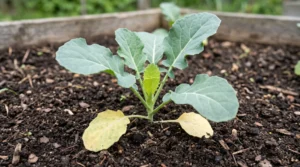
If the center keeps pushing out healthy green growth, the plant is likely establishing.
If you want to tidy up, pinch off leaves that are fully yellow and loose.
In mild cases, signs of improvement can show within a week or two, but there is no fixed timeline.
Hot, cold, or windy weather can slow things down.
Watch for these signs that recovery isn’t happening:
- Yellowing keeps spreading upward or inward.
- The center stops growing or turns pale.
- The plant stays wilted even when the soil moisture is right.
- The stem is soft or discolored at the soil line.
If a plant keeps declining after you’ve fixed the obvious issues, it may not be worth saving.
Replace it, and don’t plant another cabbage-family crop in the same spot until you know what happened.
How Can You Prevent Yellow Leaves When Transplanting Broccoli?
Good transplanting practices can reduce the risk of stress-related yellowing, although they cannot prevent every problem.
Harden off first. About a week before transplanting, begin placing seedlings outdoors in a sheltered spot for short periods.
Gradually increase their exposure to sunlight and wind so they can adjust to outdoor conditions.
Keep the soil adequately moist during this period.
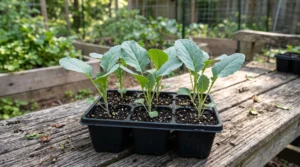
Handle roots gently. Hold the seedling by its root ball or a leaf, never the stem. Plant it at the same depth it grew in the pot.
Water it in. Soak the hole after planting so the soil settles around the roots. Then keep the root zone evenly moist, not soggy.
Pick the right day.
Planting on a cloudy day or in the evening spares seedlings from a blast of midday sun.
Prepare the bed. Loose, well-drained soil with some compost helps roots spread.
Avoid planting into compacted or waterlogged ground.
Give early protection. A row cover can shield young plants from wind and insects in their first weeks.
Choose a light material in warm weather.
When Should You Worry About Yellow Broccoli Leaves?
Worry when the pattern changes from “adjusting” to “declining.”
That means yellowing that keeps moving to new leaves, a plant that fades despite good moisture and shelter, or leaves with V-shaped yellow areas and dark veins.
Swollen, mushy, or tunneled roots are serious too.
At that point, stop adjusting your care and get a proper diagnosis.
Your state’s Extension service or plant diagnostic clinic can look at photos or a sample, and they know what’s common in your region.
The best first move is simple.
Check where the yellow is, feel the soil beside the roots, and look for fresh center growth before you change anything.
Most mild cases need steady moisture and a little patience, not a rescue plan.