Baby cucumbers shriveling before they grow often points to poor pollination.
Heat, water problems, and other plant stress can make young fruit drop too. So before you blame the bees, take a minute to look at the whole plant.
If your tiny cucumbers keep turning yellow and shrinking, the plant is probably dropping fruit it can’t finish. That’s frustrating to watch. It’s also often fixable, and the next flower can still set fruit.
Your 60-Second Check
- Did the female flower open normally, or did it shrivel before opening?
- Were bees active while it bloomed, or was it rainy, cool, or very hot?
- Is your cucumber a standard, all-female, or seedless type?
- Is the soil bone dry or soggy?
Is That Really a Baby Cucumber?
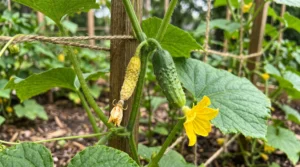
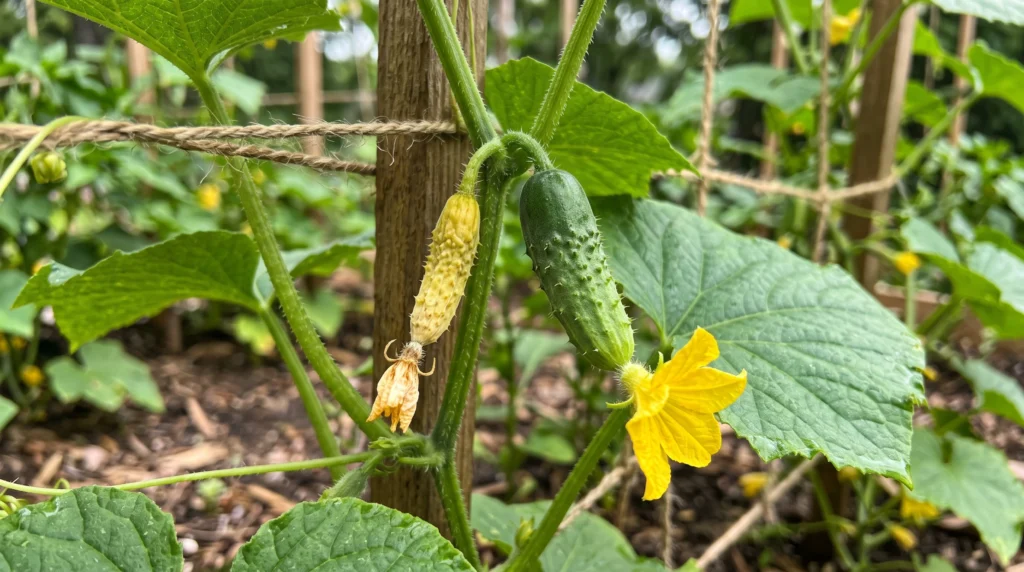
The tiny cucumber behind a female flower is the flower’s ovary, the part that can grow into the fruit.
It’s there before pollination. So seeing one doesn’t mean a cucumber has set. Think of it as a fruit waiting for pollen.
Female flowers have that small swelling at the base.
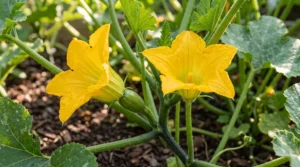
Male flowers sit on a thin stem and have no swelling.
The first flowers on a young vine are usually male, and they drop off on their own. The females show up later.
What Kind of Cucumber Are You Growing?
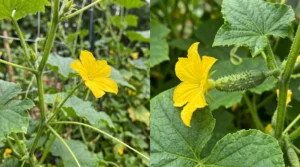
Your variety matters here, because not every cucumber needs pollen. Check the seed packet or plant tag.
Standard types grow male and female flowers on the same vine. They need pollination to set fruit.
Seedless types, called parthenocarpic, can set fruit with no pollination.
That doesn’t make them safe from shriveling. Heat, dry soil, and other plant stress can still make young fruit drop. If seedless cucumbers grow near standard ones, bees may still carry pollen to their flowers.
In some varieties, this can lead to seeds or misshapen fruit.
All-female types, called gynoecious, make mostly female flowers. If the variety is not parthenocarpic, it needs a compatible cucumber nearby that produces pollen. Some seed packets include a few seeds of a pollen-producing variety.
What You See and What It May Mean
Use this as a starting point. No single clue proves the cause, and problems can overlap.
| What you see | What it may mean | What to check |
|---|---|---|
| Flower opened, baby cucumber stays small, then yellows and shrivels | Poor or incomplete pollination | Bees, weather, variety |
| Flowers and tiny fruit dropping in very hot weather | Heat, often with poor pollination | Recent day and night temperatures |
| Female flowers shrivel before they open | Heat or other plant stress | Weather, overall plant health |
| Soil bone dry, plant looks stressed | Water stress | Moisture around the roots |
| Soil stays soggy, plant looks stressed | Root or drainage stress | Drainage, root health |
| Very leafy vines, few fruit | Too much nitrogen may contribute | Feeding history, pollination |
| Several young fruits form and some stop developing | Plant stress or heavy fruit load may contribute | Heat, water, overall vigor |
| Fruit is soft, water-soaked or fuzzy | Rot or disease | Fruit surface, humidity |
| Seedless type | Pollination may not be the issue | Heat, water, fruit load |
| Twisted or mottled leaves, or whole vines wilting | Disease or a plant-wide problem | Whole-plant symptoms |
Why Is Poor Pollination a Common Cause?
For most cucumbers, bees carry pollen from male flowers to female ones.
When enough pollen lands on the female flower, the ovary starts to swell. When it doesn’t, the plant gives up on that fruit.
The timing is tight. A cucumber bloom is typically open for just one day, and flowers that don’t get pollinated drop off.
The baby fruit may fall with the bloom or several days later. That’s why a tiny cucumber can look fine for a few days and then yellow and shrivel.
Plenty can keep bees away. Rainy, cool weather does it.
So do pesticide sprays. A pot on a balcony can be hard for bees to find, and a greenhouse may have few bees or none at all.
Signs Pollination May Be the Problem
- The female flower opened normally.
- The tiny cucumber stopped growing soon after.
- It turned yellow, then shriveled.
- The rest of the plant looks healthy.
- Few bees were around, or the weather was cool, rainy, or windy.
These clues point that way, but they don’t prove it.
Why Seeing Bees Doesn’t Mean Enough Pollination
Seeing a few bees nearby doesn’t mean the flower received enough pollen.
For cucumber varieties that require pollination, successful fruit set depends on enough viable pollen reaching the female flower, and repeated pollinator visits can improve pollen transfer.
So a garden can look busy with bees and still have weak pollination.
Can Heat Make Baby Cucumbers Shrivel?
Yes, and heat can work together with poor pollination.
Daytime highs in the 90s°F (about 32°C and up), or warm nights in the 70s°F (about 21°C and up), can make flowers and small fruit drop.
Bees also visit less in very hot or rainy weather.
Heat can also lower pollen quality and damage flower buds before they open. That is one reason some flowers shrivel without ever opening.
A short hot spell may not cost you much. A long one can.
Mulch helps keep the roots cooler and the soil moist. Then give it time. Once the weather settles, plants often start setting fruit again.
Can Water or Fertilizer Cause It?
Too much or too little water can make cucumbers drop flowers and fruit. Dry soil makes it hard for the plant to feed all its young fruit.
Soggy soil starves the roots of air and stresses the whole plant.
Too much nitrogen can play a part too. Heavy feeding can give you big, leafy vines and very little fruit.
Still, lush leaves alone don’t prove it. Treat them as a clue, not a verdict. And don’t add fertilizer just because your baby cucumbers are shriveling.
More food rarely fixes it.
Early in the season, a plant may form several young fruits at once.
If that happens along with heat, dry soil or weak growth, some may stop developing. In a greenhouse, low light can add more stress.
What helps:
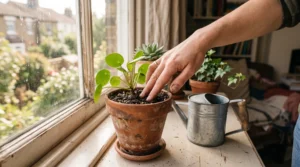
- Keep soil moisture steady, without swings from bone dry to soaking.
- Pick mature cucumbers on time. Leaving big ones on the vine slows new fruit.
No single watering schedule fits every garden. Soil, weather, and pot size all change what the plant needs.
How Do You Hand-Pollinate Cucumbers?
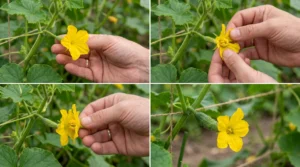
If bees are scarce, you can do their job.
- In the morning, while flowers are open, find a fresh male flower. It has a thin stem and no swelling.
- Pick it and peel back the petals to show the pollen. Or use a small soft brush or cotton swab to pick up pollen.
- Touch the pollen to the center of a freshly opened female flower, the one with the swelling at its base.
- Repeat on other fresh female flowers.
Use freshly opened male and female flowers, preferably in the morning while the pollen is fresh.
Each bloom lasts only about a day, so check your plants every morning.
Skip routine hand pollination for seedless types unless the plant label says otherwise.
Why Did My Hand-Pollinated Cucumber Still Shrivel?
This happens to a lot of gardeners. Hand pollination helps, but it doesn’t guarantee fruit. Common reasons:
- Not enough pollen reached the flower.
- Heat hurt the pollen.
- The female flower was no longer fresh enough to pollinate well.
- Heat or water stress hit the plant after pollination.
- Too much nitrogen or a heavy fruit load may have added to the plant’s stress.
- It’s a seedless type, so pollination wasn’t the limit.
If you’ve pollinated carefully and the fruit still drops, look at the weather and the soil next.
Could It Be Rot Instead?
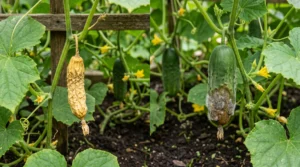
Dry, shrinking fruit usually points to the plant dropping it.
Soft, water-soaked, or fuzzy fruit deserves a closer look for rot or disease. A failed fruit can also start to decay after it drops, so mold doesn’t always mean disease caused the problem.
Remove soft or moldy fruit so it doesn’t sit on the vine.
What Should You Do Now?
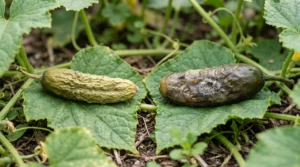
A fruit that has clearly aborted won’t start growing again.
Pull it off if you like, then put your effort into the next flower.
- Find out whether your variety needs pollination.
- Hand-pollinate standard types if bees are scarce.
- Plant flowers nearby to bring bees in.
- Skip insecticide sprays while the plant is blooming.
- Take row covers off once flowering starts if your variety needs pollination. Seedless (parthenocarpic) types that set fruit without pollination are an exception.
- Keep moisture even and add mulch.
- Hold off on high-nitrogen feeding.
The goal isn’t to rescue a fruit that has already quit. It’s to help the next one set.
When Is It More Than a Pollination Problem?
Look closer if you see any of these:
- Female flowers keep shriveling before they open.
- New leaves are badly twisted or have strong mottled patterns.
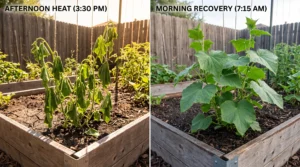
- Whole vines are wilting. See why cucumber leaves wilt during the day and recover at night.
- The roots stay waterlogged.
- Stems have lesions.
- Most young fruit keeps dropping even in mild weather with plenty of bees.
Fruit alone rarely tells the whole story. Check the leaves, stems, and roots too, and read about common vegetable garden diseases if the whole plant looks off.
FAQs
Will my cucumber plant recover?
Often, yes. Once the heat breaks or the soil stays evenly moist, new flowers may set fruit normally. If poor pollination was the problem, hand-pollinating the next fresh female flowers may improve the chance of successful fruit set.
Should I add fertilizer?
Not at first. Extra nitrogen can mean more leaves and fewer fruit. Check pollination, water, and heat before you feed.
Why do I only see male flowers?
Early flowers are mostly male, and they drop on their own. Females come later. Hot weather can also push a vine toward more male flowers, so female flowers may be scarce during a heat wave.
What to Remember
Poor pollination is a leading reason baby cucumbers shrivel, but it isn’t the only one. Check your variety and the flower first. Then look at heat, water, and feeding. Don’t try to save a fruit that has already quit. Focus on the next female flower.