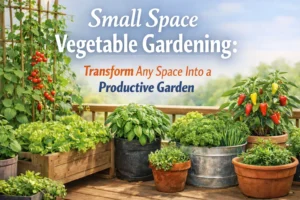
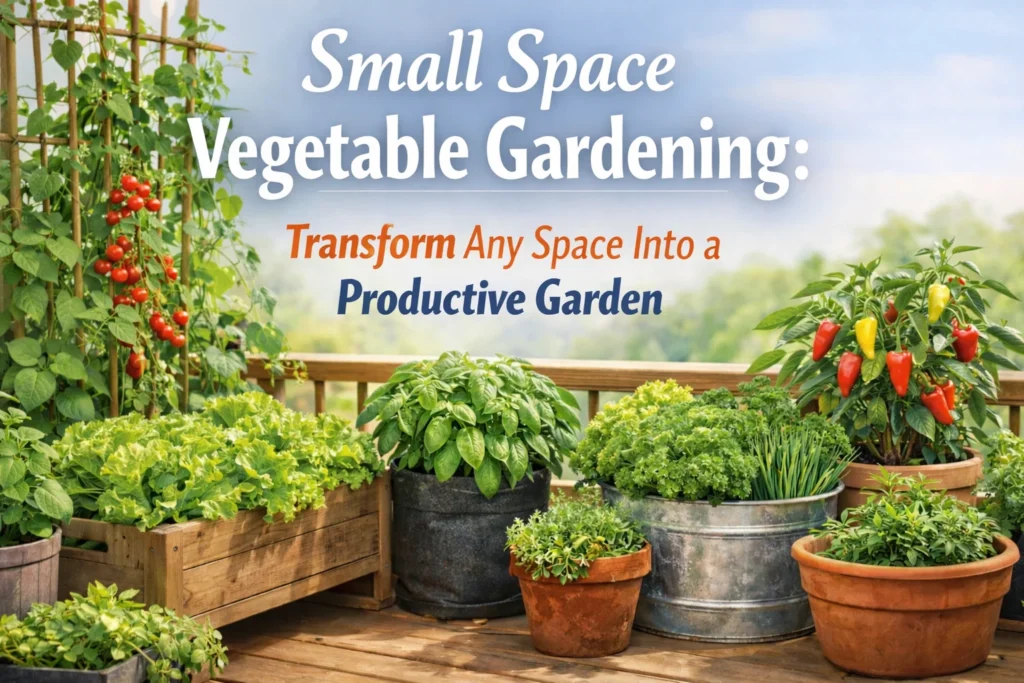
Growing your own vegetables doesn’t require acres of land or a sprawling backyard.
In fact, some of the most productive gardens I’ve seen have been tucked into tiny balconies, squeezed onto fire escapes, and cleverly arranged in compact urban spaces.
Whether you’re living in a studio apartment with just a windowsill or have a small patio to work with, small space vegetable gardening can provide you with fresh, nutritious produce right at your fingertips.
The beauty of small space gardening lies in its accessibility and efficiency.
When you work with limited space, every square inch counts, forcing you to be creative and intentional with your plant choices and growing methods.
This constraint often leads to more productive gardens per square foot than traditional large-scale plots.
Key Highlights
• Vertical growing maximizes limited space by utilizing walls, trellises, and hanging systems
• Container gardening offers flexibility and control over soil quality and plant placement
• Choosing the right vegetables is crucial – focus on compact, high-yield varieties that thrive in small spaces
• Succession planting extends your harvest season and maximizes productivity in minimal space
• Creative solutions like window boxes, balcony gardens, and indoor growing can transform any space into a productive garden
Understanding Small Space Vegetable Gardening
Small space vegetable gardening is the practice of growing edible plants in limited areas using space-efficient techniques and compact varieties.
This approach has gained tremendous popularity as more people move to urban environments and seek sustainable ways to access fresh produce.
The key to successful small space gardening lies in maximizing vertical space, choosing appropriate plant varieties, and creating optimal growing conditions within your constraints.
Unlike traditional gardening, where plants can spread naturally, small space gardening requires strategic planning and often involves container growing, vertical systems, and intensive planting methods.
Benefits of Small Space Vegetable Gardening
Cost Savings
Growing your own vegetables, even in small quantities, can significantly reduce your grocery bills.
A single tomato plant can yield 10-15 pounds of fruit throughout the season, easily paying for itself many times over.
Fresher, Healthier Produce
When you harvest vegetables from your own garden, you’re getting them at peak freshness and nutritional value.
There’s no long transportation time or storage period that can diminish quality.
Complete Control Over Growing Methods
You decide what goes into your soil, whether to use organic methods, and how to manage pests.
This control is especially valuable for those with dietary restrictions or preferences for organic produce.
Therapeutic Benefits
Gardening provides stress relief, physical activity, and a sense of accomplishment.
Even spending 15-20 minutes tending to plants can improve mental well-being.
Educational Opportunities
Small space gardens are perfect for teaching children about where food comes from and developing responsibility through plant care.
Assessing Your Space and Resources
Before diving into plant selection and garden design, it’s crucial to thoroughly evaluate your available space and resources.
This assessment will guide every decision you make moving forward.
Light Assessment
Full Sun (6+ hours of direct sunlight)
Ideal for most vegetables, especially fruiting plants like tomatoes, peppers, and squash. South-facing spaces typically receive the most light.
Partial Sun (4-6 hours of direct sunlight)
Suitable for many vegetables with some adjustments. Focus on leafy greens, herbs, and root vegetables that can tolerate less intense light.
Partial Shade (2-4 hours of direct sunlight)
Limited but not impossible for vegetable growing.
Concentrate on shade-tolerant crops like lettuce, spinach, and certain herbs.
Full Shade (Less than 2 hours of direct sunlight)
Challenging for most vegetables. Consider focusing on microgreens, sprouts, or relocating to a brighter area.
Space Evaluation
Measure your available area carefully and note any restrictions such as:
- Weight limitations (important for balconies and rooftops)
- Access to water sources
- Protection from wind and weather
- Proximity to neighbors
- Building regulations or lease restrictions
Climate Considerations
Understanding your local climate and microclimate is essential for success.
Urban environments often create unique conditions:
- Heat islands can make cities warmer than surrounding areas
- Wind tunnels between buildings can stress plants
- Reflected light from buildings can increase available light
- Protected areas may extend growing seasons
Container Gardening Fundamentals
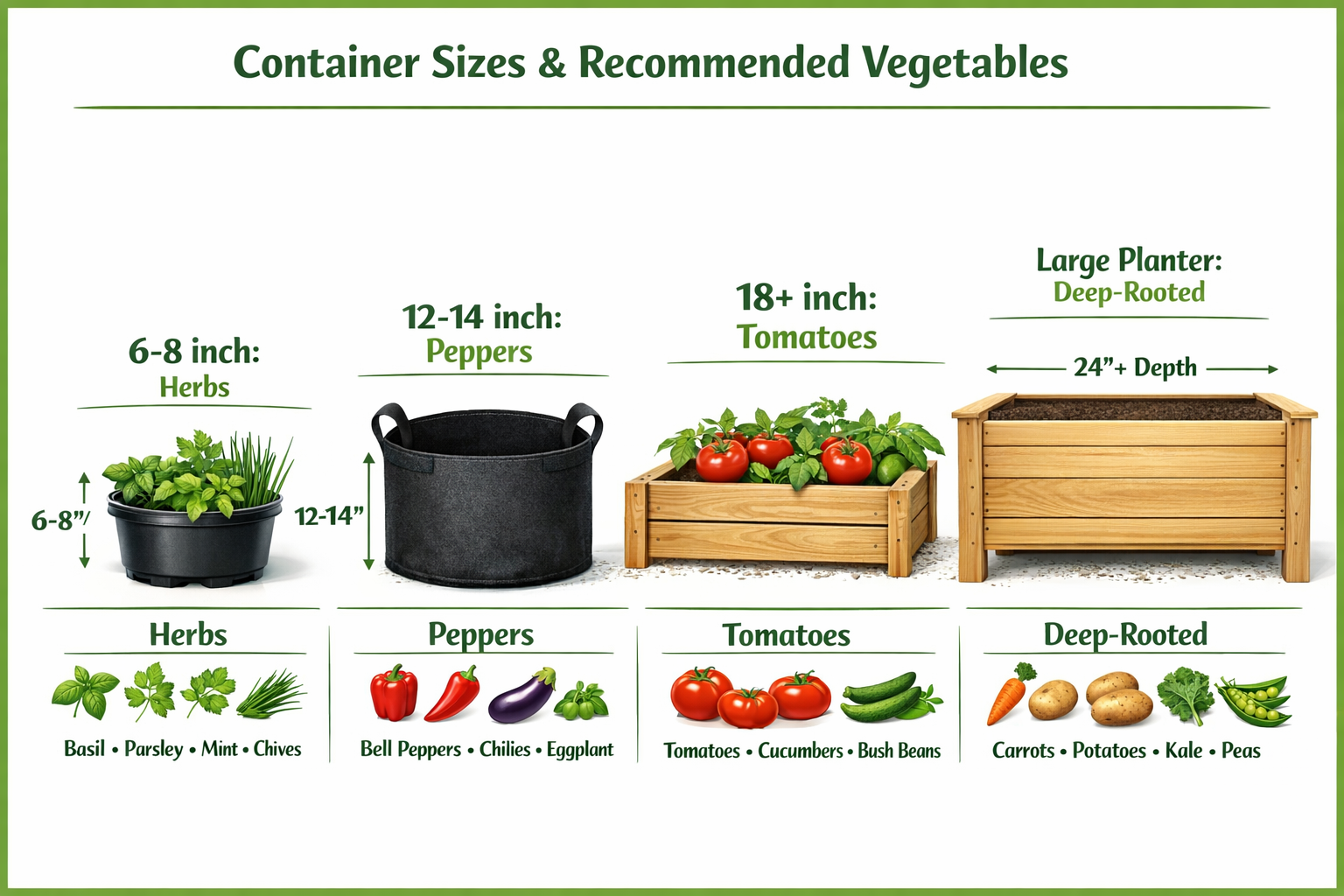
Container gardening forms the backbone of most small space vegetable gardens.
The right containers provide mobility, drainage control, and the ability to optimize growing conditions for different plants.
Choosing the Right Containers
Size Requirements
Different vegetables have varying root space needs:
| Vegetable Type | Minimum Container Size |
|---|---|
| Herbs (basil, parsley) | 6-8 inch diameter |
| Lettuce, spinach | 8-10 inch diameter |
| Peppers, compact tomatoes | 12-14 inch diameter |
| Full-size tomatoes | 18-20 inch diameter |
| Root vegetables | 12+ inches deep |
Material Considerations
Plastic Containers
- Lightweight and affordable
- Retain moisture well
- May not be as aesthetically pleasing
- Can become brittle in extreme temperatures
Ceramic and Terra Cotta Pots
- Attractive and stable
- Provide good insulation for roots
- Heavier and more expensive
- Terra cotta is porous and may dry out quickly
Fabric Grow Bags
- Excellent drainage and aeration
- Lightweight when empty
- Easy to store when not in use
- May need more frequent watering
Wooden Containers
- Natural appearance
- Good insulation properties
- Can be custom-built to fit spaces
- May rot over time without proper treatment
Drainage and Soil Management
Proper drainage is critical for container success.
Every container must have drainage holes to prevent waterlogged soil, which can kill plants quickly.
I recommend adding a layer of gravel or broken pottery pieces at the bottom of containers to improve drainage.
For soil, never use garden soil in containers as it’s too heavy and doesn’t drain well.
Instead, use a high-quality potting mix designed for containers. Learn more about soil preparation to ensure your plants have the best foundation for growth.
Vertical Growing Techniques
When horizontal space is limited, the solution is to grow up!
Vertical growing techniques can multiply your growing space several times over while creating an attractive green wall effect.
Trellises and Support Systems
A-Frame Trellises
Perfect for small spaces, these structures provide growing space on both sides. Ideal for:
- Peas and beans
- Cucumber varieties
- Small squash plants
- Indeterminate tomatoes
Wall-Mounted Systems
Utilize existing walls or fences by installing:
- Wire mesh panels
- Wooden lattice structures
- Modular pocket systems
- Hanging planters
Tower Gardens
Vertical tower systems maximize space efficiency:
- Stackable planter systems
- PVC pipe towers with holes
- Wooden tower structures
- Commercial vertical growing systems
Hanging Gardens
Hanging Baskets
Excellent for trailing varieties:
- Cherry tomatoes
- Trailing herbs like oregano
- Strawberry plants
- Cascading flowers for pollinator attraction
Upside-Down Planters
Gravity-fed systems work well for:
- Tomatoes (especially determinate varieties)
- Peppers
- Small eggplants
Living Walls
Create a complete vertical garden using:
- Modular pocket systems
- Felt pocket organizers
- Repurposed pallets
- Custom-built frame systems
Tip: When planning vertical systems, consider the weight load and ensure your support structure can handle the combined weight of containers, soil, water, and mature plants.
Best Vegetables for Small Spaces
Selecting the right vegetables is crucial for small space success.
Focus on varieties that provide high yields in minimal space and consider your family’s eating preferences.
High-Yield Compact Varieties
Leafy Greens
These are the champions of small space gardening:
- Lettuce: ‘Tom Thumb’, ‘Little Gem’, ‘Salad Bowl’
- Spinach: ‘Space’, ‘Baby’s Leaf’, ‘Bloomsdale’
- Kale: ‘Dwarf Blue Curled’, ‘Red Russian’
- Swiss Chard: ‘Bright Lights’, ‘Fordhook Giant’
Herbs
Essential for any kitchen garden:
- Basil: ‘Spicy Globe’, ‘Greek Columnar’
- Parsley: Both flat-leaf and curly varieties
- Cilantro: ‘Slow Bolt’, ‘Leisure’
- Chives: Perennial and space-efficient
Compact Fruiting Plants
- Cherry Tomatoes: ‘Tiny Tim’, ‘Red Robin’, ‘Tumbling Tom’
- Peppers: ‘Mini Bell’, ‘Lunch Box’, ‘Shishito’
- Dwarf Eggplant: ‘Fairy Tale’, ‘Little Prince’
Root Vegetables for Containers
Root vegetables can thrive in containers with adequate depth:
- Radishes: Ready in 30 days, perfect for succession planting
- Carrots: Choose shorter varieties like ‘Paris Market’ or ‘Thumbelina’
- Beets: ‘Detroit Dark Red’, ‘Chioggia’ for colorful harvests
- Turnips: ‘Tokyo Cross’, ‘Purple Top White Globe’
For those just starting their gardening journey, check out our guide on the best vegetables to grow for beginners to make informed choices about what to plant first.
Vining Plants for Vertical Growing
Make the most of vertical space with these climbing varieties:
- Pole Beans: ‘Kentucky Blue’, ‘Scarlet Runner’
- Peas: ‘Sugar Snap’, ‘Snow Peas’, ‘Shelling Peas’
- Cucumbers: ‘Bush Pickle’, ‘Spacemaster’, ‘Salad Bush’
- Small Squash: ‘Eight Ball’, ‘Pattypan’, ‘Delicata’
Creative Small Space Solutions
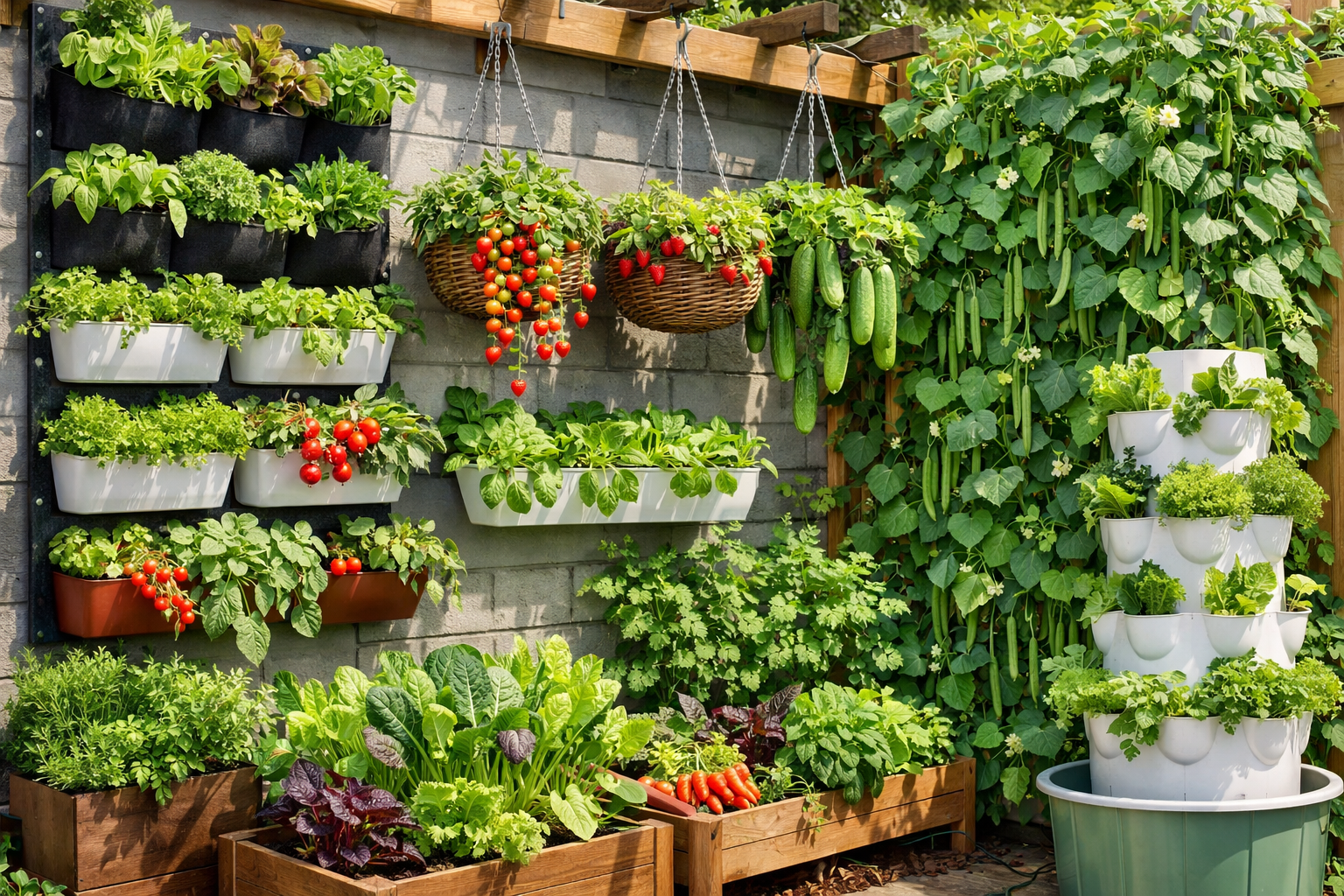
Innovation is key to maximizing small spaces.
Here are proven creative solutions that can transform even the tiniest areas into productive gardens.
Window Box Gardens
Window boxes aren’t just for flowers! They’re perfect for:
- Herb gardens outside kitchen windows
- Lettuce and greens for easy harvesting
- Strawberry plants for sweet treats
- Microgreens for year-round fresh additions
Installation Tips:
- Ensure secure mounting to handle weight when watered
- Choose boxes with adequate drainage
- Consider seasonal rotation for year-round production
Balcony and Patio Gardens
Transform outdoor living spaces into productive gardens:
Railing Systems
- Install railing planters for herbs and small vegetables
- Use adjustable brackets for seasonal changes
- Consider wind protection in exposed areas
Corner Utilization
- Stack containers in pyramid formations
- Use corner shelving units for multiple levels
- Install corner trellises for vertical growing
Mobile Container Gardens
- Use wheeled planters for sun tracking
- Create seasonal arrangements
- Move plants indoors during extreme weather
Indoor Growing Options
Don’t let lack of outdoor space stop you! Indoor growing offers year-round possibilities:
Windowsill Gardens
- Perfect for herbs and microgreens
- Use south-facing windows when possible
- Rotate containers regularly for even growth
Grow Light Systems
- LED grow lights make any space suitable for growing
- Timer systems automate lighting schedules
- Perfect for basement or interior room growing
Hydroponic Systems
- Soilless growing in nutrient solutions
- Faster growth and higher yields
- Excellent for leafy greens and herbs
For those interested in low-maintenance approaches, explore our no-dig gardening methods that work well in small spaces.
Layout and Design Strategies
Effective layout design maximizes both space and productivity while creating an attractive and functional garden.
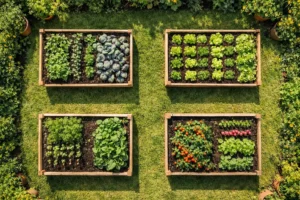
Square Foot Gardening Method
This intensive planting method divides growing space into one-foot squares, with each square planted according to the plant’s space requirements:
- 1 plant per square: Large plants like tomatoes, peppers, eggplant
- 4 plants per square: Medium plants like lettuce, chard, basil
- 9 plants per square: Small plants like spinach, onions
- 16 plants per square: Tiny plants like carrots, radishes
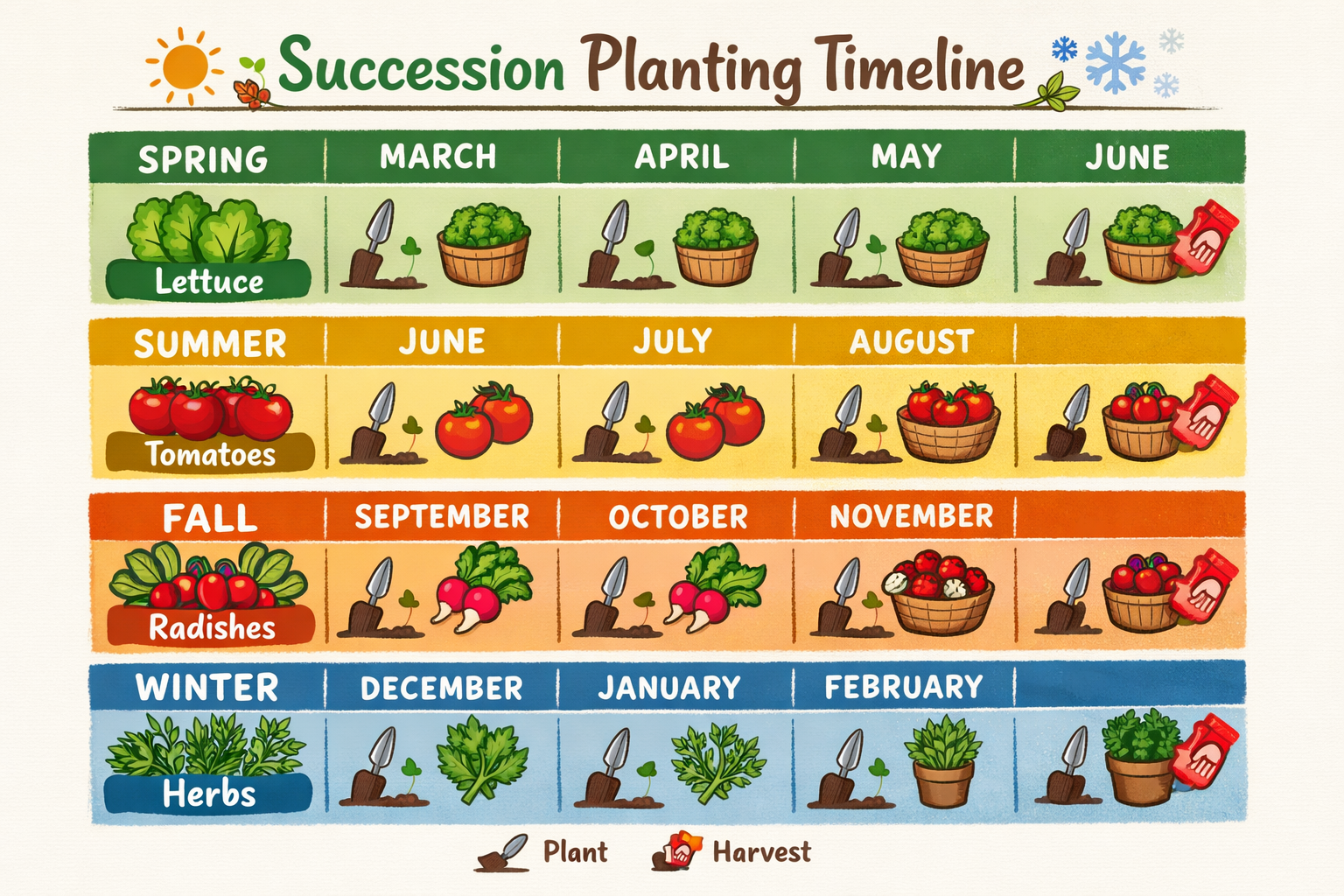
Succession Planting
Maximize harvest by planting crops in stages:
- Every 2 weeks: Plant new lettuce, radishes, cilantro
- Monthly: Start new herb plantings
- Seasonal: Replace finished crops with new varieties
This approach ensures continuous harvests rather than overwhelming abundance followed by nothing.
Companion Planting in Small Spaces
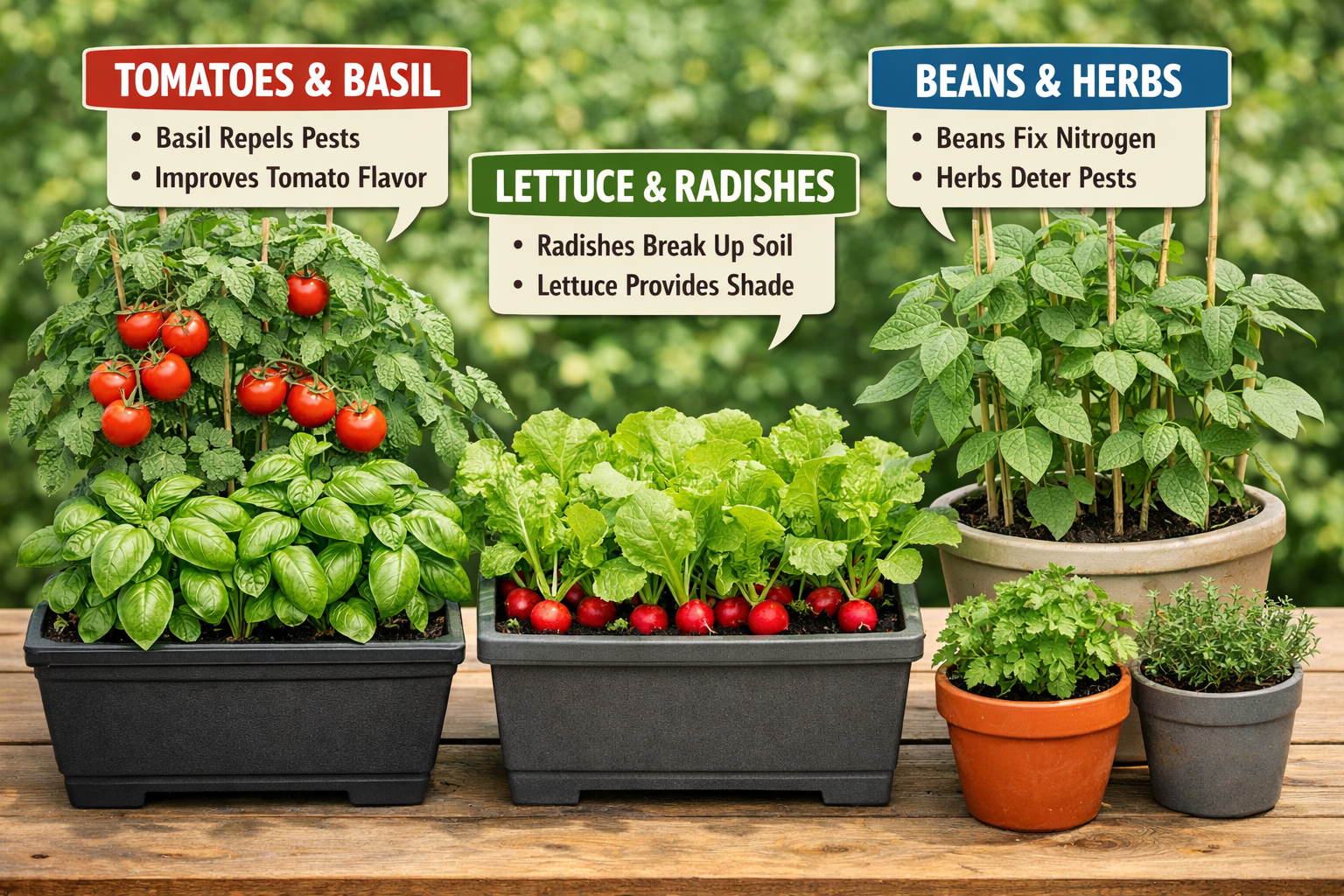
Strategic plant partnerships can increase yields and improve plant health:
Classic Combinations:
- Tomatoes + Basil: Basil may improve tomato flavor and repel pests
- Lettuce + Radishes: Radishes break up soil for lettuce roots
- Beans + Herbs: Beans fix nitrogen that herbs can utilize
- Carrots + Chives: Chives may help deter carrot flies
For detailed layout inspiration, visit our vegetable garden layout ideas for small spaces to see practical examples and design templates.
Seasonal Planning
Plan your garden layout for year-round productivity:
Spring: Cool-season crops like peas, lettuce, radishes Summer: Heat-loving plants like tomatoes, peppers, basil Fall: Second round of cool-season crops, winter prep Winter: Indoor growing, planning for next year
Soil and Fertilization for Small Spaces
Container growing requires special attention to soil quality and nutrition since plants can’t extend their roots to find nutrients.
Container Soil Mixes
Basic Container Mix Recipe:
- 1 part high-quality compost
- 1 part peat moss or coconut coir
- 1 part perlite or vermiculite
- Slow-release organic fertilizer
Premium Mix Additions:
- Worm castings for gentle, long-term nutrition
- Mycorrhizal fungi to improve root health
- Kelp meal for trace minerals
Fertilization Strategies
Slow-Release Fertilizers
Mix into soil at planting time for season-long nutrition.
Look for organic options with NPK ratios appropriate for vegetables (typically 10-10-10 or similar balanced formulations).
Liquid Fertilizers
Apply every 2-3 weeks during growing season:
- Fish emulsion for gentle, organic nutrition
- Seaweed extracts for trace minerals
- Compost tea for beneficial microorganisms
Organic Matter Additions
- Compost: Add fresh compost monthly
- Worm castings: Top-dress containers quarterly
- Mulch: Use organic mulch to retain moisture and add nutrients
pH Management
Most vegetables prefer slightly acidic to neutral soil (pH 6.0-7.0).
Test container soil annually and adjust as needed:
- Lower pH: Add sulfur or organic matter
- Raise pH: Add lime or wood ash (sparingly)
Watering and Irrigation Systems
Proper watering is critical in container gardens since plants can’t access groundwater and containers dry out faster than ground soil.
Manual Watering Techniques
Deep, Infrequent Watering
Water thoroughly until water drains from container holes, then allow soil to dry slightly before next watering. This encourages deep root growth.
Morning Watering
Water early in the day to reduce evaporation and allow plants to absorb moisture before heat stress.
Mulching
Apply 2-3 inches of organic mulch to container surfaces to retain moisture and regulate soil temperature.
Automated Irrigation Solutions
Drip Irrigation Systems
- Install drip emitters in each container
- Connect to timer systems for automated watering
- Adjust flow rates for different plant needs
Self-Watering Containers
- Built-in water reservoirs provide consistent moisture
- Reduce watering frequency
- Excellent for vacation care
Ollas (Clay Pot Irrigation)
- Bury unglazed clay pots in containers
- Fill pots with water for slow, deep watering
- Traditional method that’s very effective
Water Conservation Tips
- Collect rainwater in containers for garden use
- Reuse greywater from washing vegetables
- Group plants by water needs for efficient irrigation
- Use moisture meters to avoid overwatering
Pest Management in Small Spaces
Small space gardens face unique pest challenges but also offer advantages for pest control through easier monitoring and targeted treatments.
Common Small Space Pests
Aphids
- Small, soft-bodied insects that cluster on new growth
- Control: Spray with soapy water, introduce ladybugs
- Prevention: Avoid over-fertilizing with nitrogen
Spider Mites
- Tiny pests that cause stippled, yellowing leaves
- Control: Increase humidity, predatory mites
- Prevention: Avoid dusty conditions, maintain air circulation
Whiteflies
- Small white flying insects on leaf undersides
- Control: Yellow sticky traps, beneficial insects
- Prevention: Quarantine new plants, inspect regularly
Organic Pest Control Methods
Physical Barriers
- Row covers for flying pests
- Copper tape around containers for slugs
- Companion planting with pest-repelling herbs
Beneficial Insects
- Release ladybugs for aphid control
- Attract native beneficial insects with flowers
- Provide habitat with diverse plantings
Organic Sprays
- Neem oil for various pests
- Insecticidal soap for soft-bodied insects
- Diatomaceous earth for crawling pests
Cultural Controls
- Regular inspection and early intervention
- Proper plant spacing for air circulation
- Sanitation to remove pest breeding sites
For gardeners who prefer low-maintenance approaches to pest management, our guide to low-maintenance plants includes naturally pest-resistant varieties.
Seasonal Considerations and Year-Round Growing
Small space gardens can be productive year-round with proper planning and seasonal adjustments.
Spring Setup (March-May)
Early Spring Tasks:
- Start seeds indoors 6-8 weeks before last frost
- Prepare containers and soil mixes
- Plan garden layout and succession planting schedule
Cool-Season Plantings:
- Peas, lettuce, spinach, radishes
- Herbs like cilantro, parsley, chives
- Onion sets and garlic cloves
Summer Management (June-August)
Heat-Season Focus:
- Transition to heat-loving crops
- Increase watering frequency
- Provide shade during extreme heat
Summer Crops:
- Tomatoes, peppers, eggplant
- Basil, oregano, thyme
- Summer squash and cucumbers
Fall Harvesting (September-November)
Second Season Planting:
- Return to cool-season crops
- Extend season with row covers
- Plan for winter storage
Fall Crops:
- Second planting of lettuce and greens
- Root vegetables for winter storage
- Cold-hardy herbs
Winter Growing (December-February)
Indoor Transition:
- Move tender plants indoors
- Set up grow light systems
- Focus on microgreens and sprouts
Cold-Hardy Options:
- Kale and Brussels sprouts in protected areas
- Winter herbs like rosemary and sage
- Planning and seed ordering for next year
Harvesting and Succession Planting
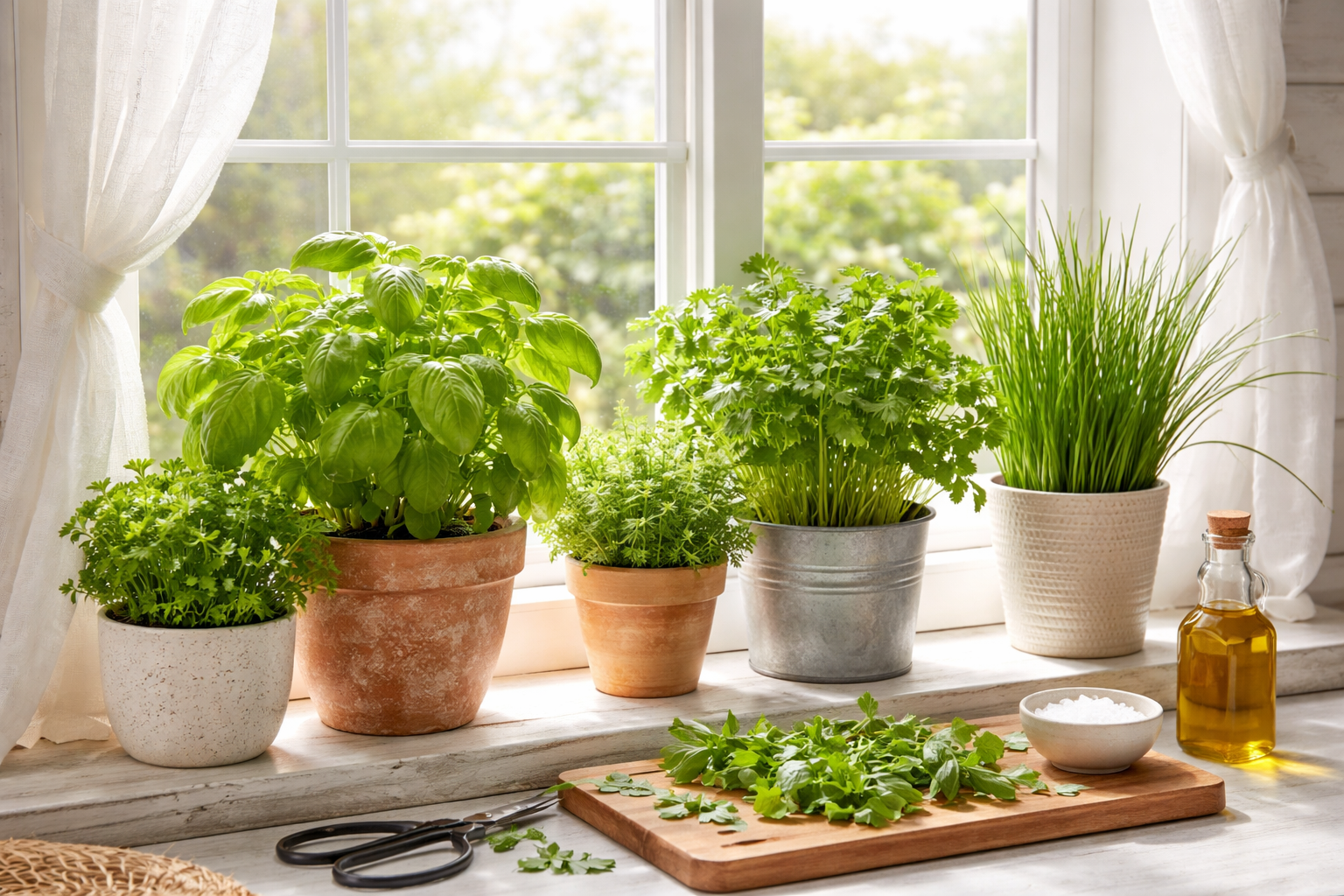
Maximizing productivity in small spaces requires strategic harvesting and continuous planting.
Harvesting Techniques
Cut-and-Come-Again Method
Perfect for leafy greens:
- Harvest outer leaves, leaving center to continue growing
- Cut lettuce 1 inch above soil level for regrowth
- Pinch herb stems to encourage bushier growth
Succession Harvesting
- Harvest vegetables at different stages of maturity
- Pick cherry tomatoes regularly to encourage production
- Harvest root vegetables by size, leaving smaller ones to grow
Extending the Growing Season
Season Extension Tools:
- Row covers for frost protection
- Cold frames for winter growing
- Greenhouses or hoop houses for year-round production
Microclimate Creation:
- Use thermal mass (water containers) to moderate temperature
- Position containers near buildings for wind protection
- Create reflective surfaces to increase light
For those interested in quick results, check out our guide to fast-growing plants that provide rapid satisfaction in small space gardens.
Troubleshooting Common Problems
Even experienced gardeners encounter challenges. Here are solutions to common small space gardening problems.
Plant Health Issues
Yellowing Leaves
- Overwatering: Improve drainage, reduce watering frequency
- Nutrient deficiency: Apply balanced fertilizer
- Natural aging: Remove old leaves to encourage new growth
Poor Growth
- Insufficient light: Relocate containers or add grow lights
- Rootbound plants: Transplant to larger containers
- Poor soil: Refresh potting mix, add compost
Wilting Plants
- Underwatering: Check soil moisture, adjust watering schedule
- Heat stress: Provide afternoon shade, increase humidity
- Root problems: Inspect for root rot or pests
Environmental Challenges
Limited Light
- Choose shade-tolerant varieties
- Use reflective surfaces to increase available light
- Consider grow lights for indoor growing
Extreme Weather
- Heat waves: Provide temporary shade, increase watering
- Cold snaps: Use row covers, move containers to protected areas
- Strong winds: Stake tall plants, move containers to sheltered locations
Space Constraints
- Utilize vertical growing techniques
- Choose compact varieties
- Practice intensive planting methods
Container-Specific Issues
Poor Drainage
- Add drainage holes to containers
- Use well-draining potting mix
- Elevate containers on blocks or pot feet
Frequent Drying Out
- Use larger containers for better moisture retention
- Add water-retaining crystals to soil
- Group containers to create humid microclimates
Heavy Containers
- Use lightweight potting mixes
- Choose plastic or fabric containers
- Install wheels or casters for mobility
Advanced Techniques for Maximum Productivity
Once you’ve mastered basic small space gardening, these advanced techniques can further increase your yields.
Hydroponic Systems
Deep Water Culture (DWC)
- Roots suspended in nutrient-rich water
- Excellent for leafy greens and herbs
- Faster growth than soil-based systems
Nutrient Film Technique (NFT)
- Thin film of nutrient solution flows past roots
- Space-efficient for multiple plants
- Good for lettuce, herbs, and strawberries
Ebb and Flow Systems
- Containers flood and drain on timer cycles
- Versatile for various plant types
- Good balance of automation and simplicity
Microgreens and Sprouts
Microgreen Production
- Harvest in 7-14 days from seeding
- High nutrition density
- Minimal space requirements
- Year-round indoor production
Sprouting Systems
- Ready in 3-7 days
- No soil required
- Excellent protein and vitamin source
- Perfect for windowsill growing
Aquaponics in Small Spaces
Combine fish raising with vegetable production:
- Fish waste provides nutrients for plants
- Plants filter water for fish
- Closed-loop system conserves water
- Produces both vegetables and protein
Grafted Plants
Benefits of Grafted Vegetables:
- Disease resistance from rootstock
- Increased yields in small containers
- Better adaptation to container growing
- Extended harvest periods
Common Grafted Options:
- Tomatoes grafted onto disease-resistant rootstock
- Eggplants for increased productivity
- Peppers for cold tolerance
Building Community Through Small Space Gardening
Small space gardening can connect you with neighbors and build community relationships.
Sharing Resources
Tool Libraries
- Share expensive tools with neighbors
- Reduce individual investment costs
- Build relationships through mutual assistance
Seed Swaps
- Exchange seeds with other gardeners
- Try new varieties without purchasing full packets
- Preserve heirloom varieties in your community
Knowledge Sharing
- Join local gardening groups
- Share successful techniques and varieties
- Learn from experienced local gardeners
Community Garden Participation
Shared Plot Benefits:
- Access to larger growing space
- Shared tools and resources
- Learning opportunities from other gardeners
- Social connections and friendships
Starting Community Gardens:
- Identify suitable spaces in your neighborhood
- Organize interested neighbors
- Work with local authorities for permissions
- Develop rules and maintenance schedules
Teaching Others
Children’s Education:
- Involve kids in planting and harvesting
- Teach responsibility through plant care
- Connect children with food sources
- Develop environmental awareness
Neighbor Outreach:
- Share surplus produce
- Offer gardening advice and assistance
- Demonstrate small space techniques
- Encourage others to start their own gardens
For comprehensive guidance on starting your gardening journey, visit our beginner’s guide to vegetable gardening to build a solid foundation.
Budget-Friendly Small Space Gardening
Creating a productive garden doesn’t require a large investment. Here are strategies to garden successfully on any budget.
Cost-Saving Strategies
DIY Containers
- Repurpose food containers, buckets, and storage bins
- Use fabric grow bags instead of expensive pots
- Build wooden planters from reclaimed materials
Seed Starting
- Start plants from seeds rather than buying transplants
- Save seeds from successful plants for next year
- Join seed swaps to access varieties without cost
Homemade Support Systems
- Use bamboo stakes instead of expensive tomato cages
- Create trellises from wire mesh and wooden frames
- Repurpose household items for plant supports
Free and Low-Cost Resources
Compost Materials
- Kitchen scraps for compost creation
- Fall leaves from neighbors for mulch
- Coffee grounds from local coffee shops
Community Resources
- Municipal compost programs
- Free mulch from tree trimming services
- Plant swaps and garden club exchanges
Recycled Materials
- Plastic bottles for self-watering systems
- Newspaper for biodegradable seed pots
- Cardboard for sheet mulching
Investment Priorities
Essential Purchases:
- Quality potting soil – Foundation of container success
- Basic hand tools – Trowel, pruners, watering can
- Seeds or starter plants – Choose based on your preferences
Optional Upgrades:
- Drip irrigation systems for convenience
- Grow lights for extended seasons
- Premium containers for aesthetics
For those who want efficient tools that work well in small spaces, check out our recommendations for gardening tools that are particularly well-suited for container gardening.
Technology and Small Space Gardening
Modern technology offers exciting opportunities to enhance small space gardening success.
Smart Gardening Tools
Soil Sensors
- Monitor moisture, pH, and nutrient levels
- Send alerts to smartphones
- Prevent over or under-watering
Automated Watering Systems
- Timer-controlled irrigation
- Smartphone app control
- Weather-responsive adjustments
LED Grow Lights
- Full-spectrum lighting for indoor growing
- Energy-efficient operation
- Programmable light cycles
Garden Planning Apps
Layout Design Tools
- Digital garden planning software
- Spacing calculators for container gardens
- Seasonal planning calendars
Plant Care Reminders
- Watering and fertilizing schedules
- Harvest timing notifications
- Pest and disease identification
Weather Integration
- Local weather forecasts
- Frost warnings
- Optimal planting time recommendations
Online Learning Resources
Video Tutorials
- YouTube channels dedicated to container gardening
- Live streaming garden tours
- Expert interviews and demonstrations
Online Communities
- Social media gardening groups
- Forum discussions and problem-solving
- Photo sharing and inspiration
Educational Websites
- University extension publications
- Research-based growing guides
- Local climate and variety information
Creating a Year-Round Growing Plan
Successful small space gardening requires thoughtful planning to maximize productivity throughout the year.
Monthly Planning Calendar
January-February
- Order seeds and plan garden layout
- Start slow-growing plants indoors
- Maintain indoor growing systems
- Plan infrastructure improvements
March-April
- Start warm-season seeds indoors
- Begin hardening off seedlings
- Prepare containers and soil
- Plant cool-season crops outdoors
May-June
- Transplant warm-season crops
- Begin succession planting schedule
- Install support systems
- Monitor for early pest issues
July-August
- Harvest early crops
- Plant fall vegetables
- Maintain watering schedules
- Plan preservation methods
September-October
- Harvest summer crops
- Prepare for season extension
- Plant winter hardy varieties
- Save seeds from successful plants
November-December
- Protect tender plants from frost
- Transition to indoor growing
- Plan next year’s garden
- Maintain tool and equipment
Crop Rotation in Containers
Even in containers, rotating plant families helps prevent soil depletion and disease buildup:
Year 1: Tomatoes in Container A, Beans in Container B Year 2: Beans in Container A, Leafy Greens in Container B Year 3: Leafy Greens in Container A, Root Vegetables in Container B Year 4: Root Vegetables in Container A, Tomatoes in Container B
Record Keeping
Garden Journal Benefits:
- Track successful varieties and techniques
- Monitor pest and disease patterns
- Plan future improvements
- Calculate costs and yields
What to Record:
- Planting dates and varieties
- Weather conditions and their effects
- Harvest quantities and dates
- Problems encountered and solutions tried
For additional inspiration and ideas, explore our gardening blog for seasonal tips and creative solutions.
Conclusion
Small space vegetable gardening proves that you don’t need acres of land to grow fresh, nutritious produce.
Whether you’re working with a tiny balcony, a windowsill, or just a few square feet of patio space, the techniques and strategies outlined in this guide can help you create a productive and rewarding garden.
The key to success lies in maximizing vertical space, choosing appropriate varieties, and creating optimal growing conditions within your constraints.
By using container gardening, vertical growing systems, and intensive planting methods, you can achieve impressive yields in minimal space.
Remember that small space gardening is a journey of continuous learning and adaptation.
Start small, experiment with different techniques, and gradually expand your garden as you gain experience and confidence.
Focus on growing vegetables your family enjoys eating, and don’t be afraid to try new varieties and methods.
Your Next Steps:
- Assess your space and available resources to determine the best growing methods for your situation
- Start small with easy-to-grow vegetables like lettuce, herbs, and radishes to build confidence
- Invest in quality containers and soil as the foundation of your garden success
- Plan for succession planting to ensure continuous harvests throughout the growing season
- Connect with other gardeners in your community for support, advice, and resource sharing
Small space vegetable gardening offers the perfect combination of practicality, sustainability, and personal satisfaction.
With the right approach and techniques, your compact garden can provide fresh vegetables, reduce grocery costs, and offer the therapeutic benefits of connecting with nature – all within the comfort of your own home.
Whether you’re motivated by fresh food, environmental concerns, or simply the joy of growing your own plants, small space vegetable gardening can enrich your life in countless ways.
Take that first step today, and discover the incredible potential hidden in your small space!