San Marzano tomato are a special type of tomato that many people love for cooking. They are known for their sweet taste, low acidity, and thick flesh.
This means they are not too sour and not too watery. Because of this, they are perfect for making tomato sauce, pizza sauce, and soups.
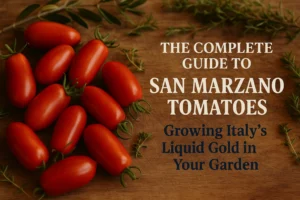
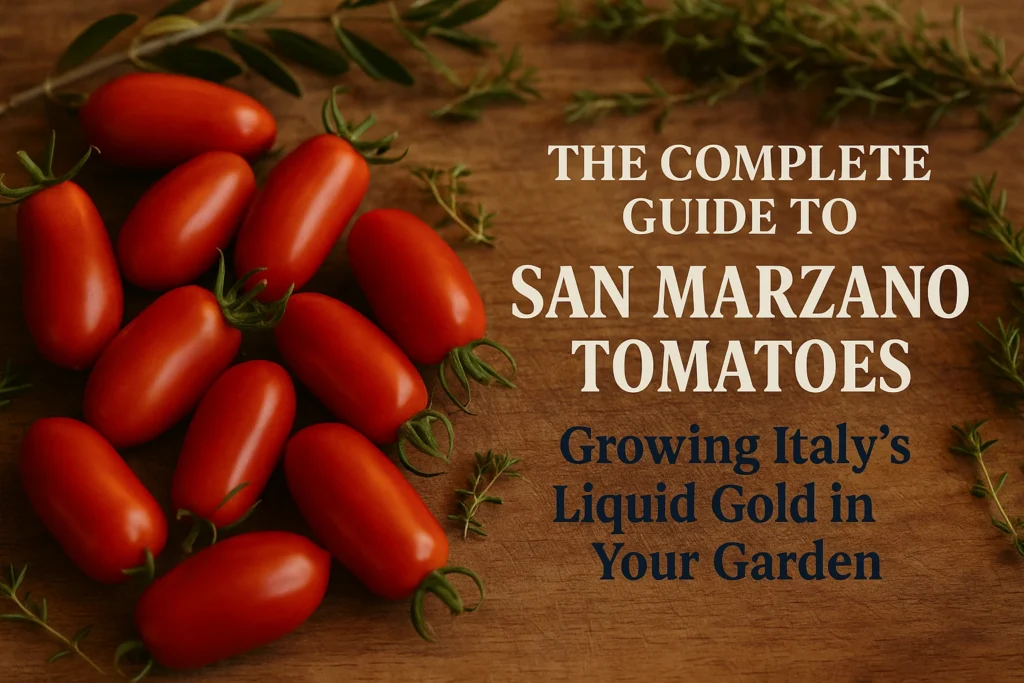
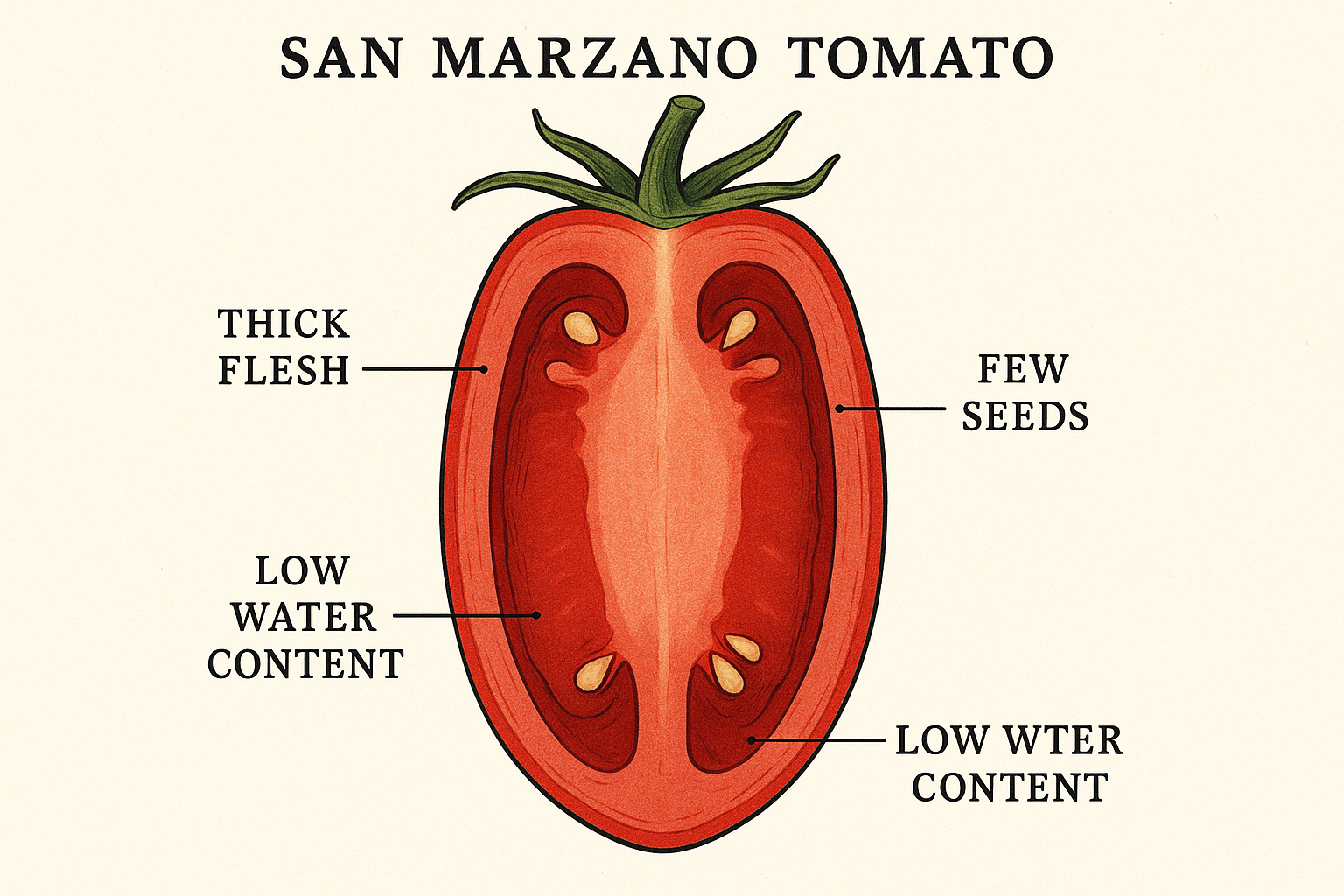
San Marzano tomatoes are longer and thinner than regular tomatoes, and they usually have fewer seeds.
When cooked, they make a rich and smooth sauce. If you want a tomato that gives strong flavor without too much sharpness, San Marzano is a great choice — even for beginners in the kitchen or garden.
The San Marzano tomato isn’t just another variety in your seed catalog – it’s a piece of living history that has shaped Italian cuisine and captured the hearts of gardeners worldwide.
From the volcanic soils of Mount Vesuvius to home gardens across America, this remarkable tomato has earned its reputation as the “king of sauce tomatoes.
Highlights
- San Marzano tomatoes are prized heirloom varieties originally from Italy, known for their sweet flavor, low acidity, and perfect sauce-making qualities
- True San Marzano varieties include San Marzano Nano, San Marzano 2, and San Marzano Redorta, each with unique growing characteristics
- Growing requirements include warm temperatures (75-85°F), well-draining soil with pH 6.0-6.8, and consistent moisture throughout the season
- Harvest timing is crucial – pick when fruits are deep red but still firm, typically 80-90 days from transplant
- Proper care includes staking, pruning suckers, and protecting from common diseases like blight and blossom end rot
What Makes San Marzano Tomato Special?
The Legend Behind the Name
The story of the San Marzano tomato begins in the shadow of Mount Vesuvius, in the fertile volcanic soils of the Campania region of Italy.
Local legend tells us that the first San Marzano seeds arrived as a gift from Peru to the Kingdom of Naples in 1770.
Whether this tale is fact or folklore, what we know for certain is that by the late 1800s, these distinctive plum-shaped tomatoes had become the foundation of authentic Italian cuisine.
What sets San Marzano tomato apart isn’t just their origin story – it’s their unique combination of characteristics that make them virtually irreplaceable in the kitchen:
Distinctive Shape and Size
- Elongated, rectangular form (typically 2-3 inches long)
- Pointed bottom with slight indentations
- Thin, easily removable skin
- Dense, meaty flesh with fewer seeds
Exceptional Flavor Profile
- Perfect balance of sweetness and acidity
- Complex, rich taste that intensifies when cooked
- Lower water content than most tomatoes
- Natural umami notes that enhance sauces
The Science of Superior Sauce
I remember the first time I made sauce with homegrown San Marzano tomatoes.
After years of using store-bought varieties, I was skeptical that one tomato could make such a difference.
But as the sauce simmered, the kitchen filled with an aroma so rich and complex that my neighbor knocked on the door asking what I was cooking!
The secret lies in the San Marzano tomato’s unique cellular structure.
These tomatoes contain:
- Higher pectin levels that create natural thickness without long cooking times
- Optimal sugar-to-acid ratio (typically 4.5-5.5 Brix with balanced pH)
- Dense flesh that breaks down evenly when heated
- Fewer water-filled seed cavities compared to slicing tomatoes
Understanding San Marzano Varieties
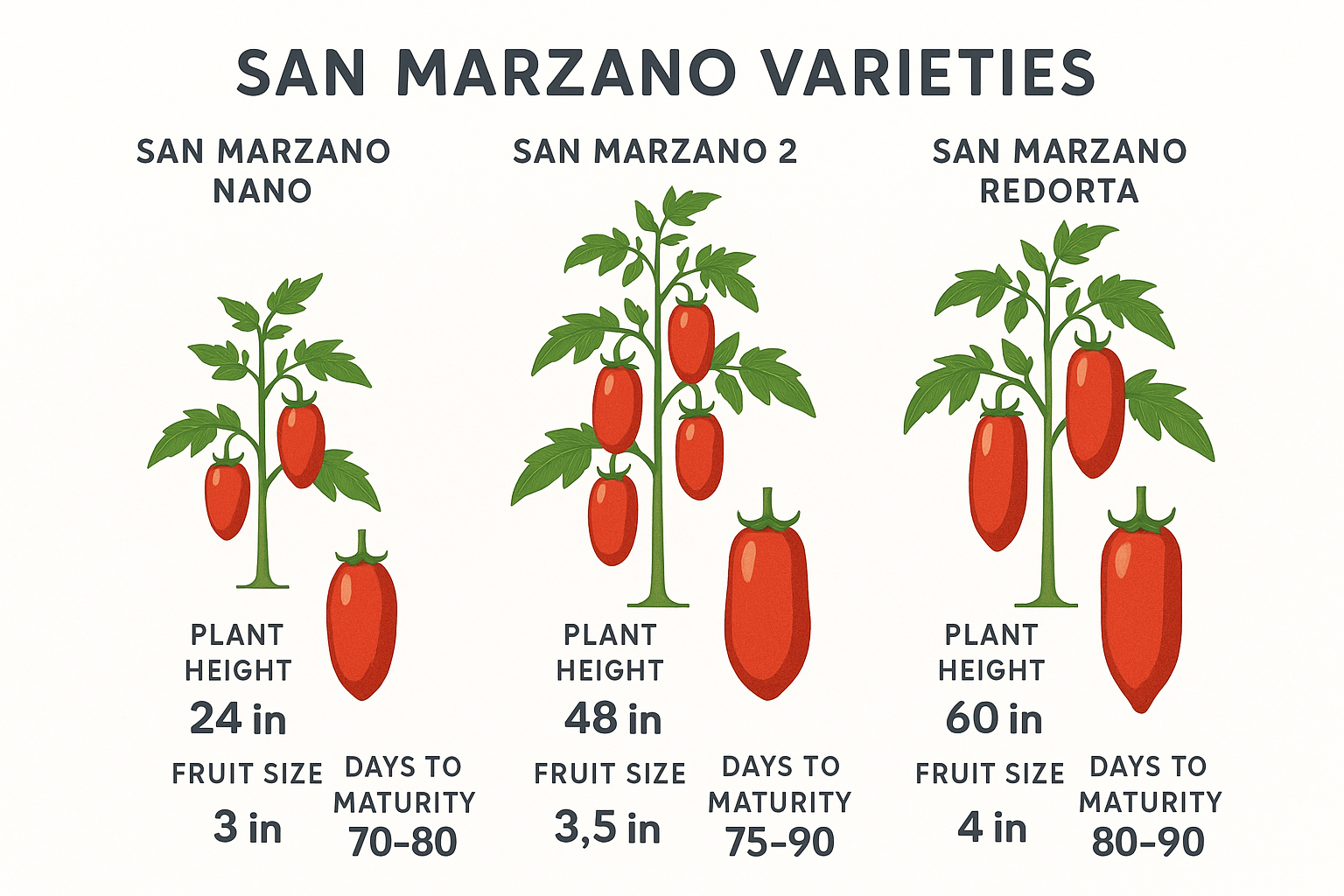
Authentic vs. San Marzano-Type Tomatoes
Before we dive into growing techniques, it’s crucial to understand the difference between true San Marzano tomatoes and “San Marzano-type” varieties.
This distinction has caused confusion among gardeners for decades.
True San Marzano Varieties:
- San Marzano Nano (dwarf variety)
- San Marzano 2 (disease-resistant strain)
- San Marzano Redorta (heirloom variety)
San Marzano-Type Varieties:
- San Marzano Gigante
- San Marzano Gold
- Various hybrid crosses
| Variety | Days to Maturity | Plant Height | Fruit Size | Disease Resistance |
|---|---|---|---|---|
| San Marzano Nano | 75-80 days | 3-4 feet | 2-3 inches | Moderate |
| San Marzano 2 | 85-90 days | 6-8 feet | 3-4 inches | High |
| San Marzano Redorta | 80-85 days | 5-7 feet | 2.5-3.5 inches | Low |
Choosing the Right Variety for Your Garden
When I first started growing San Marzano tomatoes, I made the mistake of choosing based solely on romantic descriptions in seed catalogs.
After a few seasons of trial and error, I learned that success depends on matching the variety to your specific growing conditions.
For Small Spaces or Container Growing: Choose San Marzano Nano – this compact variety reaches only 3-4 feet tall and produces excellent fruit in containers as small as 15 gallons.
For Disease-Prone Areas: San Marzano 2 offers the best disease resistance while maintaining authentic flavor.
This variety was developed specifically to combat the fungal diseases that plague many heirloom tomatoes.
For Purists Seeking Authentic Flavor: San Marzano Redorta represents the closest genetic match to the original Italian varieties, though it requires more careful disease management.
Growing San Marzano Tomatoes: From Seed to Harvest
Starting from Seed
Growing San Marzano tomatoes from seed requires patience and attention to detail.
These varieties often have lower germination rates than hybrid tomatoes, so I always recommend starting more seeds than you need.
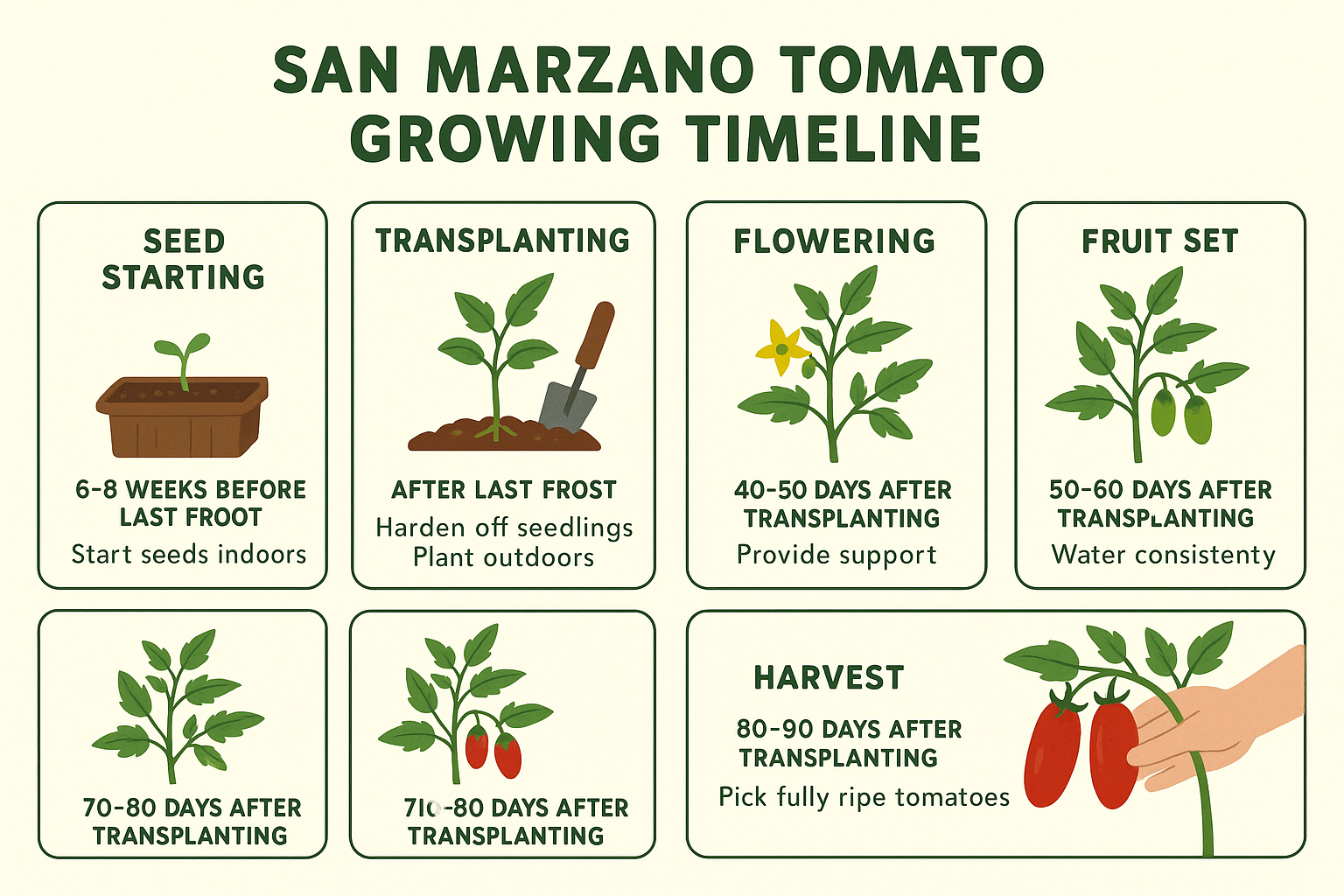
Seed Starting Timeline:
- 8-10 weeks before last frost: Start seeds indoors
- 6-8 weeks before last frost: First transplant to larger containers
- 2-3 weeks after last frost: Transplant to garden
Optimal Germination Conditions:
- Temperature: 75-80°F consistently
- Moisture: Keep soil evenly moist but not waterlogged
- Light: 14-16 hours of bright light daily
- Soil: Well-draining seed starting mix with pH 6.0-6.5
Soil Preparation and Garden Setup
The volcanic soils of Italy’s Campania region provide the perfect blueprint for growing San Marzano tomatoes.
While we can’t all have volcanic ash in our backyards, we can recreate the key soil characteristics these tomatoes crave.
Ideal Soil Conditions:
- pH Level: 6.0-6.8 (slightly acidic to neutral)
- Drainage: Excellent drainage with moisture retention
- Organic Matter: 3-5% organic content
- Nutrients: Balanced NPK with emphasis on phosphorus and potassium
My Proven Soil Amendment Recipe: For each planting hole, I mix:
- 2 parts existing garden soil
- 1 part aged compost
- 1/2 part perlite or coarse sand
- 1/4 cup bone meal
- 1/4 cup kelp meal
This mixture has consistently produced healthy, productive San Marzano tomato plants in my garden over the past eight years.
Planting and Spacing
San Marzano tomatoes are indeterminate varieties, meaning they continue growing and producing fruit throughout the season until frost kills them.
This growth habit requires careful planning for support structures and spacing.
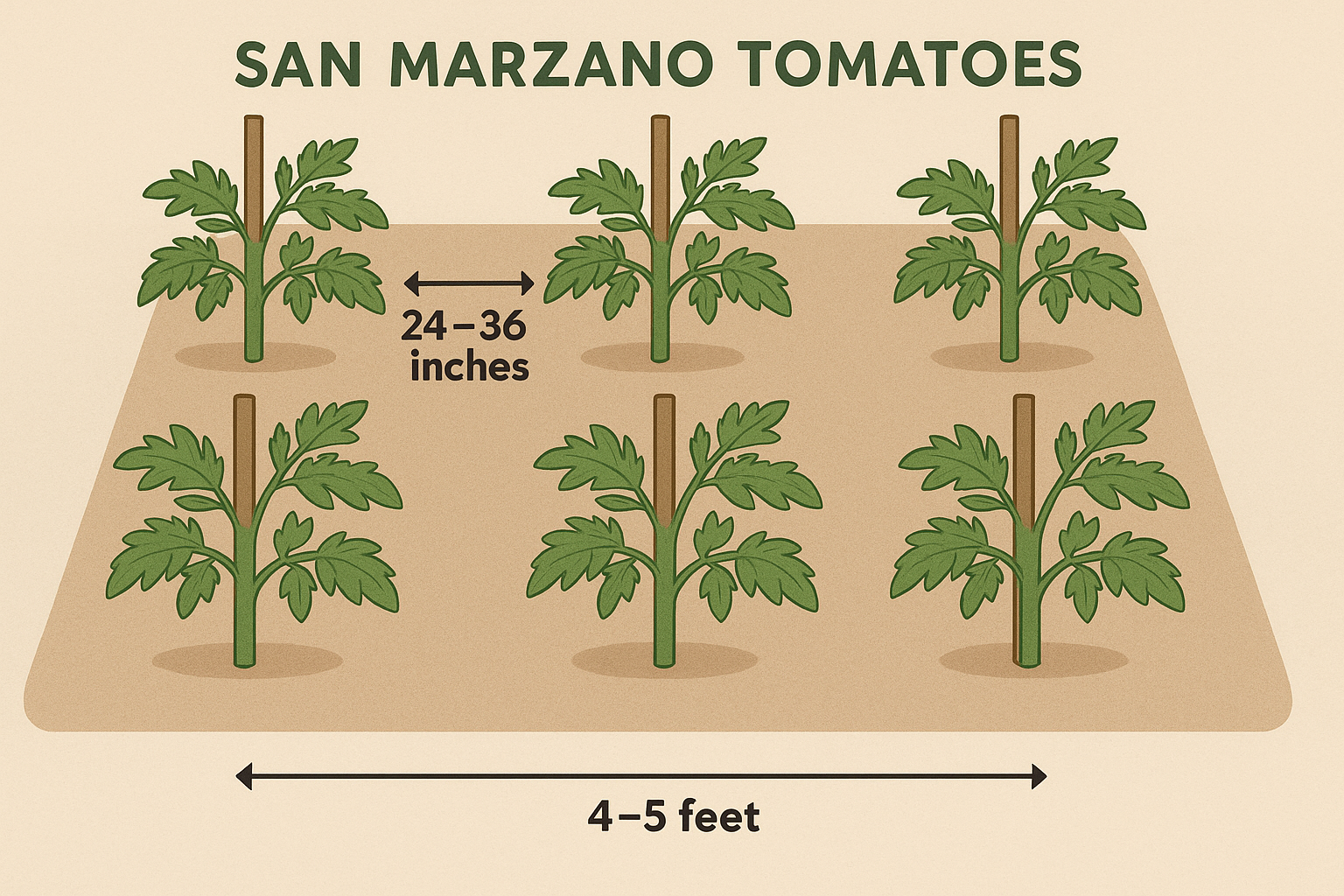
Planting Guidelines:
- Spacing: 24-36 inches between plants
- Row Spacing: 4-5 feet between rows
- Planting Depth: Bury 2/3 of the stem, including lower leaf nodes
- Support: Install 8-foot stakes or cages at planting time
I learned the importance of deep planting the hard way. My first year growing San Marzano tomatoes, I planted them at the same depth as the nursery containers.
The plants struggled with stability and root development.
Now, I always bury most of the stem, which encourages a robust root system that can support the plant’s vigorous growth.
Care and Maintenance Throughout the Season
Watering Strategies for Success
Consistent moisture is perhaps the most critical factor in growing healthy San Marzano tomatoes.
These varieties are particularly sensitive to water stress, which can lead to blossom end rot, cracking, and poor fruit development.
Watering Best Practices:
- Frequency: Deep watering 2-3 times per week
- Amount: 1-2 inches per week (including rainfall)
- Timing: Early morning to reduce disease pressure
- Method: Drip irrigation or soaker hoses preferred
Mulching Strategy: I apply a 3-inch layer of organic mulch around each San Marzano tomato plant, keeping it 2 inches away from the stem.
My preferred mulches include:
- Straw (not hay, which contains seeds)
- Shredded leaves
- Grass clippings (pesticide-free)
- Shredded newspaper
Fertilizing for Optimal Production
San Marzano tomatoes are heavy feeders that require consistent nutrition throughout their long growing season.
However, they’re also sensitive to over-fertilization, particularly with nitrogen, which can promote excessive foliage growth at the expense of fruit production.
Fertilization Schedule:
At Planting:
- Work 2-3 inches of compost into planting area
- Add 1 tablespoon of balanced organic fertilizer (10-10-10) per plant
4 Weeks After Planting:
- Side-dress with compost
- Apply phosphorus-rich fertilizer (bone meal or rock phosphate)
When First Fruits Set:
- Switch to low-nitrogen, high-potassium fertilizer
- Apply every 3-4 weeks through growing season
Monthly Foliar Feeding: I spray my San Marzano tomato plants monthly with diluted fish emulsion or compost tea.
This practice has significantly improved plant health and fruit quality in my garden.
Pruning and Training Techniques
Proper pruning is essential for San Marzano tomato success.
These vigorous indeterminate plants can easily become unwieldy without regular attention, leading to poor air circulation, disease problems, and reduced fruit quality.
Essential Pruning Tasks:
Sucker Removal: Remove suckers (shoots growing between main stem and branches) weekly when they’re 2-4 inches long.
I use my fingers to pinch small suckers and clean pruning shears for larger ones.
Lower Leaf Removal: Once fruit begins to set, gradually remove lower leaves that touch the ground or show signs of disease.
This improves air circulation and reduces disease pressure.
Top Pruning: In late summer (6-8 weeks before expected frost), I top the main growing point to encourage the plant to focus energy on ripening existing fruit rather than producing new growth.
Common Challenges and Solutions
Disease Management
San Marzano tomatoes, particularly heirloom varieties, can be susceptible to various diseases.
Prevention is always better than treatment, so I focus on creating conditions that promote plant health and discourage disease development.
Common Diseases and Prevention:
Early Blight (Alternaria solani):
- Symptoms: Brown spots with concentric rings on lower leaves
- Prevention: Proper spacing, mulching, avoid overhead watering
- Treatment: Remove affected leaves, apply copper-based fungicide
Late Blight (Phytophthora infestans):
- Symptoms: Water-soaked spots on leaves, white fuzzy growth on undersides
- Prevention: Ensure good air circulation, avoid overhead watering
- Treatment: Remove affected plants immediately, apply preventive fungicide
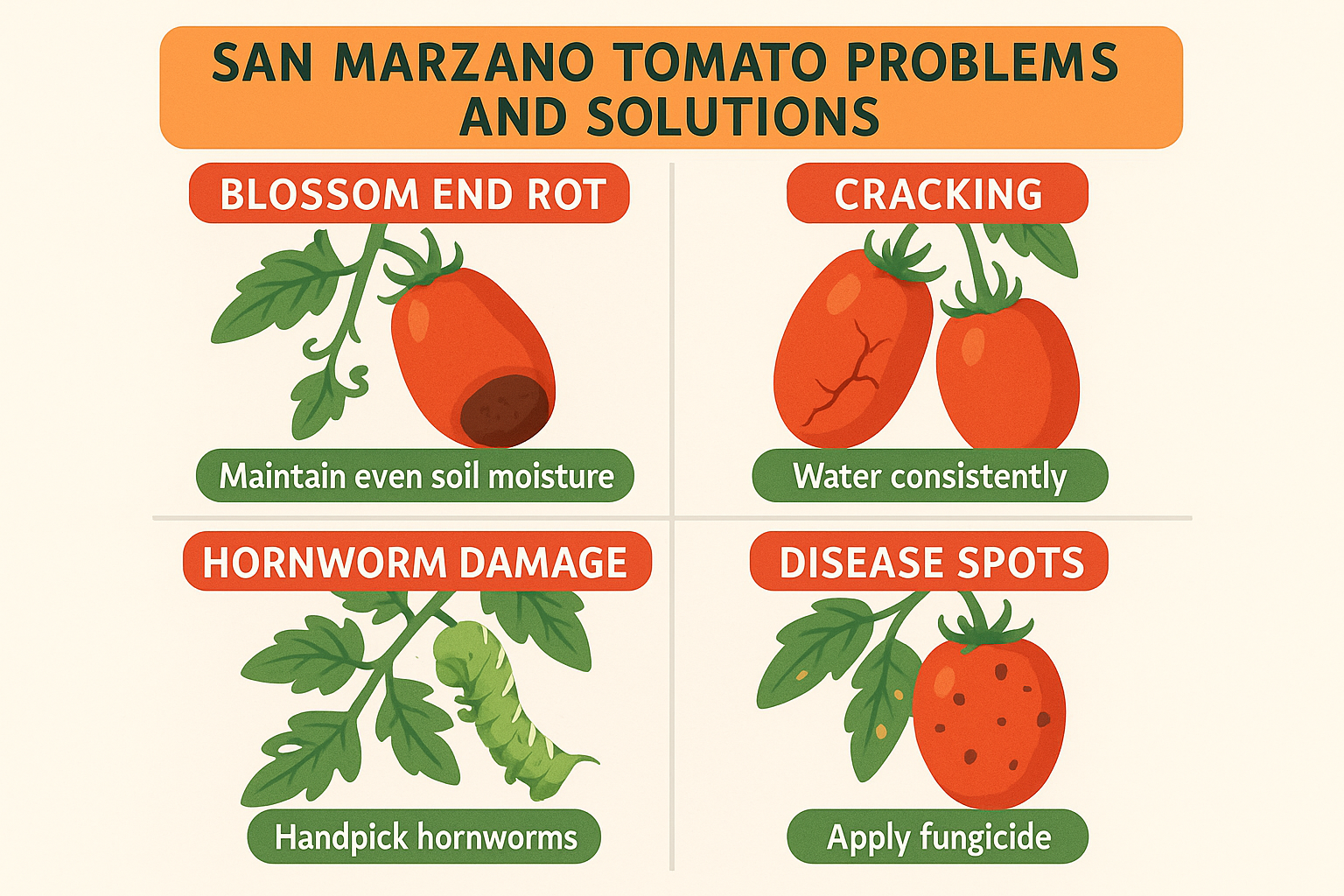
Blossom End Rot:
- Symptoms: Dark, sunken spots on blossom end of fruit
- Cause: Calcium deficiency, usually due to inconsistent watering
- Prevention: Maintain consistent soil moisture, proper calcium levels
Pest Management
While San Marzano tomatoes face many of the same pests as other tomato varieties, their long growing season means extended exposure to potential problems.
Common Pests and Solutions:
Hornworms: These large green caterpillars can defoliate a plant quickly.
I check my plants daily during peak season and hand-pick any hornworms I find. Encouraging beneficial insects like parasitic wasps provides natural control.
Aphids: Small, soft-bodied insects that cluster on new growth. Strong water spray or insecticidal soap effectively controls minor infestations.
Whiteflies: Tiny white flying insects that weaken plants and spread diseases.
Yellow sticky traps and reflective mulch help reduce populations.
Harvesting and Storage
Timing Your Harvest
Knowing when to harvest San Marzano tomatoes is crucial for achieving the best flavor and texture.
Unlike slicing tomatoes that you might pick when fully ripe, San Marzanos for sauce-making are often harvested at different stages depending on their intended use.
Harvest Indicators:
- Color: Deep red with no green shoulders
- Feel: Firm but with slight give when gently squeezed
- Sound: Slight hollow sound when tapped (indicates optimal moisture content)
- Ease of Removal: Fruit separates easily from vine with gentle twist
Harvest Timing by Use:
- Fresh Eating: Fully ripe, deep red color
- Sauce Making: Slightly underripe, firm texture
- Canning: Mix of ripe and slightly underripe fruits
I typically harvest San Marzano tomatoes every 2-3 days during peak season.
This frequent harvesting encourages continued production and prevents overripe fruit from attracting pests.
Post-Harvest Handling
Proper handling after harvest significantly impacts the quality and storage life of your San Marzano tomatoes.
These varieties have relatively thin skins that can bruise easily, so gentle handling is essential.
Storage Guidelines:
Short-term Storage (1-2 weeks):
- Store at room temperature away from direct sunlight
- Place stem-side down to prevent moisture loss
- Don’t refrigerate unless fully ripe
Long-term Storage:
- Can whole or as sauce
- Dehydrate for sun-dried tomatoes
- Freeze whole (skins slip off easily when thawed)
Processing and Culinary Uses
Making the Perfect San Marzano Sauce
After growing San Marzano tomatoes for several seasons, I’ve developed a simple sauce recipe that showcases their exceptional flavor without masking it with too many additional ingredients.
Classic San Marzano Sauce Recipe:
Ingredients:
- 5 pounds fresh San Marzano tomatoes
- 4 cloves garlic, minced
- 1/4 cup extra virgin olive oil
- 1 teaspoon sea salt
- Fresh basil leaves
- Optional: 1 small onion, finely diced
Method:
- Blanch tomatoes in boiling water for 1-2 minutes
- Transfer to ice water, then slip off skins
- Crush tomatoes by hand, removing seeds if desired
- Heat olive oil in heavy-bottomed pot
- Sauté garlic (and onion if using) until fragrant
- Add crushed tomatoes and salt
- Simmer 20-30 minutes, stirring occasionally
- Add fresh basil in final 5 minutes
The key to great San Marzano tomato sauce is restraint – let the tomatoes be the star.
Preservation Methods
San Marzano tomatoes preserve beautifully using various methods.
Their low water content and balanced acidity make them ideal for canning, while their rich flavor intensifies when dried.
Canning Whole San Marzanos: This method preserves the tomatoes’ shape and texture for later use in sauces and stews.
- Prepare tomatoes by blanching and peeling
- Pack into sterilized jars with 1 tablespoon lemon juice per pint
- Add boiling water, leaving 1/2 inch headspace
- Process in boiling water bath: 40 minutes (pints), 45 minutes (quarts)
Dehydrating for Sun-Dried Tomatoes: San Marzano tomatoes make exceptional sun-dried tomatoes due to their meaty texture and concentrated flavor.
- Cut tomatoes in half lengthwise
- Remove seeds and gel (save for stock)
- Arrange cut-side up on dehydrator trays
- Dehydrate at 135°F for 8-12 hours until leathery
- Store in olive oil or vacuum-sealed bags
Advanced Growing Techniques
Season Extension Methods
One of the challenges of growing San Marzano tomatoes is their long maturation period.
In shorter growing seasons, gardeners need to employ season extension techniques to achieve full harvests.
Season Extension Strategies:
Early Season Protection:
- Wall-o-Water or similar protection devices
- Row covers during cool nights
- Black plastic mulch to warm soil
Late Season Protection:
- Harvest green tomatoes before frost and ripen indoors
- Temporary greenhouse structures
- Pull entire plants and hang in garage or basement
I’ve had success using clear plastic sheeting to create temporary greenhouse conditions around my San Marzano tomato plants in late fall, extending the harvest by 3-4 weeks.
Companion Planting
Certain companion plants can improve the health and productivity of San Marzano tomatoes while deterring pests and attracting beneficial insects.
Beneficial Companions:
- Basil: Improves flavor and repels aphids and hornworms
- Marigolds: Deter nematodes and other soil pests
- Nasturtiums: Trap crop for aphids and cucumber beetles
- Parsley: Attracts beneficial insects
Plants to Avoid:
- Fennel: Inhibits tomato growth
- Corn: Attracts same pests (corn earworm = tomato fruitworm)
- Brassicas: Compete for nutrients and space
Troubleshooting Common Problems
Poor Fruit Set
One of the most frustrating problems when growing San Marzano tomatoes is poor fruit set – when plants flower prolifically but fail to produce fruit.
Common Causes and Solutions:
Temperature Stress:
- Problem: Temperatures below 55°F or above 90°F prevent pollination
- Solution: Provide protection during temperature extremes, choose appropriate varieties for your climate
Nutrient Imbalances:
- Problem: Too much nitrogen promotes foliage at expense of flowers
- Solution: Reduce nitrogen fertilization, increase phosphorus and potassium
Watering Issues:
- Problem: Inconsistent moisture stresses plants
- Solution: Maintain consistent soil moisture through mulching and regular watering
Fruit Quality Issues
San Marzano tomatoes can develop various fruit quality problems that affect their culinary value.
Common Fruit Problems:
Cracking:
- Cause: Rapid water uptake after dry period
- Prevention: Consistent watering, adequate mulching
- Varieties: Some San Marzano types are more crack-resistant
Catfacing:
- Cause: Cool temperatures during flower formation
- Prevention: Protect plants during cool weather, choose appropriate varieties
Uneven Ripening:
- Cause: Various factors including genetics, temperature, and plant stress
- Management: Provide consistent growing conditions, harvest at proper stage
Planning Your San Marzano Garden
Succession Planting
To ensure a continuous harvest of San Marzano tomatoes, I recommend succession planting – starting new plants at intervals throughout the growing season.
Succession Planting Schedule:
First Planting:
- Start seeds 8-10 weeks before last frost
- Transplant 2-3 weeks after last frost
- Harvest begins mid to late summer
Second Planting:
- Start seeds 4-6 weeks before last frost
- Transplant 4-5 weeks after last frost
- Harvest extends into fall
Third Planting (warm climates only):
- Start seeds at last frost date
- Transplant 6-8 weeks after last frost
- Harvest continues until first frost
Record Keeping
Successful San Marzano tomato growing improves with experience and careful record keeping.
I maintain a garden journal that tracks:
- Planting dates and varieties
- Weather conditions and temperatures
- Fertilization and watering schedules
- Pest and disease occurrences
- Harvest dates and yields
- Taste and quality notes
This information helps me refine my techniques each season and choose the best varieties for my specific conditions.
Regional Growing Considerations
Climate Adaptations
San Marzano tomatoes originated in a Mediterranean climate, but they can be successfully grown in various regions with proper adaptations.
Climate-Specific Tips:
Hot, Humid Climates:
- Choose disease-resistant varieties like San Marzano 2
- Provide afternoon shade during extreme heat
- Ensure excellent air circulation
- Monitor closely for fungal diseases
Cool, Short-Season Climates:
- Start seeds extra early indoors
- Use season extension techniques
- Choose faster-maturing varieties like San Marzano Nano
- Consider greenhouse or high tunnel growing
Arid Climates:
- Increase mulching to conserve moisture
- Provide wind protection
- Monitor soil moisture levels closely
- Consider drip irrigation systems
Container Growing
For gardeners with limited space or challenging soil conditions, San Marzano tomatoes can be successfully grown in containers.
Container Requirements:
- Size: Minimum 20 gallons for determinate varieties, 30+ gallons for indeterminate
- Drainage: Multiple drainage holes essential
- Support: Heavy-duty cages or stake systems
- Soil: High-quality potting mix with added compost
Container Growing Tips:
- Water more frequently than ground-planted tomatoes
- Fertilize every 2-3 weeks with diluted liquid fertilizer
- Protect from extreme temperatures
- Consider dwarf varieties for smaller containers
The Future of San Marzano Tomatoes
Seed Saving and Preservation
One of the most rewarding aspects of growing San Marzano tomatoes is the ability to save seeds for future seasons.
As an heirloom variety, properly saved seeds will produce plants true to type.
Seed Saving Process:
- Select the best fruits from your healthiest plants
- Allow fruits to fully ripen on the vine
- Extract seeds and ferment for 3-4 days
- Clean, dry, and store in cool, dry conditions
- Properly stored seeds remain viable for 4-6 years
By saving seeds, you’re not only ensuring your future harvests but also helping preserve these important genetic resources for future generations of gardeners.
Breeding and Selection
Advanced gardeners may be interested in selecting and improving their San Marzano tomato strains over time.
Through careful selection of the best-performing plants each season, you can develop a strain particularly well-adapted to your local conditions.
Selection Criteria:
- Disease resistance
- Fruit quality and flavor
- Plant vigor and productivity
- Adaptation to local climate conditions
Conclusion
Growing San Marzano tomatoes represents one of the most rewarding challenges a gardener can undertake.
These remarkable heirloom varieties offer a direct connection to centuries of Italian culinary tradition while providing unparalleled flavor and versatility in the kitchen.
Throughout this comprehensive guide, we’ve explored every aspect of San Marzano tomato cultivation, from selecting the right variety for your garden to harvesting and preserving your precious crop.
The key to success lies in understanding these plants’ specific needs: consistent moisture, well-draining soil, proper support, and protection from diseases that commonly affect heirloom varieties.
Remember that growing San Marzano tomatoes is as much an art as it is a science.
Each season brings new challenges and opportunities to refine your techniques.
Don’t be discouraged if your first attempt doesn’t produce the perfect harvest – even experienced gardeners continue learning and adapting their methods.
The investment in time and effort required to grow San Marzano tomatoes pays dividends far beyond the garden.
When you taste that first spoonful of sauce made from your homegrown San Marzanos, you’ll understand why these tomatoes have captivated gardeners and chefs for generations.
Your Next Steps:
- Choose your variety based on your climate, space, and experience level
- Plan your timeline using the guidelines provided in this article
- Prepare your soil with the amendments and conditions San Marzanos require
- Start your seeds at the appropriate time for your region
- Document your journey to improve your techniques each season
Whether you’re growing a single plant in a container or planning a full garden dedicated to these Italian treasures, the principles and techniques outlined in this guide will help you achieve success.
The San Marzano tomato is more than just a garden crop – it’s a gateway to authentic flavors, sustainable gardening practices, and the deep satisfaction that comes from growing something truly special.
As you embark on your San Marzano tomato growing journey, remember that you’re joining a community of gardeners worldwide who share a passion for these exceptional tomatoes.
Share your experiences, learn from others, and most importantly, enjoy the incredible flavors that only come from homegrown San Marzano tomatoes.