No dig gardening for ADHD beginners is one of the easiest ways to start a garden without feeling overwhelmed.
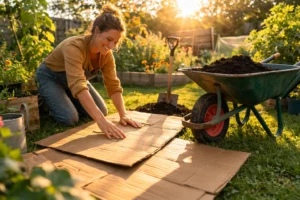
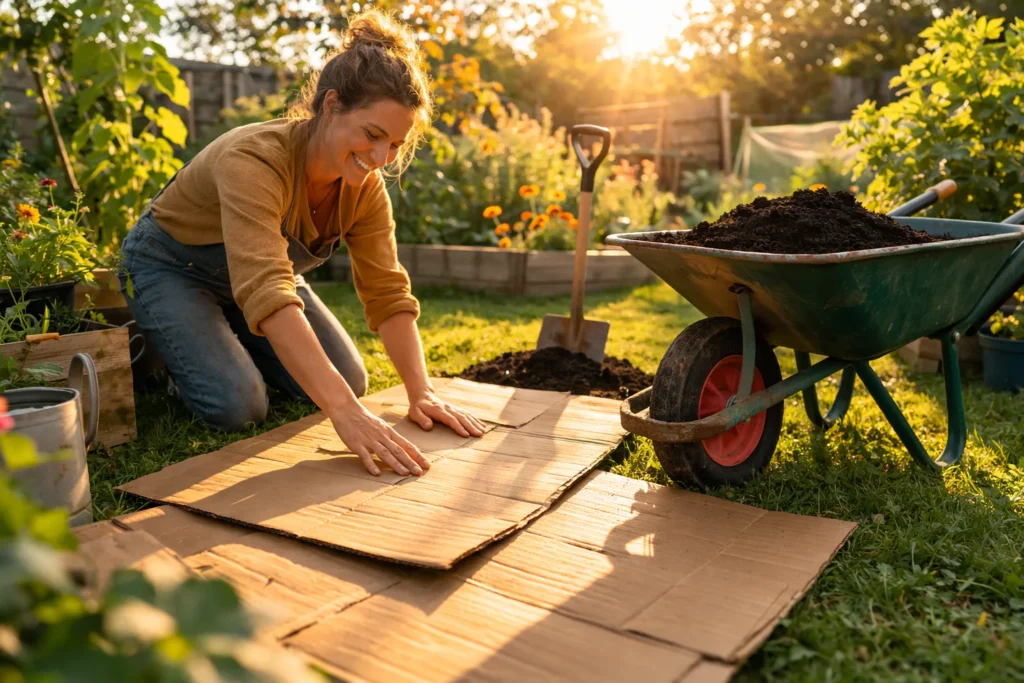
You do not dig the soil at all. You lay cardboard on the ground, cover it with compost, and plant straight into the top layer.
Charles Dowding, the UK’s leading no dig expert, says the method makes gardening easier and helps plants grow more healthily because the soil life underneath is left completely undisturbed.
That is exactly why no dig gardening for ADHD works so well. Less effort, fewer weeds, and more time actually growing things.
What Is No Dig Gardening for ADHD?
No dig gardening is a way of growing plants without turning or breaking up the soil.
Gardens Illustrated explains that no dig is built around two things: keeping the soil as undisturbed as possible, and feeding it by adding compost to the surface each year.
Worms and soil life pull the compost downwards naturally. The soil gets better every season with almost no work from you.
Garden Ninja confirms that no dig reduces the effort and time needed to prepare soil, making it a great fit for beginners who want results without back-breaking work.
Why No Dig Gardening for ADHD Suits the Brain
People with ADHD often find big open-ended tasks hard to start and even harder to finish.
No dig gardening changes that. The setup is simple, the steps are clear, and results come faster than with traditional methods.
A Thrive UK 2025 survey found that 85% of people with ADHD said gardening helps boost their mood. No dig makes it even easier to start and keep going.
The Benefits of No Dig Gardening for ADHD
Fewer Weeds Mean Fewer Surprise Jobs
Charles Dowding’s research at Homeacres shows that no dig beds have far fewer weeds than dug beds, because turning the soil brings old weed seeds to the surface where they can sprout.
For ADHD gardeners, fewer weeds means fewer unexpected tasks. Your time stays focused on growing, not clearing.
Better Soil That Builds Itself
ECOgardener confirms that no dig preserves the natural structure of the soil and encourages worms, fungi, and microbes to flourish beneath the surface.
Healthy soil means plants grow faster and stronger. Faster growth means quicker rewards for the ADHD brain.
No Heavy Digging or Back Strain
Garden Ninja points out that no dig removes the need for forking, double digging, or straining your back. You only touch the soil when you are planting seedlings.
Physical discomfort is a common reason people stop tasks halfway through. No dig gardening for ADHD removes that problem entirely.
More Food With Less Work
Trials at Charles Dowding’s Homeacres show that no dig beds produce around 6% more food by weight compared to dug beds, and the crop quality is noticeably better too.
More food, less work, and a garden that gets better every year. A very good deal for any ADHD gardener.
| IMAGE PROMPT: IN-BETWEEN IMAGE 1
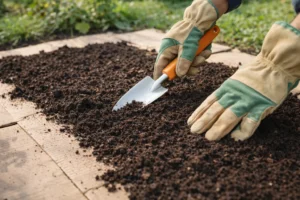
Prompt: A close up of healthy dark compost being spread over flat cardboard on a garden bed, gloved hands smoothing the surface with a trowel, bright natural daylight, fresh and satisfying beginner gardening photography, photorealistic Size: 1000 x 700px | Placement: Directly below the Benefits section Tool: Adobe Firefly at firefly.adobe.com | Photo mode | Save as WebP 72 DPI under 150KB |
How to Start No Dig Gardening for ADHD Step by Step
Setting up a no dig garden for ADHD is quick and straightforward. You do not need specialist tools or a lot of space.
ECOgardener sums it up simply: lay cardboard over the ground, top it with compost, then plant straight into the surface layer.
- Choose your spot. Pick an area that gets at least 5 to 6 hours of sun each day.
- Cut down tall grass or weeds. You do not need to remove them.
- Lay flat cardboard across the whole area. Overlap edges by 15cm to block weeds.
- Wet the cardboard with a watering can so it stays flat and starts to break down.
- Spread 10 to 15cm of compost on top. This is where your plants will grow.
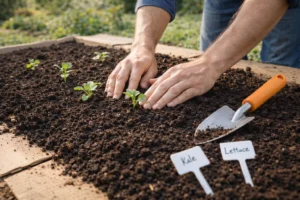
- Plant seeds or seedlings straight into the compost layer.
- Label everything right away with the name and the date planted.
| ADHD Tip: Start With One Small Bed
Do not try to build your whole garden at once. Start with one bed about one metre by two metres. That is plenty. Once you see how well it works you can always add more later. A small start keeps the ADHD brain motivated rather than overwhelmed. |
What to Grow in Your No Dig Garden for ADHD
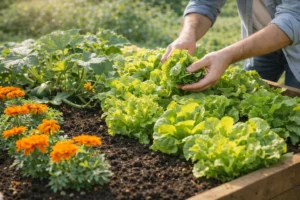
Almost any vegetable, herb, or flower grows well in a no dig bed.
For ADHD gardeners, the best choices are plants that grow quickly and give you something to check or pick every few days.
Best Vegetables for No Dig Gardening for ADHD
| Vegetable | Why It Works in a No Dig ADHD Garden |
| Radishes | Ready in 21 to 30 days. The fastest result in any garden. |
| Lettuce | Pick outer leaves as they grow. One planting gives weeks of harvest. |
| Spinach | Baby leaves ready in 20 to 30 days. Grows back quickly after picking. |
| Courgette | Very productive all summer. Something new to pick every 2 to 3 days. |
| Cherry tomatoes | Watch the fruits change colour each day. Most rewarding ADHD crop. |
| Spring onions | Quick to grow and very satisfying to pull from the compost. |
| Peas | Fun to watch climb. Sweet and delicious picked straight from the pod. |
Best Flowers for No Dig Gardening for ADHD
- Marigolds grow fast, protect nearby plants from pests, and bloom all summer.
- Zinnias germinate in under a week and produce bright flowers right through the season.
- Nasturtiums are edible and trail over the edge of a no dig bed in a beautiful way.
- Cosmos are easy, fast, and attract bees and butterflies throughout summer.
Research published by WebMD confirms that gardening helps people focus on what is right in front of them. Growing food and flowers together makes that experience even more engaging.
How to Keep Your No Dig Garden Going All Year
Once your no dig garden for ADHD is set up, keeping it going is simple.
The main task is adding a fresh layer of compost once a year, usually in autumn or early spring.
Charles Dowding recommends around 2.5cm of compost on top each year to keep the soil in great shape for the next growing season.
That is one job per year. Everything else is planting, watering, and harvesting.
A Simple Daily Routine for No Dig Gardening for ADHD
- Check the compost. Water if it feels dry when you press your finger in.
- Look for changes. New sprouts, forming buds, or ripe vegetables ready to pick.
- Harvest anything ready. Regular picking keeps plants producing more.
- Pull any small weeds you spot. There will be very few in a no dig bed.
- Do one small task then stop. Short focused sessions suit the ADHD brain best.
Seasonal No Dig Tasks for ADHD Gardeners
| Season | Main No Dig Task |
| Spring | Add fresh compost. Plant seeds and seedlings. Label everything straight away. |
| Summer | Water regularly. Harvest often. Deadhead flowers to keep them blooming. |
| Autumn | Clear finished crops. Lay a fresh compost layer on top of the bed. |
| Winter | Rest and plan ahead. Order seeds. The no dig bed looks after itself. |
Common Questions About No Dig Gardening for ADHD

Do I Need Good Soil to Start?
No. That is one of the best things about no dig gardening for ADHD beginners.
Charles Dowding says you can start on almost any ground, including clay, grass, and weedy soil, with very little compost needed.
The cardboard smothers whatever is underneath. The compost on top gives plants everything they need from day one.
What if I Forget to Water?
No dig beds hold moisture better than dug soil, so they are more forgiving if you miss a day or two.
Moisture retention and drainage are both improved in no dig beds because the natural soil structure stays fully intact.
A simple drip irrigation timer is an easy option if you want to take watering off your daily task list completely.
No Dig Gardening for ADHD Children
Coordikids confirms that gardening tasks like planting and watering involve whole body movements that help release energy and improve focus in children with ADHD.
No dig gardening is a great fit for children with ADHD because there is no heavy digging, results come fast, and the steps are very easy to follow.
A small no dig patch or a large pot filled with compost is all a child needs to start growing their own food.
- Radishes are ready in three weeks and are very exciting to pull out of the compost layer.
- Sunflowers grow taller every single day and give children a powerful sense of progress.
- Cherry tomatoes are fun to watch change colour and taste amazing picked warm from the plant.
- Nasturtiums are fast, edible, and trail beautifully over the edge of a pot or bed.
Start Your No Dig Garden for ADHD Today
No dig gardening for ADHD is simple, affordable, and one of the most rewarding ways to grow your own food you will ever try.
Less digging, fewer weeds, better soil, and more harvests every single season.
You do not need perfect soil, a big garden, or hours of free time to make it work.
Frequently Asked Questions
| Q: What is no dig gardening for ADHD and why does it work so well?
A: No dig gardening for ADHD is a way of growing plants without turning or breaking up the soil. You lay cardboard on the ground, cover it with compost, and plant straight into the top. It works well for ADHD because the setup is simple, the steps are clear, there is very little ongoing work, and results come faster than with traditional gardening. Charles Dowding, the leading no dig expert, shows in his research that no dig beds produce more food with less effort and have far fewer weeds than dug beds. |
| Q: How much does it cost to start no dig gardening for ADHD?
A: A small no dig bed costs under twenty pounds to set up. Cardboard is free from any supermarket or delivery box. A bag of compost costs around five to ten pounds. Seeds for two or three crops cost around three to six pounds. You do not need any specialist tools. No dig gardening for ADHD is one of the most affordable ways to start growing your own food. |
| Q: Can I do no dig gardening for ADHD on a balcony or in a small space?
A: Yes. No dig gardening for ADHD works just as well in large pots and fabric grow bags as it does in the ground. Fill your container with quality compost and plant straight into it. No cardboard is needed for container growing. Radishes, lettuce, herbs, nasturtiums, and cherry tomatoes all grow brilliantly in containers using this method. |
| Q: How much time does no dig gardening for ADHD take each day?
A: Just ten minutes a day is enough to keep a no dig garden for ADHD healthy and productive. Check the compost, water if needed, pick anything ready, and spot any weeds. There will be very few weeds in a well set up no dig bed. The one annual job is spreading a thin layer of fresh compost in autumn or early spring. |
| Q: What is the best first crop for no dig gardening for ADHD beginners?
A: Radishes are the best first crop for no dig gardening for ADHD. They are ready in 21 to 30 days, need very little care, and pulling your first homegrown radish from a compost layer is genuinely exciting. After radishes, loose leaf lettuce is the next best step because you can start picking leaves in as little as 21 days and the plant keeps producing for several weeks. |