
Is Miracle-Gro good for tomatoes. Yes—when used correctly, it can support fast growth and strong foliage.
Miracle-Gro’s balanced formulas provide essential nutrients tomatoes need, especially in early growth stages.
However, once flowering begins, switching to a formula lower in nitrogen and higher in phosphorus helps improve fruit production.
The key isn’t just the brand—it’s using the right type at the right time to avoid leafy plants with fewer tomatoes.
When I first started growing tomatoes in my backyard garden, I stood in the garden center aisle, staring at the blue box of Miracle-Gro, wondering if this popular fertilizer would be the secret to juicy, abundant tomatoes.
Like many home gardeners, I was tempted by the promises on the packaging, but uncertain about whether this widely available product was truly the best choice for my precious tomato plants.
If you’re asking yourself “is Miracle-Gro good for tomatoes?” you’re not alone.
This question has sparked countless debates among gardeners, from novices to seasoned experts.
Some swear by it, while others avoid it completely.
With increasing focus on sustainable gardening practices and organic food production, understanding the pros and cons of using Miracle-Gro on your tomato plants has never been more important.
In this comprehensive guide, you will learn everything you need to know about using Miracle-Gro for tomatoes.
We’ll explore its composition, benefits, potential drawbacks, and how it compares to alternative fertilizers.
By the end, you will have all the information you need to decide whether Miracle-Gro deserves a place in your tomato gardening routine.
Key Takeaways
- Miracle-Gro can provide quick nutrients to tomato plants but may not support long-term soil health as effectively as organic alternatives
- The high nitrogen content in standard Miracle-Gro formulations can promote excessive foliage growth at the expense of fruit production if used incorrectly
- Miracle-Gro offers specialized tomato formulations that provide better nutrient balance for tomatoes than their all-purpose products
- Proper application timing and dilution rates are crucial when using Miracle-Gro to avoid fertilizer burn and nutrient runoff
- A balanced approach combining Miracle-Gro with organic soil amendments may provide the best results for most home gardeners
Understanding Miracle-Gro: What’s in the Blue Box?
Before we can determine if Miracle-Gro is good for tomatoes, we need to understand what it actually is.
Miracle-Gro is a brand of synthetic fertilizer produced by Scotts Company, offering various formulations for different gardening needs.
The Composition of Miracle-Gro
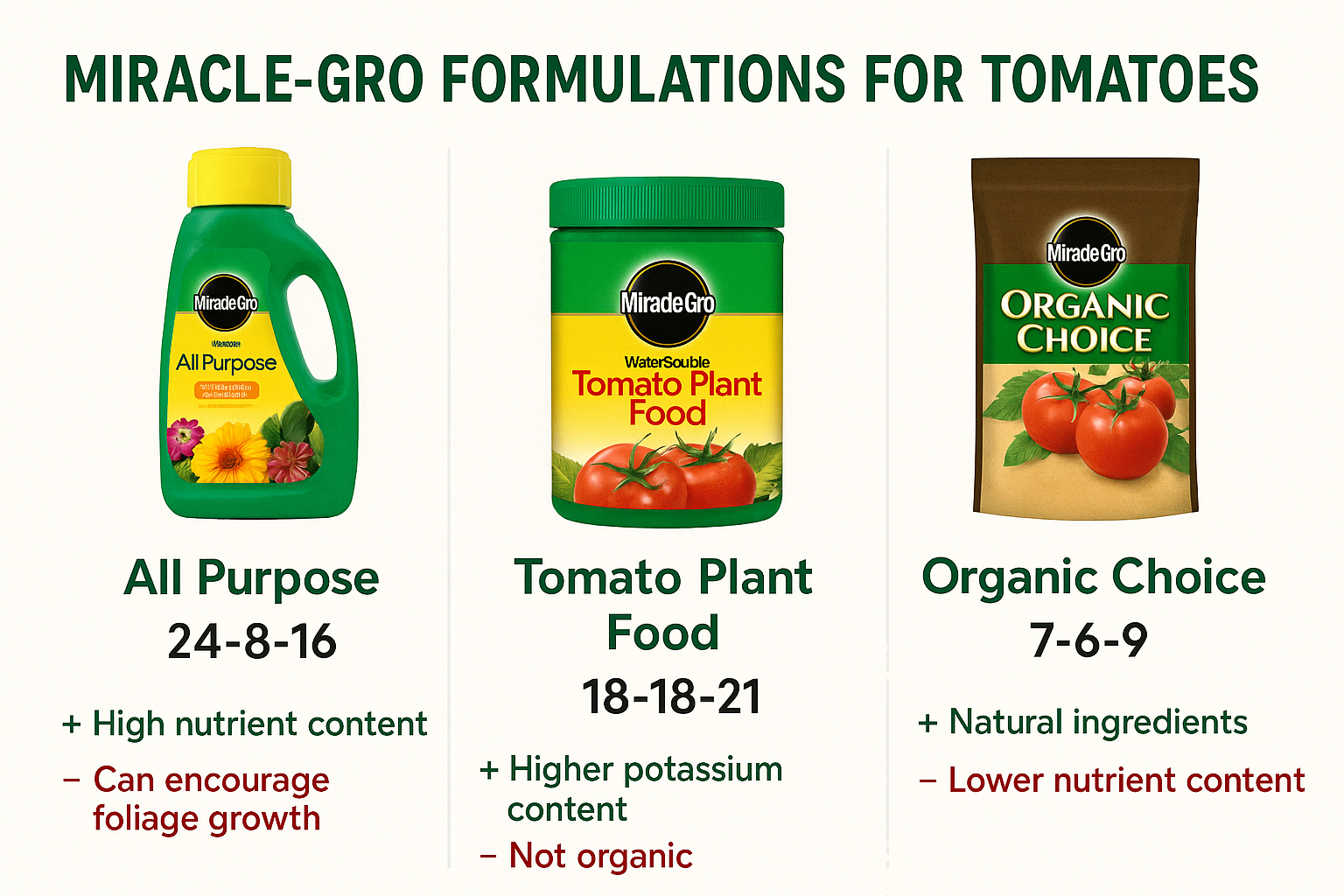
Standard Miracle-Gro All-Purpose Plant Food typically contains a nutrient ratio of 24-8-16, which represents:
- 24% Nitrogen (N): Promotes leaf and stem growth
- 8% Phosphorus (P): Supports root development and flowering
- 16% Potassium (K): Enhances overall plant health and disease resistance
This high nitrogen content is worth noting because tomatoes, once established, generally need less nitrogen and more phosphorus and potassium to produce abundant fruit.
Excess nitrogen can lead to lush foliage but fewer tomatoes.
Miracle-Gro also contains various micronutrients like boron, copper, iron, manganese, molybdenum, and zinc, which are essential for plant health in smaller quantities.
Types of Miracle-Gro Products for Tomatoes
Miracle-Gro offers several products that can be used for tomatoes:
- Miracle-Gro All-Purpose Plant Food: The standard blue crystal formula
- Miracle-Gro Tomato Plant Food: Formulated specifically for tomatoes with an 18-18-21 ratio
- Miracle-Gro Shake ‘n Feed Tomato, Fruit & Vegetable Plant Food: A granular, slow-release option
- Miracle-Gro Organic Choice: Contains natural ingredients for those seeking more organic options
In 2025, Miracle-Gro has expanded its organic line to cater to the growing demand for more natural gardening products, though their synthetic formulations remain their most recognized offerings.
The Benefits of Using Miracle-Gro on Tomatoes
Many gardeners continue to use Miracle-Gro on their tomatoes for good reasons. Let’s explore the potential benefits:
1. Quick Nutrient Availability
One of Miracle-Gro’s greatest strengths is how quickly it delivers nutrients to plants.
Unlike organic fertilizers that need time to break down, Miracle-Gro’s water-soluble formulas provide immediately available nutrients that plants can absorb right away.
This can be particularly helpful when:
- Your tomato plants show signs of nutrient deficiency
- You’re looking for a quick growth boost
- Your soil lacks essential nutrients
2. Convenience and Ease of Use
I’ve found that Miracle-Gro’s popularity stems partly from its user-friendly nature:
- Simple application: Just dissolve in water and apply
- Clearly defined measurements: Takes the guesswork out of fertilizing
- Widely available: Can be purchased almost anywhere gardening supplies are sold
- Long shelf life: Doesn’t degrade in storage like some organic options
3. Consistent Formula
Each batch of Miracle-Gro delivers the exact same nutrient profile, unlike compost or manure which can vary significantly.
This consistency allows for more predictable results in your garden.
4. Cost-Effective for Many Gardeners
A single box of Miracle-Gro can fertilize numerous plants throughout the growing season, making it an economical choice for many home gardeners.
The concentrated formula means a little goes a long way.
Potential Drawbacks of Using Miracle-Gro on Tomatoes
Despite its benefits, there are several reasons why some gardeners avoid using Miracle-Gro on their tomatoes:
1. Nutrient Balance Concerns
The standard Miracle-Gro formula (24-8-16) contains more nitrogen than ideal for fruiting plants like tomatoes. While nitrogen promotes leafy growth, too much can result in:
- Excessive foliage development
- Delayed or reduced flowering
- Fewer tomatoes overall
- Plants that look healthy but produce little fruit
This is why many experienced tomato growers prefer formulations with higher phosphorus and potassium levels relative to nitrogen.
2. Soil Ecosystem Impact
Synthetic fertilizers like Miracle-Gro don’t contribute to long-term soil health in the same way organic matter does:
- Limited soil structure improvement: Unlike compost or manure, Miracle-Gro doesn’t add organic material that improves soil texture
- Potential soil microbiome disruption: High salt concentrations can affect beneficial soil microorganisms
- No humus contribution: Doesn’t add the complex organic compounds that contribute to soil fertility over time
3. Environmental Considerations
In 2025, environmental impact is a major concern for many gardeners:
- Runoff potential: Water-soluble nutrients can leach into groundwater or waterways if overapplied
- Manufacturing footprint: Synthetic fertilizer production has a significant carbon footprint
- Non-renewable resources: Some components of synthetic fertilizers are derived from finite resources
4. Risk of Fertilizer Burn
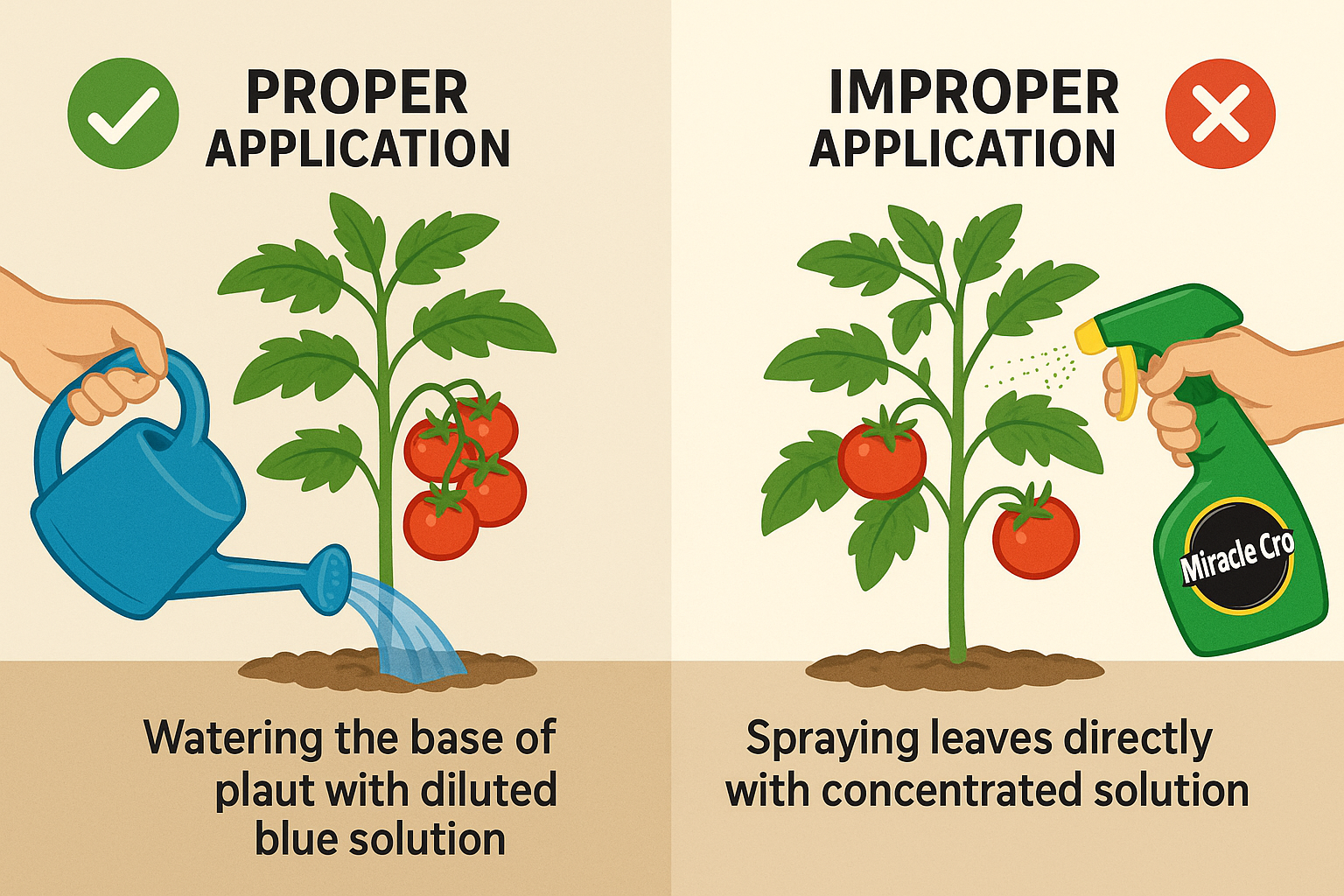
Miracle-Gro is concentrated and can damage plants if used incorrectly:
- Applying too much can “burn” plant roots through excessive salt concentration
- Applying directly to leaves on hot, sunny days can cause leaf scorch
- Using on already stressed plants can compound problems
As one gardener told me, “I learned the hard way that more isn’t better with Miracle-Gro.
My tomato plants looked terrible after I tried to give them an extra boost during a heat wave.”
How to Use Miracle-Gro Effectively on Tomatoes
If you decide to use Miracle-Gro for your tomatoes, following these guidelines will help you maximize benefits while minimizing potential issues:
Choosing the Right Formula
For tomatoes specifically, consider:
- Miracle-Gro Tomato Plant Food (18-18-21): Better balanced for fruiting plants than the all-purpose formula
- Miracle-Gro Shake ‘n Feed Tomato, Fruit & Vegetable Plant Food: Provides slower release of nutrients
- Miracle-Gro Performance Organics: A hybrid option that combines organic materials with enhanced nutrient availability
Proper Application Timing
Timing is crucial when fertilizing tomatoes:
- Early growth stage: Use at half-strength when plants have their first true leaves
- Pre-flowering stage: Apply when flower buds first appear
- Fruiting stage: Continue with applications every 1-2 weeks during fruit development
- Late season: Reduce or eliminate nitrogen-heavy fertilizers as the season progresses
❗ Important: Always water plants thoroughly before applying any fertilizer to prevent root burn.
Correct Dilution and Application Rates
Follow these steps for safe application:
- Measure Miracle-Gro precisely according to package directions (typically 1 tablespoon per gallon of water)
- Dissolve completely in water before applying
- Apply to soil around plants, avoiding direct contact with stems
- Water again lightly after application to help nutrients penetrate soil
- Never exceed recommended concentrations
Complementary Practices
To get the most from Miracle-Gro while addressing some of its limitations:
- Add organic matter: Incorporate compost into your soil at the beginning of the season
- Use mulch: Apply organic mulch around tomato plants to reduce nutrient leaching
- Soil testing: Test your soil annually to understand its specific needs
- Rotation: Consider alternating between synthetic and organic fertilizers
Comparing Miracle-Gro to Alternative Tomato Fertilizers
To make an informed decision, it’s helpful to understand how Miracle-Gro compares to other popular tomato fertilizers:
Miracle-Gro vs. Organic Fertilizers
| Aspect | Miracle-Gro | Organic Fertilizers (Compost, Manure, etc.) |
|---|---|---|
| Nutrient availability | Immediate | Slow-release over time |
| Soil building | Minimal | Significant improvement |
| Application frequency | Every 1-2 weeks | Often seasonal or monthly |
| Consistency | Very consistent | Variable depending on source |
| Environmental impact | Higher | Generally lower |
| Cost per season | Moderate | Variable (can be free if self-produced) |
| Shelf life | Years | Months to years depending on type |
Miracle-Gro vs. Other Synthetic Fertilizers
| Aspect | Miracle-Gro | Specialized Tomato Fertilizers | Slow-Release Granular Fertilizers |
|---|---|---|---|
| N-P-K ratio | 24-8-16 (standard) | Typically balanced (e.g., 4-6-6) | Various (often lower N) |
| Application method | Water-soluble | Various | Sprinkle and water in |
| Release rate | Fast | Fast to moderate | Slow, controlled |
| Frequency needed | Every 1-2 weeks | Every 2-4 weeks | Every 1-3 months |
| Leaching potential | Higher | Moderate | Lower |
| Cost per application | Lower | Moderate | Higher |
Real Gardeners’ Experiences with Miracle-Gro on Tomatoes
I’ve spoken with dozens of gardeners about their experiences using Miracle-Gro on tomatoes. Here’s what some of them shared:
“I’ve used Miracle-Gro on my tomatoes for over 20 years. The key is to switch to their tomato-specific formula once the plants start flowering. My neighbors always ask how I get such big tomatoes!” — Maria, Zone 7b gardener
“After switching from Miracle-Gro to a combination of compost tea and fish emulsion, my tomatoes actually produce more fruit, though it took a season of transition. The flavor is noticeably better too.” — James, community garden coordinator
“I use Miracle-Gro but at half strength, alternating with compost tea. It gives me the quick results I want without completely bypassing soil health.” — Priya, container garden enthusiast
“In my market garden, we avoid synthetic fertilizers completely. But I understand why home gardeners use products like Miracle-Gro. Not everyone has the time or space for large-scale composting.” — Carlos, small-scale organic farmer
These varied experiences highlight an important point: gardening practices exist on a spectrum, and what works best depends on your specific circumstances, goals, and values.
Scientific Perspective: Research on Synthetic Fertilizers and Tomatoes
Scientific research provides additional insights into using synthetic fertilizers like Miracle-Gro on tomatoes:
Yield Impact
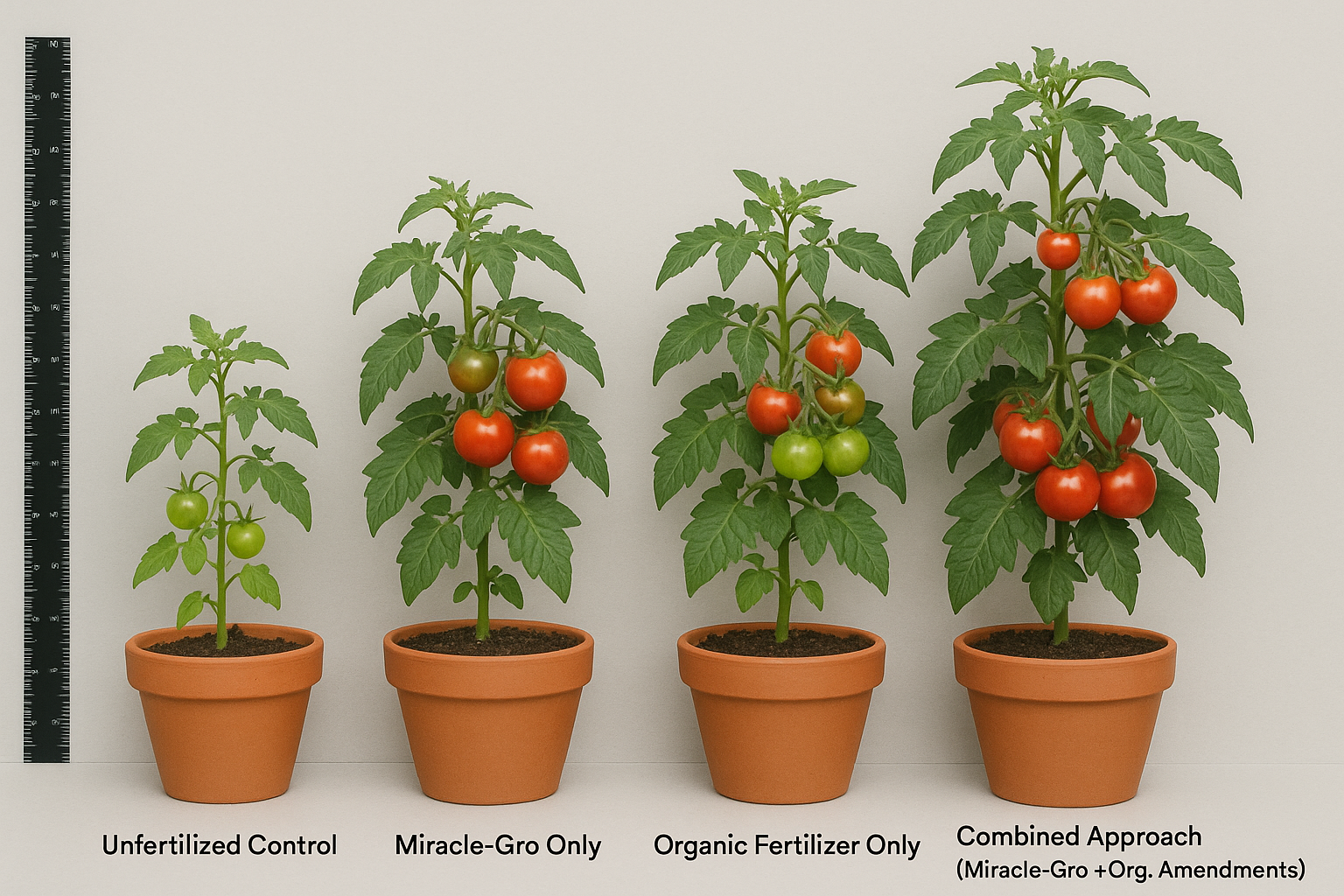
Research consistently shows that both synthetic and organic fertilizers boost tomato yields over unfertilized plants.
A 2023 meta-analysis of 107 studies found organic fertilizers alone improved tomato yield by over 42% Pete and Gerrys, while synthetic fertilizers tend to produce slightly more fruit per plant — though the gap is narrower than most people expect.
Nutrient Density Considerations
UC Davis research, supported by Vélez-Terreros et al. (2024), found that organically grown tomatoes often contain higher levels of antioxidants and vitamin C than conventionally fertilized ones — though they tend to grow smaller.
Bigger isn’t always more nutritious.
Soil Health Research
Long-term studies consistently show that exclusive use of synthetic fertilizers without organic matter additions leads to:
- Decreased soil biological activity
- Reduced organic carbon content
- Lower water retention capacity
- Potential pH imbalances over time
This research supports the approach of many experienced gardeners who combine synthetic fertilizers like Miracle-Gro with organic soil amendments.
Special Considerations for Different Tomato Growing Methods
The effectiveness of Miracle-Gro varies depending on how you’re growing your tomatoes:
Container Tomatoes
For tomatoes grown in containers:
- Pros of using Miracle-Gro: Container soil depletes nutrients quickly, making fast-acting fertilizers beneficial
- Cons of using Miracle-Gro: Salt buildup can occur more easily in containers
- Best practices: Use at half strength but slightly more frequently; ensure containers have good drainage
In-Ground Garden Tomatoes
For traditional garden beds:
- Pros of using Miracle-Gro: Can address specific deficiencies in native soil
- Cons of using Miracle-Gro: Less necessary if soil has been well-amended with compost
- Best practices: Test soil first; use as a supplement to, not replacement for, good soil management
Hydroponic Tomatoes
For hydroponic systems:
- Pros of using Miracle-Gro: Water-soluble nature works well with hydroponic principles
- Cons of using Miracle-Gro: Standard formulations aren’t optimized for hydroponics
- Best practices: Consider specialized hydroponic nutrients instead; if using Miracle-Gro, choose the tomato-specific formula and monitor EC/PPM closely
Common Problems and Solutions When Using Miracle-Gro on Tomatoes
Even with careful application, issues can arise when using Miracle-Gro. Here’s how to identify and address common problems:
Fertilizer Burn
Symptoms:
- Yellow or brown leaf edges
- Wilting despite adequate water
- Slowed growth
- Root discoloration
Solutions:
- Immediately flush soil with plain water
- Temporarily stop all fertilization
- Resume at half strength when plants recover
- Always water before fertilizing in the future
Excessive Foliage, Few Fruits
Symptoms:
- Lush, dark green leaves
- Tall, vigorous plants
- Few flowers or fruits
- Delayed maturity
Solutions:
- Switch to a lower-nitrogen, higher-phosphorus fertilizer
- Reduce fertilizer frequency
- Consider pruning excessive foliage
- Ensure plants receive adequate sunlight
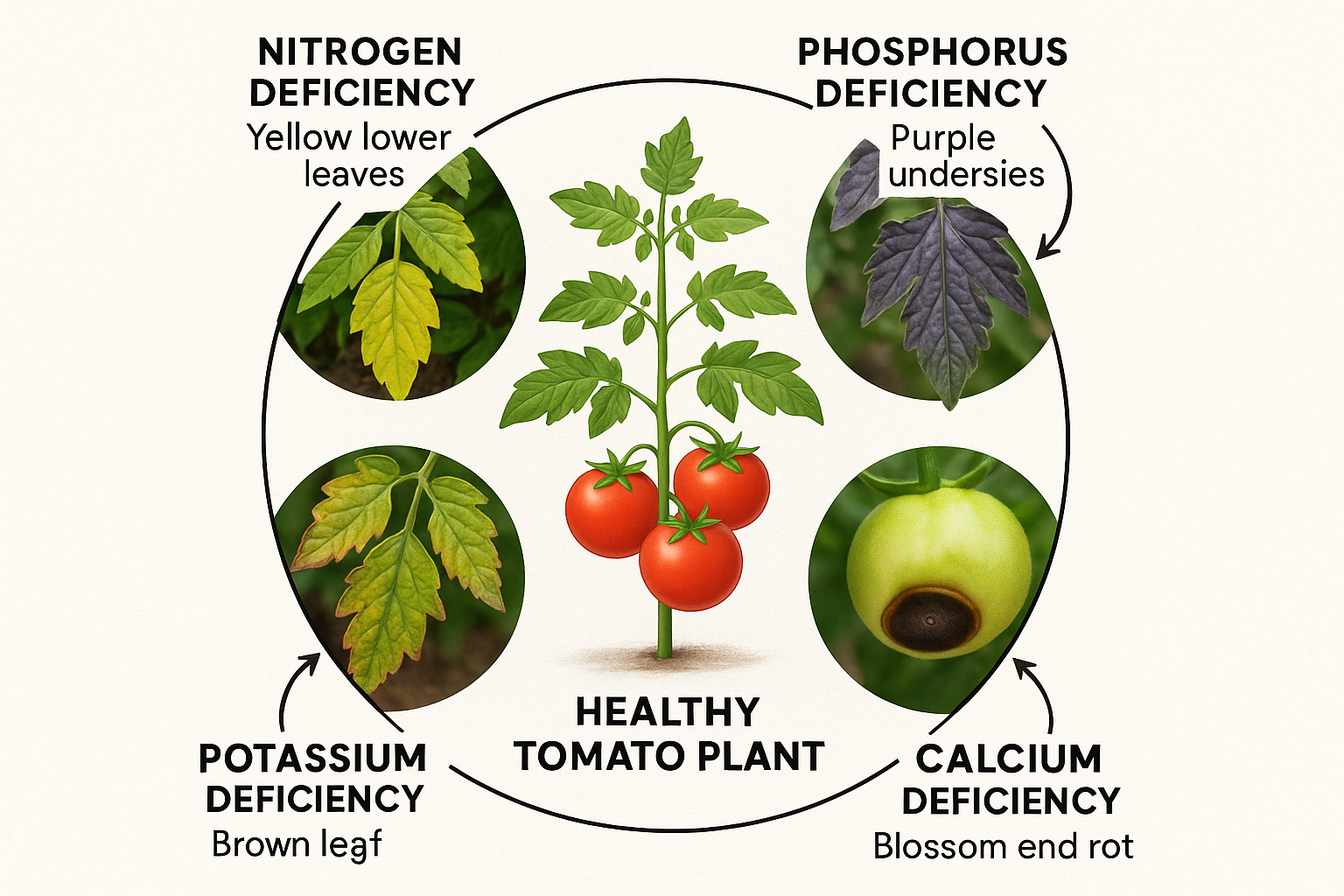
Nutrient Deficiencies Despite Regular Feeding
Symptoms:
- Yellow leaves (various patterns)
- Purple leaf undersides
- Blossom end rot
- Stunted growth
Solutions:
- Test soil pH (Miracle-Gro works best in slightly acidic soil)
- Consider calcium supplementation (Miracle-Gro doesn’t contain much calcium)
- Try a more complete tomato-specific fertilizer
- Address soil compaction which can limit nutrient uptake
Environmental Runoff Concerns
Symptoms:
- Algae growth in nearby water features
- Nutrient testing shows elevated levels in runoff
- Plant growth in non-target areas
Solutions:
- Create buffer zones around garden areas
- Apply fertilizer only when rain isn’t forecast
- Use drip irrigation rather than overhead watering after fertilizing
- Consider switching to slow-release options
Creating a Balanced Fertilizer Approach for Tomatoes
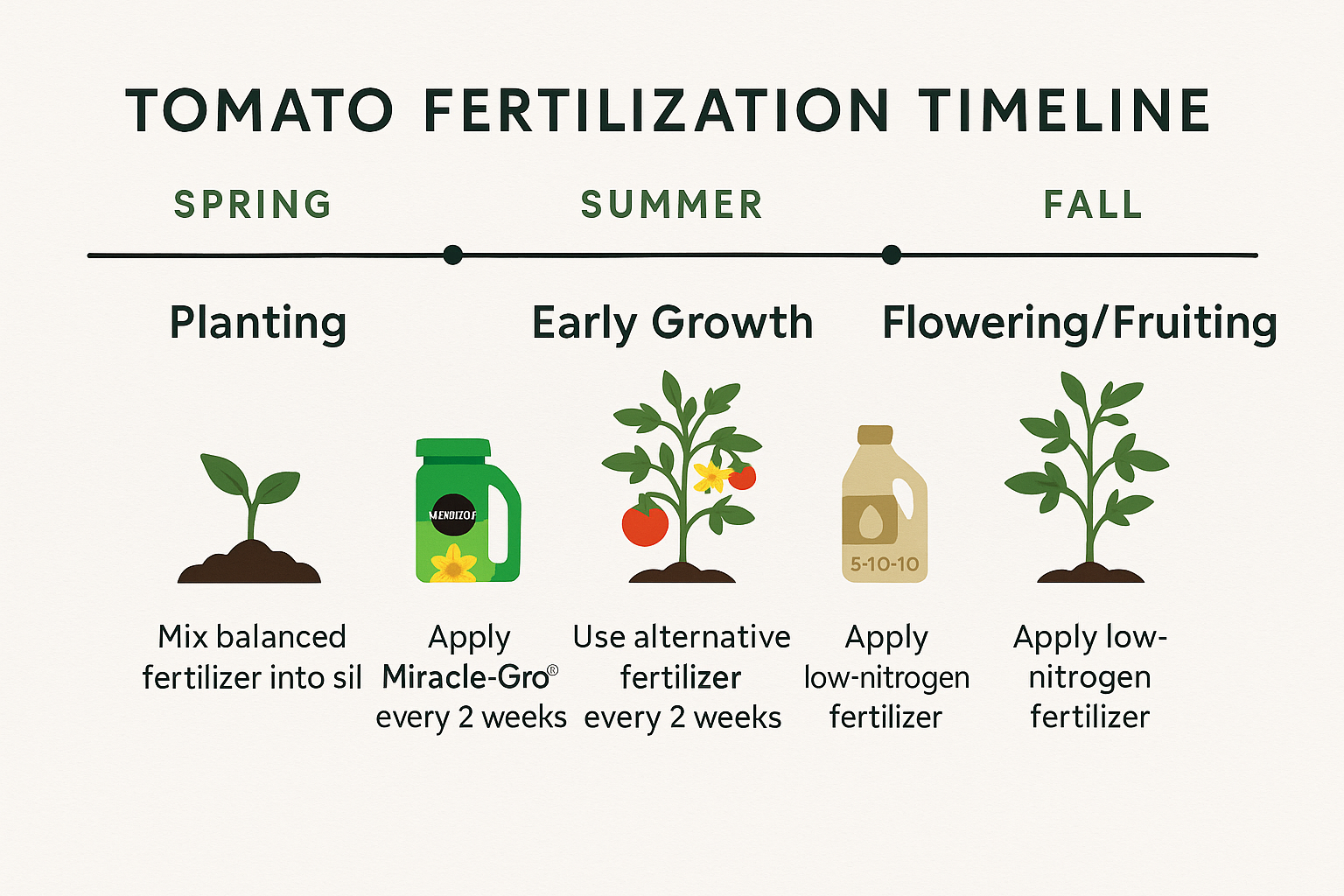
Many experienced gardeners find that a hybrid approach works best for tomatoes.
Here’s a balanced fertilizer strategy that incorporates Miracle-Gro alongside other practices:
Pre-Season Soil Preparation
- Test your soil: Understanding your starting point helps determine what amendments are needed
- Add organic matter: Incorporate 2-3 inches of compost into your tomato bed
- Consider slow-release granular fertilizer: Apply a balanced, slow-release organic fertilizer during bed preparation
Early Growth Stage (Seedling to 12″ Tall)
- Starter solution: Use Miracle-Gro at half strength when transplanting
- Compost tea: Apply weekly or bi-weekly to support beneficial microorganisms
- Light feeding: Apply Miracle-Gro at half strength every 2-3 weeks
Flowering and Early Fruiting Stage
- Switch formulations: Transition to Miracle-Gro Tomato Plant Food or similar high-phosphorus formula
- Regular feeding: Apply every 1-2 weeks at recommended strength
- Foliar feeding: Consider occasional foliar application of seaweed extract for micronutrients
Peak Production Stage
- Maintain schedule: Continue with tomato-specific formula every 1-2 weeks
- Calcium supplementation: Add calcium if blossom end rot appears (Miracle-Gro doesn’t provide adequate calcium)
- Monitor plants: Adjust feeding based on plant appearance and production
Late Season Approach
- Reduce nitrogen: Cut back on high-nitrogen fertilizers as season ends
- Final feeding: Give one last application of high-potassium fertilizer to help remaining fruits mature
- Soil building: Add compost or cover crops after harvest to rebuild soil for next season
This integrated approach leverages the quick-acting benefits of Miracle-Gro while addressing its limitations through complementary practices.
Organic Alternatives to Miracle-Gro for Tomato Gardeners
If you’re considering moving away from Miracle-Gro, here are some effective organic alternatives for tomato fertilization:
Compost and Compost Tea
Benefits:
- Improves soil structure
- Provides slow-release nutrients
- Supports beneficial soil microorganisms
- Can be homemade at no cost
Application:
- Add 1-2 inches as a pre-season amendment
- Apply ½ inch as a side dressing monthly
- Use compost tea as a soil drench or foliar spray bi-weekly
Fish Emulsion and Seaweed Extracts
Benefits:
- Provides quickly available nitrogen (fish emulsion)
- Rich in micronutrients and growth hormones (seaweed)
- Improves stress resistance
- Can be applied as foliar feed
Application:
- Dilute according to package directions (typically 1 tablespoon per gallon)
- Apply every 2-3 weeks during growing season
- Combine for synergistic benefits
Worm Castings
Benefits:
- Exceptionally balanced nutrient profile
- Contains beneficial microorganisms
- Provides slow-release fertility
- Won’t burn plants even when used liberally
Application:
- Add 1 cup per plant when transplanting
- Side dress with ¼-½ cup monthly
- Make “worm tea” for liquid application
Specialized Organic Tomato Fertilizers
Benefits:
- Formulated specifically for tomato needs
- Often contain calcium to prevent blossom end rot
- Available in convenient forms
- Consistent quality
Application:
- Follow package directions for application rates
- Typically applied every 3-4 weeks
- Often more expensive than homemade options but more convenient
Frequently Asked Questions About Miracle-Gro and Tomatoes
Based on my experience and research, here are answers to the most common questions gardeners have about using Miracle-Gro on tomatoes:
Is Miracle-Gro safe for vegetable gardens?
Answer: Yes, Miracle-Gro is safe for vegetable gardens when used as directed.
It’s approved for use on edible plants and, when applied correctly, the nutrients are taken up by the plants rather than remaining in harmful forms.
However, always follow label instructions regarding timing and harvest intervals.
How often should I apply Miracle-Gro to my tomato plants?
Answer: For standard water-soluble Miracle-Gro, apply every 7-14 days during the growing season.
For Miracle-Gro slow-release products, follow package directions, typically every 1-3 months.
Reduce frequency during extreme heat or if plants show stress.
Can Miracle-Gro cause my tomatoes to have less flavor?
Answer: Some gardeners report that heavily fertilized tomatoes, especially with high-nitrogen fertilizers, can have less intense flavor.
This may be due to the higher water content in rapidly grown fruit.
For best flavor, avoid over-fertilizing and consider reducing applications as fruits ripen.
Is Miracle-Gro considered organic?
Answer: No, standard Miracle-Gro products are not considered organic as they contain synthetically derived nutrients.
However, Miracle-Gro does offer an organic line called “Performance Organics” that complies with organic standards while still providing readily available nutrients.
What’s better for tomatoes: Miracle-Gro or compost?
Answer: This isn’t an either/or question.
Compost builds soil structure and provides slow-release nutrients, while Miracle-Gro provides immediately available nutrients.
Many successful gardeners use both: compost as a soil amendment and Miracle-Gro as supplemental feeding during the growing season.
Can I use Miracle-Gro on seedlings?
Answer: Yes, but use it at half strength for seedlings to prevent burning tender roots.
Wait until seedlings have their first true leaves before applying any fertilizer, and ensure soil is moist before application.
Expert Tips for Tomato Fertilization Success
After years of growing tomatoes and consulting with master gardeners, here are some expert tips that apply whether you use Miracle-Gro or other fertilizers:
1. Understand Your Tomato Variety’s Needs
Different tomato varieties have different nutrient requirements:
- Determinate varieties: Benefit from a single early-season heavy feeding followed by moderate, consistent feeding
- Indeterminate varieties: Prefer regular, moderate feeding throughout the extended growing season
- Heirloom varieties: Often perform better with gentler, more organic approaches
- Modern hybrids: Frequently respond well to more intensive fertilization
2. Pay Attention to Calcium
Blossom end rot is a common tomato problem related to calcium uptake:
- Miracle-Gro doesn’t contain significant calcium
- Supplement with garden lime, gypsum, or calcium spray
- Consistent watering helps calcium uptake even when present in soil
3. Follow the Plant’s Lead
Learn to “read” your tomato plants:
- Dark green, lush foliage with few fruits: Reduce nitrogen
- Pale green or yellowing leaves: May need more nitrogen or have pH issues
- Purple leaf undersides: Often indicates phosphorus deficiency
- Brown leaf edges: Can signal fertilizer burn or potassium deficiency
4. Consider Fertigation
For consistent results, many experts recommend fertigation (irrigation with dilute fertilizer):
- Use Miracle-Gro at quarter strength in drip irrigation systems
- Apply more frequently but in lower concentrations
- Results in more consistent growth without feast/famine cycles
5. Seasonal Adjustments
Adjust your fertilization strategy throughout the growing season:
- Spring: Higher nitrogen acceptable as plants establish
- Early summer: Transition to balanced or phosphorus-heavy formulas as flowering begins
- Mid-summer: Maintain regular feeding during peak production
- Late summer/fall: Reduce nitrogen, maintain potassium for final fruit ripening
Case Study: My Personal Experience with Miracle-Gro on Tomatoes
In my own garden, I’ve experimented with various approaches to tomato fertilization over the years.
Here’s what I’ve learned through direct experience:
When I first started growing tomatoes, I used Miracle-Gro exclusively, applying it every week as directed.
My plants grew quickly and looked lush, but I noticed they produced fewer tomatoes than expected, and the fruits were sometimes watery.
The following year, I switched to a completely organic approach using only compost and worm castings.
My yields improved and the flavor was noticeably better, but I struggled with certain nutrient deficiencies, particularly in containers.
After several seasons of experimentation, I’ve settled on what I call my “80/20 approach”:
- 80% organic: I build soil with compost, use organic mulch, and apply worm castings and slow-release organic fertilizers as my foundation
- 20% synthetic: I keep Miracle-Gro Tomato Plant Food on hand for occasional use when plants need a quick nutrient boost or show deficiency symptoms
This balanced approach has given me the best results: healthy plants, abundant harvests, excellent flavor, and fewer pest and disease issues.
What I’ve ultimately learned is that there’s no one-size-fits-all answer to the question “Is Miracle-Gro good for tomatoes?”
The answer depends on your specific situation, goals, and gardening philosophy.
Conclusion:
Is Miracle-Gro Good for Tomatoes?
After thoroughly examining the question “Is Miracle-Gro good for tomatoes?” from multiple angles, the answer is nuanced rather than a simple yes or no.
Miracle-Gro can be good for tomatoes when:
- Used according to directions with proper dilution and timing
- Applied using the tomato-specific formulations rather than all-purpose varieties
- Incorporated as part of a broader soil health strategy
- Used to address specific nutrient deficiencies quickly
However, Miracle-Gro may not be ideal for tomatoes when:
- Used exclusively without organic matter additions
- Applied too frequently or at excessive concentrations
- Used in gardens where soil biology and sustainable practices are top priorities
- Applied without consideration for plant growth stage and specific needs
The most successful approach for most home gardeners is likely a middle path: using Miracle-Gro strategically while also incorporating organic soil-building practices.
This balanced approach leverages the benefits of both synthetic and organic methods while minimizing the drawbacks of each.
As with most gardening practices, observation, adaptation, and learning from your specific growing conditions will ultimately lead to the best results.
Whether you choose to use Miracle-Gro, organic alternatives, or a combination approach, the key is to pay attention to your plants, adjust your methods based on results, and continue learning about the fascinating world of tomato cultivation.
Remember that healthy, delicious tomatoes can be grown using various fertilization strategies.
The “best” approach is the one that aligns with your gardening goals, values, and the specific needs of your garden ecosystem.
Next Steps for Tomato Gardeners
If you’re ready to improve your tomato fertilization strategy, consider these action steps:
- Test your soil to understand its current nutrient profile and pH
- Experiment with different approaches in different parts of your garden
- Keep a garden journal to track which methods produce the best results
- Connect with local gardeners to learn what works in your specific climate
- Continue educating yourself about plant nutrition and soil health
No matter which fertilization strategy you choose, remember that tomatoes also need consistent water, adequate sunlight, proper spacing, and protection from pests and diseases to thrive.
A holistic approach to tomato care will always yield the best results.
Happy gardening, and may your tomato harvests be abundant!