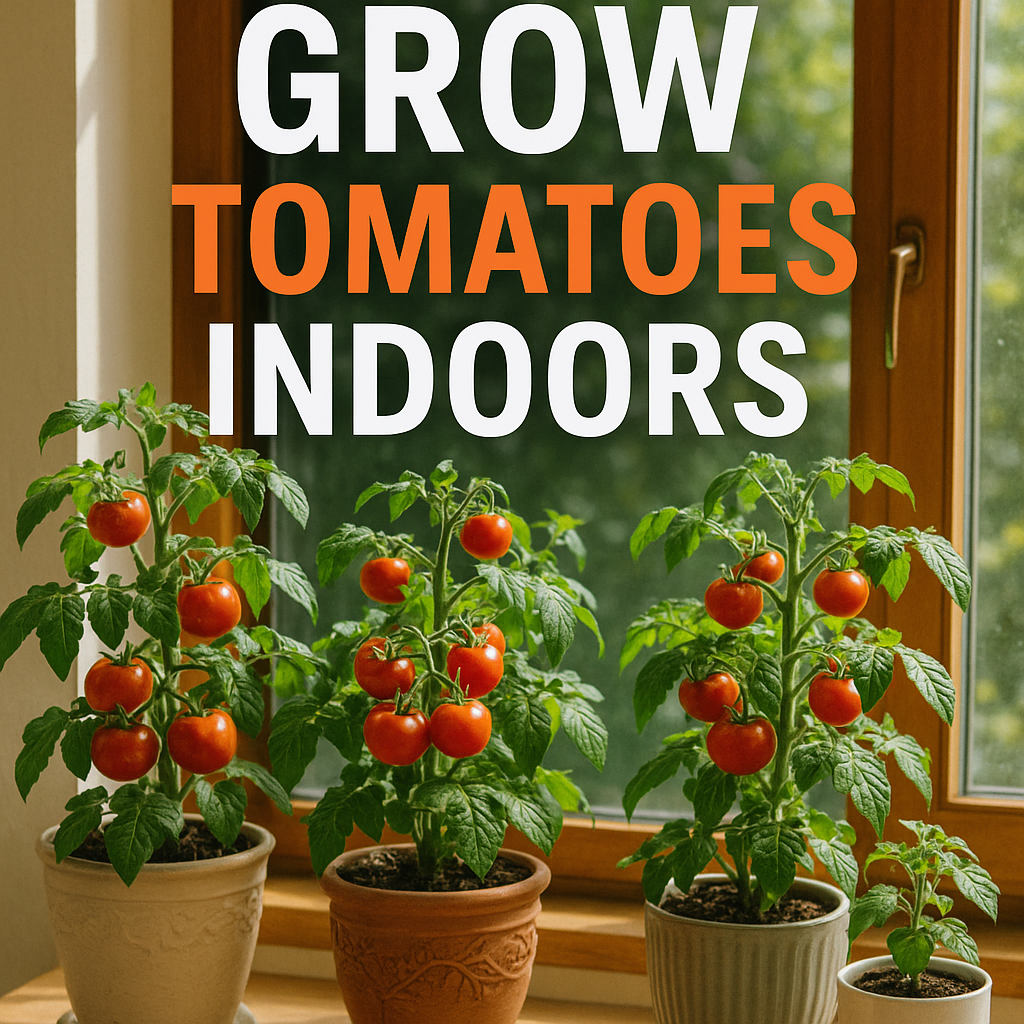
How to grow tomatoes indoors in 2026 isn’t about luck—it’s about controlling light, space, and nutrients.
Indoors, you replace the sun with a full-spectrum LED grow light (12–16 hours daily), garden soil with high-quality potting mix, and unpredictable weather with consistent care.
Choose compact, high-yield varieties like cherry or dwarf tomatoes. Plant in a 10–12 inch deep container with proper drainage.
Water only when the top inch of soil feels dry, and feed with a balanced liquid fertilizer every two weeks. Gently shake the stems to help with pollination.
Control the environment, and you’ll harvest reliably—no backyard required.
Key Takeaways
- Choose the right varieties: Cherry, grape, and determinate dwarf tomatoes are ideal for indoor growing due to their compact size and shorter growth cycles.
- Lighting is crucial: Tomatoes need 14-16 hours of bright light daily; south-facing windows or supplemental grow lights are essential.
- Container selection matters: Use 5-gallon containers with drainage holes for full-sized varieties; smaller 1-2 gallon pots work for dwarf varieties.
- Proper pollination is necessary: Indoor tomatoes need manual pollination using a small brush, electric toothbrush, or gentle shaking of the plants.
- Consistent care yields results: Maintain temperatures between 65-80°F (18-27°C), water consistently but avoid overwatering, and feed with balanced fertilizer for optimal harvests.
Why Grow Tomatoes Indoors?
Growing tomatoes indoors offers numerous advantages that make it an attractive option for gardeners of all experience levels:
Year-Round Harvests
Perhaps the most compelling reason to grow tomatoes indoors is the ability to enjoy fresh, homegrown tomatoes throughout the year.
No more waiting for summer or settling for flavorless store-bought options in winter.
With the right setup, you can have a continuous harvest regardless of the season or climate outside.
Control Over Growing Conditions
Indoor gardening gives you complete control over the environment.
You decide the temperature, humidity, light exposure, and watering schedule.
This control means fewer pests, no weather-related disasters, and the ability to create optimal growing conditions for your tomato plants.
Space Efficiency
Don’t have a yard or garden plot? No problem! Indoor tomato growing is perfect for apartments, condos, and homes with limited outdoor space.
Modern growing techniques like vertical gardening and compact hydroponic systems allow you to maximize your harvest in minimal space.
Educational Value
For families with children, growing tomatoes indoors provides an excellent educational opportunity. Kids can observe the entire growing process from seed to fruit, learning valuable lessons about plant biology, responsibility, and where food comes from.
Therapeutic Benefits
There’s something deeply satisfying and therapeutic about nurturing plants. Indoor gardening can reduce stress, improve mood, and provide a sense of accomplishment. The simple act of tending to your tomato plants can become a mindful practice that enhances your overall well-being.
“There is no plant that tastes more of summer than a homegrown tomato, and growing them indoors means you can capture that summer feeling all year long.” – Indoor Gardening Association, 2025
Understanding Tomato Plant Basics
Before diving into the specifics of indoor tomato cultivation, it’s important to understand some fundamental aspects of tomato plants.
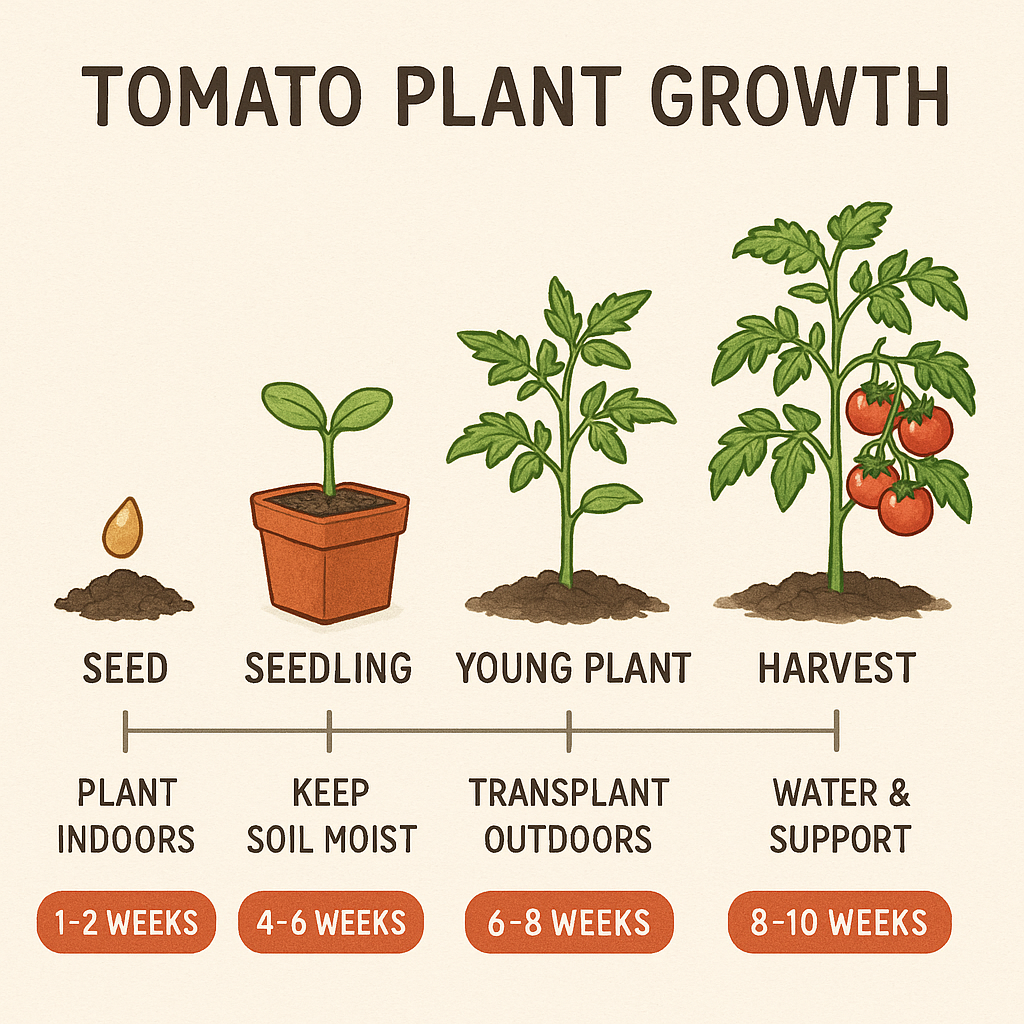
Tomato Plant Life Cycle
Tomatoes follow a predictable growth pattern:
- Germination (5-10 days): Seeds sprout and develop their first set of leaves (cotyledons).
- Seedling stage (3-4 weeks): True leaves form, and the plant establishes its root system.
- Vegetative growth (3-5 weeks): The plant focuses on growing stems and leaves.
- Flowering (1-2 weeks): Yellow flowers appear, which will eventually develop into tomatoes.
- Fruiting (5-7 weeks): Flowers are pollinated and begin to develop into tomatoes.
- Ripening (2-3 weeks): Fruits change color and develop their full flavor.
Understanding this cycle helps you provide appropriate care at each stage and anticipate your harvest timeline.
Determinate vs. Indeterminate Varieties
Tomato plants fall into two main growth categories:
Determinate (Bush) Tomatoes
- Grow to a predetermined height (usually 2-4 feet)
- Produce all their fruit within a short period
- Require minimal pruning and support
- Ideal for containers and indoor growing
- Examples: Roma, Patio Princess, Bush Early Girl
Indeterminate (Vining) Tomatoes
- Continue growing and producing fruit until killed by frost or disease
- Can reach heights of 6-10 feet or more
- Require substantial support and regular pruning
- More challenging but possible for indoor growing with adequate space
- Examples: Sungold, Sweet 100, Brandywine
For most indoor situations, determinate varieties or specially bred dwarf varieties will be your best bet due to their manageable size.
Tomato Plant Anatomy
Understanding the basic parts of a tomato plant will help you care for it properly:
- Roots: Absorb water and nutrients; can develop along the stem when buried
- Stem: Supports the plant and transports nutrients
- Leaves: Capture sunlight for photosynthesis
- Suckers: Secondary stems that grow in the crotch between the main stem and branches
- Flowers: Yellow blossoms that develop into fruit when pollinated
- Fruit: The tomatoes themselves, which contain seeds for the next generation
Choosing the Right Tomato Varieties for Indoor Growing
Not all tomato varieties are created equal when it comes to indoor growing. Some thrive in containers and limited space, while others struggle. Here are the best types to consider for your indoor garden:
Best Varieties for Indoor Growing
Cherry and Grape Tomatoes
These smaller varieties mature quickly and produce abundant fruit:
| Variety | Days to Maturity | Height | Special Features |
|---|---|---|---|
| Tiny Tim | 45-55 days | 12-18″ | Ultra-compact, perfect for windowsills |
| Red Robin | 55 days | 8-12″ | Sweet fruit, very compact |
| Micro Tom | 50-60 days | 6-8″ | World’s smallest tomato plant |
| Sungold | 57 days | 4-5′ | Exceptionally sweet orange cherry tomatoes |
| Sweet Million | 60 days | 4-6′ | Prolific producer of sweet red cherries |
Dwarf Varieties
These specially bred varieties combine compact growth with good-sized fruit:
- Patio Choice Yellow: Compact plants (18″) with sweet yellow cherry tomatoes
- Tumbler: Cascading growth habit, perfect for hanging baskets
- Totem: Upright growth with minimal need for staking
- Window Box Roma: Determinate paste tomato bred for containers
- Balcony: Compact plant with medium-sized fruit
Container-Friendly Larger Tomatoes
If you want larger slicing tomatoes:
- Bush Early Girl: Determinate version of the popular Early Girl
- Celebrity: Reliable producer of medium-sized fruit on sturdy plants
- Patio F: Bred specifically for container growing
- Bush Champion: Compact plants with full-sized fruit
- Better Bush: Sturdy, compact plants with good disease resistance
Varieties to Avoid Indoors
Some tomato varieties are particularly challenging for indoor growing:
- Beefsteak types: These plants are typically large and require significant support
- Most heirloom varieties: Many grow quite large and have specific environmental needs
- Very long-season varieties: Those requiring 85+ days to maturity may struggle indoors
💡 Pro Tip: When selecting seeds or seedlings, look specifically for varieties labeled as container-friendly, dwarf, patio, or bush types for the best results indoors.
Essential Supplies for Indoor Tomato Growing
Before you begin, gather these supplies to create an optimal growing environment for your indoor tomatoes.
Containers and Growing Mediums
Container Options
The right container makes a significant difference in your success:
- Standard plastic pots: Affordable and lightweight, but may tip with top-heavy plants
- Ceramic containers: Attractive and stable, but heavy and potentially expensive
- Self-watering containers: Help maintain consistent moisture levels
- Fabric grow bags: Provide excellent drainage and air pruning of roots
- Hydroponic systems: Soilless growing for maximum efficiency and cleanliness
Regardless of the type, ensure your containers have adequate drainage holes and are appropriately sized:
- 5+ gallons (18+ liters) for full-sized determinate varieties
- 1-2 gallons (4-8 liters) for dwarf varieties
- 3-5 gallons (11-18 liters) for cherry tomato varieties
Growing Mediums
Choose from these options:
- Potting mix: Use a high-quality, well-draining mix specifically formulated for vegetables
- Soilless mix: Lightweight blends of peat, coconut coir, perlite, and vermiculite
- Hydroponic media: Clay pellets, rockwool, or other inert materials for hydroponic systems
Avoid using garden soil, which can compact in containers and may contain pests or diseases.
Lighting Requirements
Tomatoes are high-light plants, requiring significant light to produce fruit. Options include:
Natural Light
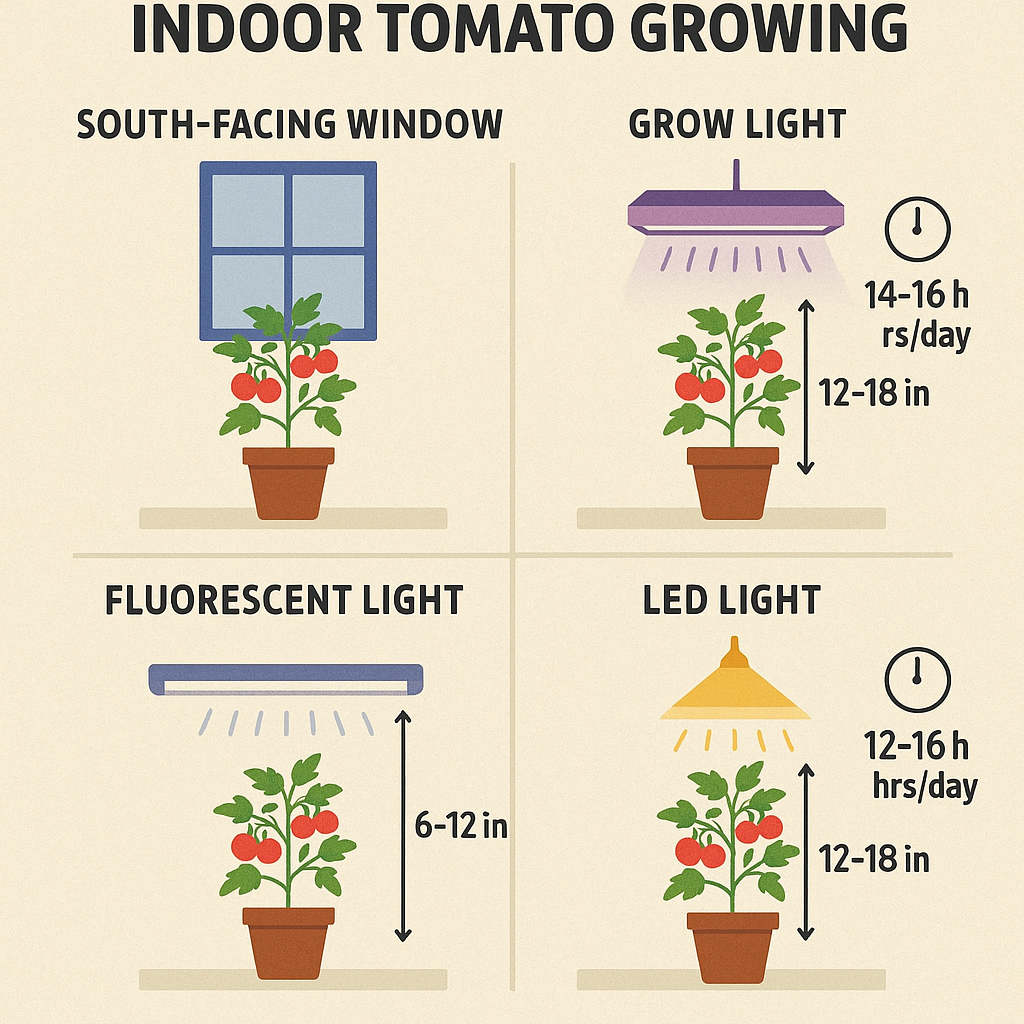
- South-facing windows: Provide the most intense and longest duration of light
- Sunrooms or conservatories: Ideal locations if available
- Window exposure: Plants need 8+ hours of direct sunlight daily to fruit properly
Artificial Lighting
When natural light is insufficient (which is common, especially in winter), you’ll need supplemental lighting:
- LED grow lights: Energy-efficient with customizable spectrum options
- Full-spectrum fluorescent: Less expensive but less efficient than LEDs
- High-intensity discharge (HID): Powerful but generate heat and use more electricity
For optimal results:
- Position lights 6-12 inches above plants
- Provide 14-16 hours of light daily
- Use timers to maintain consistent light cycles
- Adjust height as plants grow

Support Systems
Even compact tomato varieties benefit from support:
- Tomato cages: Smaller versions work well for determinate varieties
- Stakes: Bamboo or plastic stakes can support individual stems
- Trellises: Wall-mounted or freestanding options for vining types
- String systems: Simple twine can be used to tie up growing branches
- Plant clips: Gentle ways to secure stems to supports
Watering Tools
Consistent watering is crucial for indoor tomatoes:
- Watering can with narrow spout: For precise watering at soil level
- Moisture meter: Helps prevent over or under-watering
- Self-watering systems: From simple water globes to sophisticated automated setups
- Trays: Place under containers to catch excess water and increase humidity
- Spray bottle: For misting flowers during pollination
Fertilizers and Nutrients
Indoor tomatoes rely entirely on you for their nutrition:
- Balanced liquid fertilizer: Look for formulations specifically for tomatoes or vegetables
- Slow-release granular fertilizer: Provides steady nutrition over time
- Organic options: Fish emulsion, seaweed extract, or compost tea
- Calcium supplements: Helps prevent blossom end rot, common in container tomatoes
- Hydroponic nutrients: Specialized formulations if using a soilless system
Step-by-Step Guide to Growing Tomatoes Indoors
Now that you understand the basics and have gathered your supplies, let’s walk through the entire process of growing tomatoes indoors.
Starting from Seeds vs. Seedlings
You have two options for beginning your indoor tomato journey:
Starting from Seeds
Pros:
- Wider variety selection
- Less expensive
- Satisfaction of growing from scratch
- No risk of introducing pests from nursery plants
Cons:
- Longer time to harvest (add 4-6 weeks)
- Requires additional supplies (seed trays, heat mat, etc.)
- Higher risk of failure for beginners
Starting from Seedlings
Pros:
- Faster time to harvest
- Easier for beginners
- Less equipment needed initially
- Can inspect plants for health before purchasing
Cons:
- Limited variety selection
- More expensive
- Potential to introduce pests or diseases
- May experience transplant shock
Seed Starting Process
If you choose to start from seeds:
- Fill seed trays with moistened seed-starting mix
- Plant seeds 1/4 inch deep, 2-3 seeds per cell
- Cover lightly with mix and mist with water
- Place in warm location (70-80°F/21-27°C) or use a heat mat
- Cover with plastic dome or plastic wrap to maintain humidity
- Provide bright, indirect light until germination (5-10 days)
- Remove cover once seeds sprout
- Thin seedlings to one per cell when they have their first true leaves
- Provide 14-16 hours of light daily, either from a sunny window or grow lights
- Transplant to larger containers when seedlings are 4-6 inches tall with several sets of true leaves
Transplanting Process
Whether starting with your own seedlings or purchased ones:
- Choose an appropriately sized container with drainage holes
- Fill container with potting mix, leaving 1-2 inches of space at the top
- Make a hole in the center large enough for the root ball
- Remove seedling carefully from its original container
- Plant slightly deeper than it was growing previously (tomatoes can form roots along buried stems)
- Firm soil gently around the plant
- Water thoroughly until water runs from drainage holes
- Place in final growing location with adequate light
- Install support if needed
💡 Pro Tip: When transplanting, bury tomato plants up to their first set of leaves. The buried stem will develop additional roots, creating a stronger plant.
Optimal Growing Conditions
Creating the right environment is crucial for success:
Temperature
- Daytime: 70-80°F (21-27°C) ideal
- Nighttime: No lower than 65°F (18°C)
- Avoid cold drafts from windows, doors, or air conditioning
- Use a thermometer to monitor conditions
Humidity
- Ideal range: 40-60% relative humidity
- Too dry: Use trays with pebbles and water (not touching pot bottom) to increase humidity
- Too humid: Improve air circulation with fans to prevent disease
Air Circulation
- Gentle fan movement helps strengthen stems and prevent disease
- Avoid direct, strong drafts on plants
- Ensure adequate spacing between plants for air movement
Watering Techniques
Proper watering is one of the most important aspects of indoor tomato care:
How to Water
- Water at the base of the plant, avoiding wetting leaves
- Water deeply until it runs from drainage holes
- Allow top inch of soil to dry before watering again
- Use room temperature water to avoid shocking plants
Watering Frequency
Factors affecting watering needs:
- Container size (smaller pots dry out faster)
- Temperature and humidity of your home
- Plant size and growth stage
- Type of growing medium
Most indoor tomatoes need watering every 2-3 days, but always check soil moisture first rather than following a strict schedule.
Signs of Watering Problems
Underwatering:
- Wilting, especially during the day
- Dry, cracked soil
- Yellowing and dropping of lower leaves
- Slow growth
Overwatering:
- Yellowing leaves throughout the plant
- Wilting that doesn’t improve after watering
- Fungus gnats around the soil
- Root rot (dark, mushy roots)
Fertilizing Schedule
Indoor tomatoes rely entirely on you for nutrition:
Early Growth Stage
- Start fertilizing when seedlings have their first true leaves
- Use half-strength balanced liquid fertilizer (like 10-10-10)
- Apply every 2 weeks
Flowering and Fruiting Stage
- Switch to a formula higher in phosphorus and potassium (like 5-10-10)
- Apply weekly at recommended strength
- Consider supplemental calcium to prevent blossom end rot
Application Methods
- Liquid fertilizer: Apply when watering
- Slow-release granules: Sprinkle on soil surface according to package directions
- Foliar feeding: Spray diluted nutrients directly on leaves (best as a supplement, not primary feeding method)
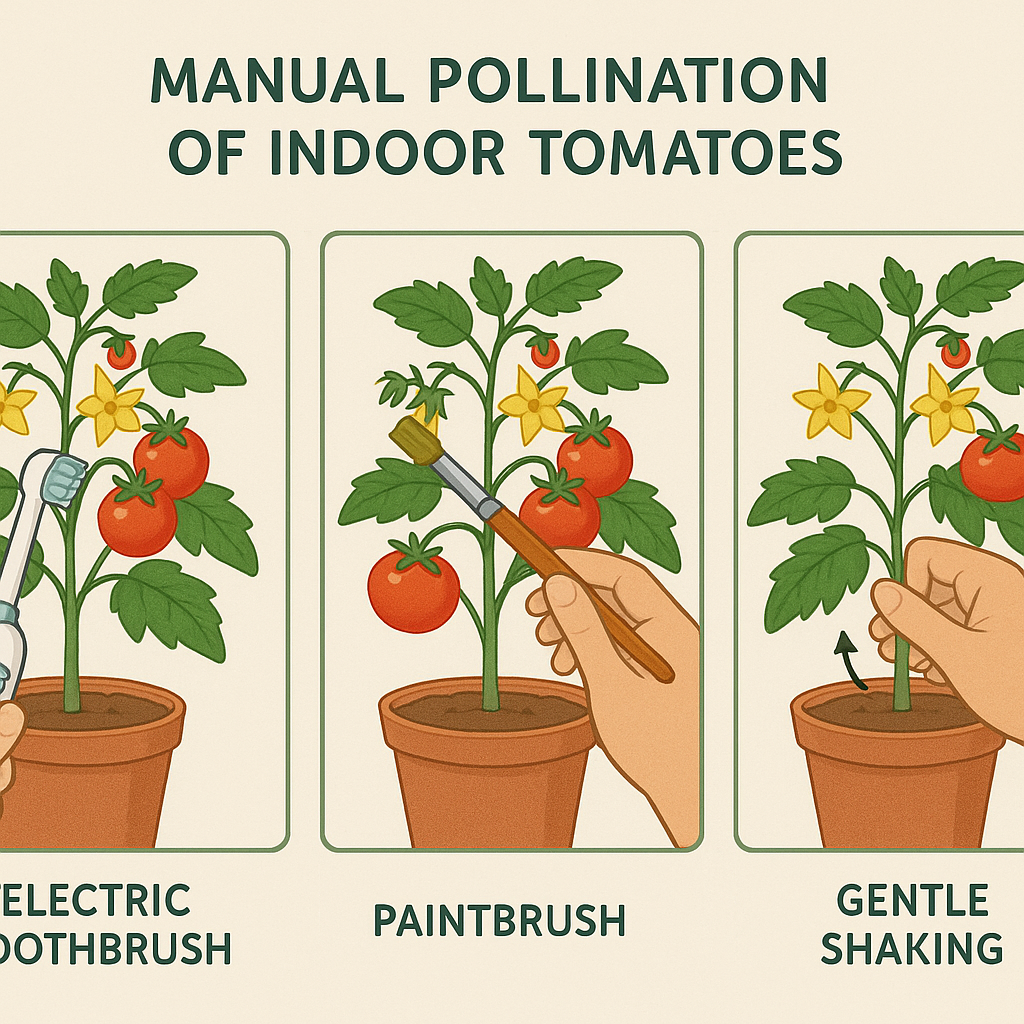
Pollination Methods
Unlike outdoor plants, indoor tomatoes don’t have bees and wind to help with pollination:
Manual Pollination Techniques
- Timing: Pollinate when flowers are fully open, typically mid-morning
- Methods:
- Electric toothbrush: Hold near (not touching) flower clusters to vibrate pollen loose
- Small paintbrush: Gently transfer pollen between flowers
- Gentle shaking: Lightly shake flowering stems to release pollen
- Fan: Run a gentle fan for a few hours daily when plants are flowering
Increasing Pollination Success
- Maintain proper temperature: 70-80°F (21-27°C) during the day
- Ensure adequate light: Insufficient light reduces flower production
- Avoid excessive humidity: Very high humidity can make pollen sticky and less viable
- Pollinate every other day during flowering period

Pruning and Training Indoor Tomato Plants
Proper pruning and training keep your indoor tomatoes manageable and productive.
Pruning Techniques
Why Prune Indoor Tomatoes?
- Improves air circulation
- Directs energy to fruit production
- Keeps plants manageable in limited space
- Reduces disease risk
- Creates stronger, more productive plants
What to Prune
-
Suckers: These are the shoots that develop in the crotch between the main stem and branches
- For determinate varieties: Remove only the lowest suckers
- For indeterminate varieties: Remove most suckers to focus energy on fruit production
-
Lower leaves: Remove leaves that:
- Touch the soil (disease vector)
- Show signs of yellowing or disease
- Are heavily shaded by upper growth
-
Excess flowers: If plant is setting too many fruits, remove some flower clusters to ensure remaining fruits develop properly
How to Prune
- Use clean scissors or pruning shears
- Make cuts close to the main stem without damaging it
- Prune in the morning when plants are hydrated
- Dispose of pruned material away from your plants
Training Systems
Several methods work well for indoor tomatoes:
Single-Stem Method
- Best for indeterminate varieties
- Remove all suckers
- Train plant up a single stake or string
- Results in fewer but larger fruits
- Most space-efficient method
Two or Three-Stem Method
- Allow one or two suckers to develop into main stems
- Remove all other suckers
- Train each stem up its own support
- Balances yield with space efficiency
Cage Method
- Best for determinate varieties
- Allow plant to grow naturally within a supportive cage
- Minimal pruning required
- Good for beginners
Common Problems and Solutions
Even with the best care, you may encounter challenges. Here’s how to address them:
Pest Management
Indoor tomatoes can still attract pests:
Common Indoor Tomato Pests
-
Aphids
- Tiny green, black, or white insects on new growth
- Solution: Spray with insecticidal soap or neem oil; introduce ladybugs for natural control
-
Spider Mites
- Tiny specks that create fine webbing; plants look dusty
- Solution: Increase humidity; spray with water; apply insecticidal soap or neem oil
-
Whiteflies
- Small white flying insects that scatter when plant is disturbed
- Solution: Yellow sticky traps; insecticidal soap; neem oil
-
Fungus Gnats
- Small black flies around soil; larvae feed on roots
- Solution: Allow soil to dry between waterings; use sticky traps; apply BTI (Bacillus thuringiensis israelensis)
Prevention Strategies
- Inspect plants regularly, especially undersides of leaves
- Quarantine new plants for two weeks before placing near existing ones
- Maintain good air circulation
- Avoid overwatering
- Use sterile potting mix
Disease Management
Several diseases can affect indoor tomatoes:
Common Diseases
-
Powdery Mildew
- White powdery coating on leaves
- Solution: Improve air circulation; reduce humidity; apply fungicide or neem oil
-
Blossom End Rot
- Dark, sunken areas at bottom of fruits
- Solution: Maintain consistent watering; add calcium supplement; ensure proper pH (6.0-6.8)
-
Leaf Mold
- Yellow spots on upper leaf surfaces, gray-brown fuzzy growth underneath
- Solution: Reduce humidity; improve air circulation; remove affected leaves
-
Early Blight
- Dark spots with concentric rings on lower leaves
- Solution: Remove affected leaves; avoid wetting foliage; apply fungicide
Prevention Strategies
- Start with disease-resistant varieties
- Maintain appropriate spacing between plants
- Water at the base of plants, keeping foliage dry
- Ensure good air circulation
- Clean tools between uses
Nutrient Deficiencies
Indoor plants rely entirely on you for their nutrition:
Identifying Common Deficiencies
-
Nitrogen Deficiency
- Symptoms: Older leaves turn yellow; stunted growth
- Solution: Apply balanced fertilizer or one higher in nitrogen
-
Phosphorus Deficiency
- Symptoms: Purple tint to leaves; poor flowering
- Solution: Apply phosphorus-rich fertilizer
-
Potassium Deficiency
- Symptoms: Leaf edges brown and curl; weak stems
- Solution: Apply potassium-rich fertilizer
-
Calcium Deficiency
- Symptoms: Blossom end rot; stunted new growth
- Solution: Add calcium supplement; maintain consistent watering
-
Magnesium Deficiency
- Symptoms: Yellowing between leaf veins, starting with older leaves
- Solution: Apply Epsom salts (1 tablespoon per gallon of water)
Environmental Issues
Sometimes the problem is the growing environment:
Temperature Stress
- Too cold: Stunted growth, purple leaves
- Too hot: Flower drop, poor fruit set
- Solution: Maintain temperatures between 65-80°F (18-27°C)
Light Problems
- Too little: Leggy growth, few flowers, pale leaves
- Too much: Leaf scorch, wilting, heat stress
- Solution: Adjust light placement or duration; use sheer curtains to diffuse intense sunlight
Humidity Issues
- Too low: Leaf curl, brown edges, poor pollination
- Too high: Disease susceptibility, poor pollination
- Solution: Use humidifiers or dehumidifiers as needed; improve air circulation
Advanced Indoor Tomato Growing Techniques
Once you’ve mastered the basics, consider these advanced methods:
Hydroponic Systems
Growing tomatoes without soil offers several advantages:
Types of Hydroponic Systems for Tomatoes
-
Deep Water Culture (DWC)
- Plants grow with roots suspended in nutrient solution
- Simple to set up but requires good aeration
-
Nutrient Film Technique (NFT)
- Thin film of nutrient solution flows over roots
- Excellent for smaller varieties
-
Drip Systems
- Nutrient solution dripped onto growing medium
- Versatile and reliable for tomatoes
-
Wick Systems
- Passive system using wicks to draw up nutrients
- Low maintenance but less efficient
Benefits of Hydroponics
- Faster growth and higher yields
- No soil-borne diseases
- Precise control of nutrients
- Water efficiency
- Cleaner growing environment
Challenges
- Higher initial setup cost
- Learning curve for nutrient management
- Dependence on electricity
- Potential for rapid system failure if equipment malfunctions
Vertical Growing Systems
Maximize your indoor space with vertical growing:
Vertical System Options
-
Stacked Containers
- Simple DIY approach using staggered shelving
- Good for determinate or dwarf varieties
-
Tower Gardens
- Commercial or DIY systems with plants growing from sides of a vertical column
- Efficient use of floor space
-
Wall-Mounted Systems
- Containers or pouches mounted on walls
- Decorative as well as functional
-
Tiered Shelving with Grow Lights
- Conventional shelving with dedicated lighting for each level
- Maximizes growing space in small footprints
Year-Round Production Strategies
For continuous harvests throughout the year:
Succession Planting
- Start new plants every 8-12 weeks
- Stagger plantings to ensure continuous production
- Replace older, less productive plants with fresh ones
Variety Selection for Continuous Harvest
- Combine early, mid, and late-season varieties
- Include both determinate and indeterminate types
- Choose varieties with different days to maturity
Seasonal Adjustments
- Winter: Increase supplemental lighting; maintain higher temperatures
- Summer: Provide cooling if needed; shade from intense direct sun
- Spring/Fall: Adjust lighting hours to match natural day length changes
Harvesting and Using Indoor Tomatoes
After all your hard work, it’s time to enjoy the fruits of your labor.
When and How to Harvest
Determining Ripeness
- Color: Most varieties should reach their full color (red, yellow, orange, etc.)
- Firmness: Slightly soft to the touch but not mushy
- Aroma: Developed tomato smell at the stem end
- Ease of picking: Ripe fruits detach more easily from the stem
Harvesting Technique
- Hold the tomato gently in one hand
- With the other hand, twist or cut the fruit from the stem
- For cherry tomatoes, harvest the entire truss when most fruits are ripe
- Handle fruits carefully to avoid bruising
Maximizing Flavor
- Harvest in the morning for best flavor
- Allow tomatoes to fully ripen on the vine when possible
- If you must pick early, ripen at room temperature (never refrigerate)
Storing and Preserving
Fresh Storage
- Counter storage: 4-7 days at room temperature (65-70°F/18-21°C)
- Refrigeration: Only if necessary; brings out mealy texture and diminishes flavor
- Stem-down storage: Place tomatoes stem-side down to prolong freshness
Preservation Methods
For bumper crops:
- Freezing: Whole, sliced, or puréed
- Drying: Slice and dehydrate for tomato chips or sun-dried style
- Canning: Requires pressure canning for safety
- Roasting and freezing: Intensifies flavor
Culinary Uses for Indoor Tomatoes
Make the most of your harvest:
Best Uses by Variety Type
- Cherry/grape tomatoes: Salads, roasting whole, snacking, quick pasta sauces
- Roma/paste tomatoes: Sauces, canning, sun-drying
- Slicing tomatoes: Sandwiches, burgers, caprese salad
- Green tomatoes: Fried green tomatoes, relishes, chutneys
Recipe Ideas for Fresh Harvests
- Quick fresh salsa: Chopped tomatoes, onion, cilantro, lime juice, salt
- Caprese salad: Sliced tomatoes, fresh mozzarella, basil, olive oil, balsamic
- Roasted cherry tomatoes: Toss with olive oil, garlic, herbs; roast at 400°F until blistered
- Fresh tomato sauce: Sauté onion and garlic, add chopped tomatoes, simmer briefly, season
🍅 Chef’s Tip: The intense flavor of homegrown indoor tomatoes means you can often use less salt and fewer seasonings in your recipes. Let the tomato flavor shine!
Cost Analysis and Efficiency
Understanding the economics of indoor tomato growing helps set realistic expectations.
Initial Setup Costs
Basic Setup (Window Growing)
| Item | Approximate Cost (2025) |
|---|---|
| Seeds or seedlings | $5-15 |
| 3-5 containers with saucers | $20-40 |
| Quality potting mix | $15-25 |
| Basic liquid fertilizer | $10-15 |
| Small support stakes/cages | $10-20 |
| Total | $60-115 |
Intermediate Setup (With Grow Lights)
| Item | Approximate Cost (2025) |
|---|---|
| Basic setup items | $60-115 |
| LED grow light | $50-150 |
| Timer | $10-25 |
| Additional containers | $15-30 |
| Total | $135-320 |
Advanced Setup (Hydroponics)
| Item | Approximate Cost (2025) |
|---|---|
| Hydroponic system | $150-500 |
| LED grow lights | $100-300 |
| Nutrients and pH testing | $50-100 |
| Seeds or seedlings | $5-15 |
| Timer and fans | $30-60 |
| Total | $335-975 |
Ongoing Costs
Monthly Expenses
| Item | Approximate Monthly Cost |
|---|---|
| Electricity (lights) | $5-30 |
| Water | $1-5 |
| Fertilizer/nutrients | $3-10 |
| Replacement potting mix | $2-5 |
| Total Monthly | $11-50 |
Yield Expectations
What return can you expect on your investment?
Average Yields by Type
- Cherry tomato plant: 20-50 fruits per plant per month when mature
- Determinate slicing variety: 5-15 fruits total over 3-4 week harvest period
- Dwarf variety: 10-20 fruits total over growing season
- Indeterminate variety: 15-30 fruits per month for 3-6 months
Value Comparison
Assuming average grocery store prices in 2025:
- Organic cherry tomatoes: $4-6 per pint
- Organic slicing tomatoes: $4-7 per pound
- Specialty varieties: $6-10 per pound
A successful indoor cherry tomato plant might produce $15-30 worth of tomatoes monthly once established.
Maximizing ROI
Tips to get the most value:
- Focus on high-yielding cherry varieties for best return
- Grow expensive specialty varieties not readily available in stores
- Reuse containers and growing media when possible
- Save seeds from successful plants for future growing
- Use energy-efficient LED lighting
- Optimize growing conditions to maximize yields
Seasonal Considerations for Indoor Growing
While indoor growing provides year-round opportunities, seasonal adjustments will improve your results.
Winter Growing Challenges
The darkest months present unique challenges:
Light Supplementation
- Increase artificial light duration to 16-18 hours
- Position plants near south-facing windows when possible
- Clean windows regularly to maximize light transmission
- Use reflective materials (white walls, aluminum foil) to bounce light
Temperature Management
- Beware of cold drafts from windows
- Maintain distance from radiators or heating vents
- Use heat mats under containers if room temperatures drop below 65°F (18°C)
- Insulate window-adjacent plants with bubble wrap around containers
Humidity Concerns
- Indoor heating reduces humidity in winter
- Use humidity trays or small humidifiers
- Group plants together to create microclimate
- Avoid misting leaves (can promote disease)
Summer Growing Advantages and Challenges
Summer brings its own considerations:
Heat Management
- Move plants away from south/west windows during intense heat
- Use sheer curtains to diffuse intense direct sunlight
- Ensure good air circulation with fans
- Consider cooling mats for containers if temperatures exceed 85°F (29°C)
Light Adjustment
- Reduce supplemental lighting to match natural day length
- Protect from intense afternoon sun which can scorch leaves
- Rotate plants regularly for even light exposure
Vacation Care
- Set up self-watering systems before trips
- Use timers for all lighting
- Ask friends to check on plants during extended absences
- Move plants away from windows during extreme weather events
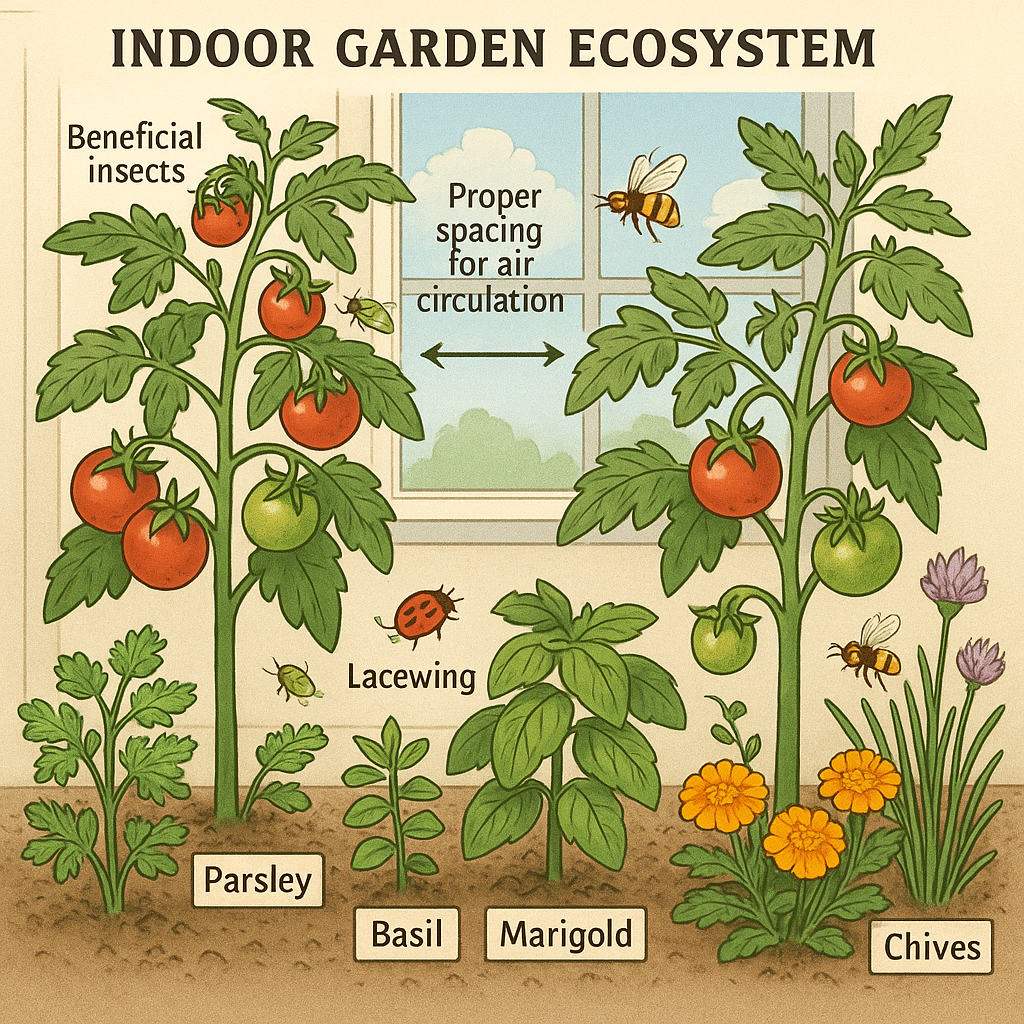
Companion Planting and Indoor Garden Ecosystems
Create a balanced indoor ecosystem for healthier plants.
Beneficial Companion Plants
Some plants work particularly well alongside indoor tomatoes:
Herb Companions
- Basil: Improves flavor and repels flies and mosquitoes
- Chives: Deters aphids and improves flavor
- Parsley: Attracts beneficial insects if allowed to flower
- Mint: Repels ants and rodents (but keep contained as it spreads aggressively)
Flower Companions
- Marigolds: Repel nematodes and other pests
- Nasturtiums: Trap aphids and add edible flowers to your harvest
- Alyssum: Attracts beneficial insects that prey on pests
- Calendula: Repels tomato hornworms and asparagus beetles
Vegetable Companions
- Lettuce: Grows well in partial shade created by tomato plants
- Spinach: Utilizes space while tomatoes are still small
- Carrots: Deep roots don’t compete with tomatoes
- Bush beans: Fix nitrogen that benefits tomatoes
Plants to Avoid
Some plants don’t make good neighbors for tomatoes:
- Dill: Inhibits tomato growth when mature
- Fennel: Secretes compounds that suppress tomato growth
- Potatoes: Can transmit similar diseases
- Corn: Competes heavily for nutrients
- Brassicas (cabbage, broccoli, kale): Compete for nutrients
Creating a Balanced Indoor Ecosystem
Beyond companion planting, consider these ecosystem elements:
Beneficial Insects
For larger indoor gardens:
- Ladybugs: Control aphids and small soft-bodied insects
- Predatory mites: Manage spider mite populations
- Parasitic wasps: Control caterpillars and other pests
- How to attract/keep them: Provide shallow water sources; include flowering plants; avoid pesticides
Soil Microorganisms
Healthy soil biology improves plant health:
- Add compost tea to introduce beneficial microbes
- Use mycorrhizal fungi when planting to improve nutrient uptake
- Avoid antimicrobial soaps/sprays near soil
- Consider worm castings as a natural soil amendment
Troubleshooting Guide
Even experienced gardeners encounter problems. Here’s how to diagnose and solve common issues:
Plant Growth Issues
Leggy, Stretched Plants
- Cause: Insufficient light
- Solution: Increase light intensity; move closer to light source; provide 14-16 hours of light daily
Stunted Growth
- Cause: Nutrient deficiency, root binding, or temperature stress
- Solution: Fertilize appropriately; check if repotting is needed; ensure temperature stays between 65-80°F (18-27°C)
Yellow Leaves
- Cause: Overwatering, underwatering, nutrient issues, or natural aging
- Solution: Check soil moisture; adjust watering schedule; ensure proper drainage; check for nutrient deficiencies
Curling Leaves
- Cause: Heat stress, pest infestation, or viral disease
- Solution: Adjust temperature; inspect for pests; isolate plant if disease is suspected
Flowering and Fruiting Problems
Flowers Drop Without Setting Fruit
- Cause: Poor pollination, temperature extremes, or nutrient imbalance
- Solution: Hand pollinate; maintain temperatures between 65-80°F (18-27°C); ensure proper fertilization
Small, Misshapen Fruits
- Cause: Inconsistent watering, poor pollination, or nutrient deficiency
- Solution: Maintain consistent moisture; improve pollination; check calcium levels
Slow Ripening
- Cause: Insufficient light, cool temperatures, or too many fruits
- Solution: Increase light exposure; maintain warm temperatures; remove some fruits to allow others to develop fully
Cracking Fruits
- Cause: Inconsistent watering or rapid growth after dry period
- Solution: Maintain even soil moisture; mulch soil surface in containers
Comprehensive Problem-Solving Approach
When facing an unknown issue:
-
Observe patterns:
- Are new or old leaves affected?
- Is the whole plant affected or just parts?
- Did symptoms appear suddenly or gradually?
-
Check the basics:
- Light levels and duration
- Watering practices (frequency and amount)
- Temperature and humidity
- Recent fertilizer applications
-
Inspect closely:
- Look under leaves for pests
- Check soil moisture at root level
- Examine stems for damage or discoloration
- Look at roots if possible (healthy roots are white or light-colored)
-
Take action progressively:
- Start with the least invasive solution
- Change only one variable at a time
- Give plants time to respond to changes
- Document what works for future reference
Conclusion
Growing tomatoes indoors is a rewarding journey that brings the joy of gardening and fresh produce into your home regardless of outdoor conditions or space limitations.
As we’ve explored throughout this guide, with the right varieties, proper setup, and consistent care, you can enjoy the unmatched flavor of homegrown tomatoes year-round.
The key to success lies in understanding the specific needs of tomato plants and creating an environment that mimics their ideal growing conditions.
From providing adequate light and consistent watering to ensuring proper pollination and nutrition, each aspect of care contributes to healthy plants and abundant harvests.
Remember that indoor gardening is both a science and an art.
While this guide provides comprehensive information, don’t be afraid to experiment and adapt based on your specific growing environment and the unique needs of your plants.
Each growing cycle will teach you something new and help you refine your approach.
As you embark on or continue your indoor tomato growing journey, celebrate each success—from the first tiny seedling to the moment you taste that first sun-ripened fruit.
The satisfaction of growing your own food connects you to a fundamental human experience and provides tangible rewards for your efforts.
Next Steps for Success
To continue your indoor gardening journey:
- Start small with one or two plants before expanding
- Keep a garden journal to track what works and what doesn’t
- Join online communities of indoor gardeners to share experiences
- Experiment with different varieties to find those that perform best in your specific conditions
- Consider expanding to other vegetables and herbs that complement your tomatoes
With patience, attention, and care, your indoor tomato garden will become a source of fresh, flavorful produce and ongoing satisfaction throughout the year. Happy growing!