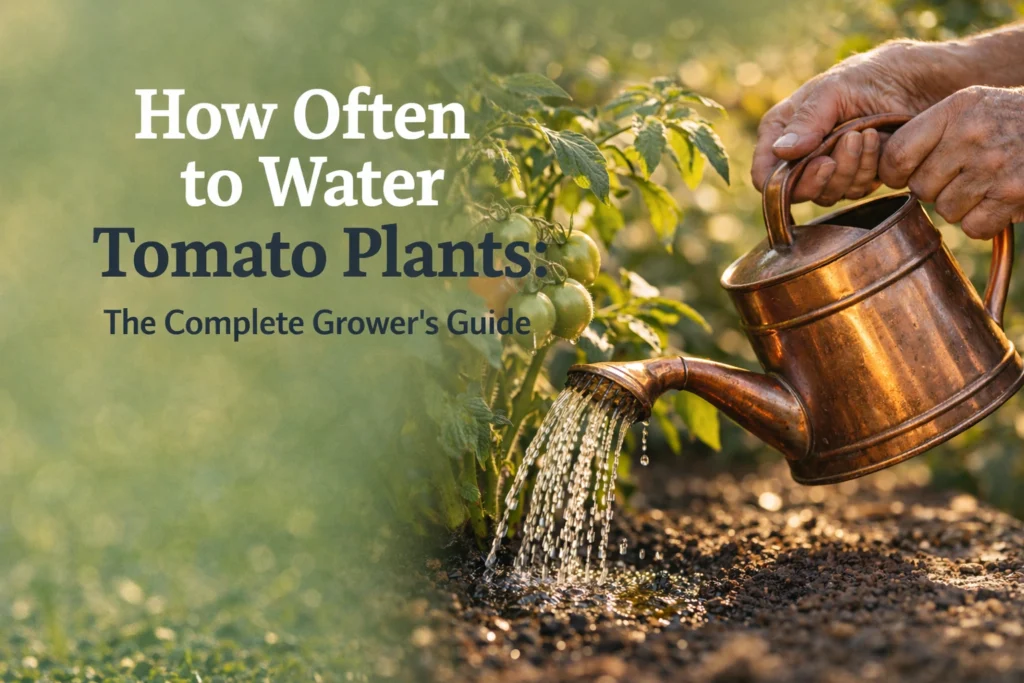
If you’re wondering how often to water tomato plants, the short answer is this: most tomato plants need deep watering about 2–3 times per week — but it depends on your climate, soil, and growth stage.
Tomatoes love consistent moisture, not soggy soil and not bone-dry roots either.
The goal is to keep the soil evenly moist, especially once fruits begin forming.
Hot weather? You may need to water more frequently.
Growing in containers? They dry out faster.
Instead of following a strict schedule, check the top 1–2 inches of soil.
If it feels dry, it’s time to water deeply and thoroughly.
I remember the summer I lost half my tomato crop to root rot.
Not drought, not pests — just plain old overwatering. I was convinced that more water meant faster growth, so I watered every single day like clockwork.
By mid-July, my plants were drooping, yellowing, and completely falling apart.
It was a hard lesson, but it taught me something that changed the way I garden: knowing how often to water tomato plants is just as important as knowing when to plant them.
Whether you’re a weekend gardener growing a couple of plants in containers or managing rows of tomatoes in a dedicated kitchen garden, getting your watering routine right is one of the single biggest factors in determining your harvest.
Too little, and your plants stress out, crack their fruit, and drop blossoms.
Too much, and you invite root rot, fungal disease, and nutrient lockout.
In this guide, I’m going to walk you through everything I’ve learned over a decade of growing tomatoes — from how to read your soil, to adjusting your watering schedule by season and container type, to the tools that actually make a difference.
By the end, you’ll have a clear, confident answer to one of gardening’s most common questions: how often to water tomato plants.
Why Consistent Watering Is the Foundation of Healthy Tomatoes
Tomatoes are roughly 95% water. That fact alone tells you how much moisture matters to these plants.
But it’s not just about quantity — it’s about consistency.
Tomatoes that get irregular watering are far more likely to develop blossom end rot (a calcium absorption problem caused by inconsistent moisture), cracked or split fruit, and stress-triggered blossom drop.
The roots of a tomato plant are its water delivery system.
When soil moisture fluctuates dramatically — soaking wet one day, bone dry the next — the roots can’t maintain steady nutrient uptake.
Calcium in particular requires consistent water movement through the plant.
When that movement is interrupted, the bottom of your tomatoes turns brown and mushy, no matter how much calcium is in your soil.
Understanding how often to water tomato plants, then, is really understanding how to maintain that consistent moisture environment your plant depends on.
How Often to Water Tomato Plants: The General Rule
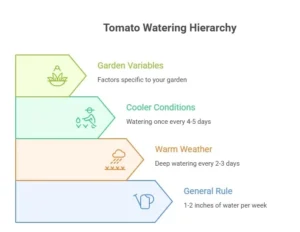
Here’s the straightforward answer most gardeners are looking for: in most climates and growing conditions, tomato plants need about 1 to 2 inches of water per week.
That typically translates to deep watering every 2 to 3 days during warm weather, and once every 4 to 5 days during cooler spring or fall conditions.
But — and this is important — that’s a starting point, not a rule set in stone.
The real answer to how often to water tomato plants depends on a handful of variables that are specific to your garden:
- Climate and temperature: Hot, dry climates or heat waves demand more frequent watering.
- Soil type: Sandy soils drain fast and need more frequent watering; clay soils hold moisture longer.
- Mulching: A 3-inch layer of mulch can cut your watering frequency nearly in half.
- Container vs. ground: Potted tomatoes dry out much faster than in-ground plants.
- Plant size and growth stage: Larger, fruiting plants drink more than seedlings.
The most reliable method I’ve ever used? Stick your finger 2 inches into the soil near the base of the plant.
If it feels dry at that depth, it’s time to water. If it still feels cool and slightly moist, wait another day.
This simple test beats any fixed schedule, every single time.
Watering by Growth Stage: Seedlings to Full-Grown Plants
One of the things I see beginner gardeners get wrong is treating their tomato plants the same at every stage of growth.
The truth is, how often to water tomato plants shifts significantly as the plant matures.
Seedlings (Weeks 1–3)
Young seedlings need consistent moisture but are highly sensitive to overwatering.
Water lightly every day or every other day, keeping the soil evenly damp — not soggy.
Their root systems are shallow and small, so they can’t handle large volumes of water at once.
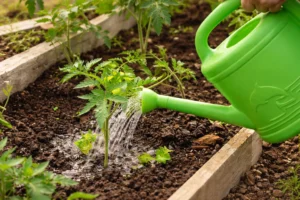
I use a spray bottle or a gentle watering can with a rose head to avoid dislodging fragile roots.
Transplants (First 2 Weeks After Moving Outdoors)
This is a critical window. Freshly transplanted tomatoes are stressed and need extra hydration to establish their roots in new soil.
Water deeply every day for the first week, then taper to every 2 days.
Avoid letting the soil dry out at all during this period.
Vegetative Growth (Weeks 4–8)
Once your plant is established and actively pushing out new leaves and stems, you can settle into a routine of watering every 2 to 3 days with deep soakings.
‘Deep’ means water slowly until it reaches at least 6 inches down into the soil.
Shallow watering encourages shallow roots, which leaves your plant more vulnerable to drought stress later.
Flowering and Fruiting Stage
This is when consistent moisture matters most.
Irregular watering during fruiting is the number one cause of blossom end rot and fruit cracking.
Maintain your schedule religiously — every 2 days in warm weather, more often during a heat wave.
At this stage, I set calendar reminders and check the soil daily just to make sure.
Late Season and Ripening
As your tomatoes start to color and ripen, you can actually reduce watering slightly.
Less water in the final ripening stage concentrates the sugars in the fruit and improves flavor.
Many experienced growers — myself included — cut back watering by about 20 to 30% once the first fruits start turning color.
How Often to Water Tomato Plants in Containers
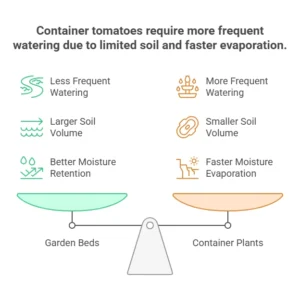
Container-grown tomatoes are a completely different animal when it comes to watering.
Pots dry out dramatically faster than garden beds, especially terracotta or smaller containers sitting in full sun.
In my experience, potted tomatoes in summer heat may need watering every single day — sometimes twice a day during extreme heat.
Here’s why: a pot has a limited volume of soil, and roots can’t search outward for moisture the way they can in the ground.
When the sun beats down on a dark pot all afternoon, that soil can go from moist to bone dry within hours.
My rules for how often to water tomato plants in containers:
- Check daily during summer — always. Press your finger into the top 2 inches.
- Use large containers (at least 5 gallons, ideally 10+) to hold more moisture.
- Add a layer of mulch on top of the pot soil to slow evaporation.
- Self-watering containers or drip irrigation setups are game-changers for busy gardeners.
- Water until it freely runs out the drainage holes — then stop.
One trick I love: place a saucer under the pot during summer heat to let the plant sip up water from below.
Just don’t let it sit in standing water for more than an hour or two, or you’re back to root rot territory.
Signs You’re Watering Too Much or Too Little
Your tomato plants are constantly communicating with you — you just need to know what to look for.
After years of growing tomatoes, I can usually tell within a few seconds of looking at a plant whether it’s getting the right amount of water.
Signs of Underwatering
- Leaves curl inward or upward (the plant’s way of conserving moisture)
- Wilting in the morning, not just during peak afternoon heat
- Dry, cracked soil that pulls away from the pot or bed edges
- Small, hard fruits or heavy blossom drop
- Yellowing lower leaves that feel dry and papery
Signs of Overwatering
- Yellowing leaves that feel soft or mushy
- Roots that look brown or slimy when you check the soil
- Fungal growth or mold at the soil surface
- A persistent musty smell coming from the soil
- Wilting despite wet soil — this is the sneaky one that trips most growers up
That last point is worth repeating: a plant can wilt even when the soil is soaking wet, because root rot has destroyed the plant’s ability to absorb water.
If your plant is drooping and the soil is wet, stop watering immediately and check for root damage.
Seasonal Adjustments: Watering in Summer vs. Spring and Fall
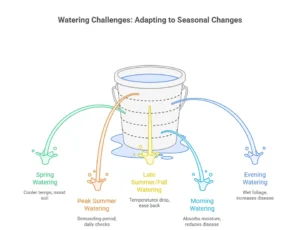
A rigid watering schedule doesn’t account for the reality that weather changes — dramatically — throughout the growing season.
How often to water tomato plants in June is very different from August in most climates.
Spring (planting through June): Cooler temperatures and often higher humidity mean your soil stays moist longer. Every 3 to 4 days is typically sufficient.
Be careful of late-season rains — always check the soil before watering.
Peak summer (July–August): This is the most demanding period.
In my garden in a warm climate, I’m checking soil moisture every single day.
Watering every 1 to 2 days is normal. During heat waves above 95°F (35°C), I sometimes water both morning and evening.
Late summer and fall: As temperatures drop and days shorten, you can ease back to every 3 to 4 days. Reduce watering further as fruits begin ripening for better flavor concentration.
One seasonal tip I swear by: always water in the morning.
Morning watering lets the plant absorb moisture before the heat of the day, and any splash on leaves dries quickly, reducing fungal disease risk.
Evening watering leaves wet foliage overnight — a perfect breeding ground for early blight and septoria leaf spot.
The Right Way to Water: Technique Matters as Much as Frequency
You can get the timing perfect and still water your tomatoes wrong.
Technique is a real factor in how effectively your plants use the water you give them.
Water at the base, not the leaves. Overhead watering splashes soil-borne fungal spores onto foliage and keeps leaves wet, encouraging disease.
Direct water to the soil around the root zone.
Water slowly and deeply. A slow trickle that soaks in gradually is far better than a fast blast that runs off the surface.
I use a soaker hose or drip system for most of my beds — they deliver water directly to the root zone at a pace the soil can absorb.
Water less frequently but more thoroughly. One deep watering every 2 to 3 days is better than a light daily sprinkle.
Deep watering encourages roots to grow downward in search of moisture, making the plant more drought-resistant overall.
Mulch generously. A 3-inch layer of straw, wood chips, or shredded leaves around the base of your plants dramatically slows moisture evaporation.
In my garden, mulching cut my watering frequency nearly in half during peak summer.
Tools That Make Getting the Right Watering Schedule Easier
I’ve tried a lot of gadgets over the years. Here are the ones that have genuinely earned a permanent place in my garden kit:
- Soil moisture meter: A simple probe that gives you an instant readout of soil moisture level. Costs about $10–$15 and removes all guesswork. Worth every penny for beginners.
- Drip irrigation system: Delivers water directly to the root zone on a timer. Once set up, it practically manages your watering for you. Great investment for anyone growing more than a few plants.
- Soaker hoses: Less expensive than drip systems but similarly effective. Lay them along your plant rows and connect to a timer.
- Watering can with a long neck and rose head: Still my go-to for seedlings and container plants where precision matters.
- Rain gauge: Tells you exactly how much rainfall your garden received, so you know whether to supplement or skip your scheduled watering.
The single best tool, though, is still your index finger in the soil. No gadget replaces that direct feedback.
Common Mistakes Gardeners Make With Tomato Watering
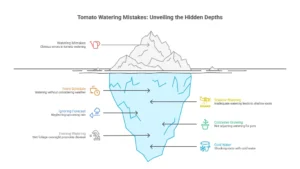
Over the years I’ve coached dozens of gardeners through tomato problems, and the same mistakes come up again and again.
Here are the biggest ones — and how to avoid them.
- Watering on a fixed schedule regardless of conditions. Weather changes. Your schedule should too. Always check the soil before watering.
- Watering too shallowly. Light, frequent watering creates shallow roots. Go deep every time.
- Ignoring the weather forecast. If rain is coming in the next 24 hours, skip your watering session.
- Not adjusting for container growing. Pots dry out far faster than beds. Treat them completely differently.
- Watering in the evening. Wet foliage overnight is a fungal disease invitation. Morning is always better.
- Using cold water straight from the hose in summer heat. This can shock plant roots. Let the hose warm up a bit, or use a rain barrel.
Most of these mistakes come down to treating watering as a routine chore rather than an active part of plant care.
When you start paying attention to what your plants are telling you, your watering improves automatically.
Building Your Personal Watering Schedule
Let me pull everything together into a practical, personalized approach. Rather than giving you a one-size-fits-all timetable, here’s how to build a watering schedule that actually works for your specific situation.
Step 1 — Know your soil. Sandy soil needs watering every 1 to 2 days; loamy soil every 2 to 3 days; clay-heavy soil every 3 to 4 days.
Step 2 — Assess your climate. If you’re in a hot, arid region, add frequency. If you’re in a cool, humid climate, reduce it.
Step 3 — Factor in your setup. Container plants water daily in summer. In-ground beds with mulch can go 3 days between waterings.
Step 4 — Check the soil every morning. Make it a habit — two minutes at the start of each day. The finger test never lies.
Step 5 — Adjust as the season and plant stage change. More water during fruiting and peak summer heat. Less as fruits ripen and temperatures cool.
Once you internalize these five steps, figuring out how often to water tomato plants stops being a question and starts being second nature.
After enough seasons, you’ll be able to look at your plants and the sky and know almost intuitively what they need.
Conclusion: Watering Smarter, Not Just More
Learning how often to water tomato plants isn’t about memorizing a schedule — it’s about developing a relationship with your plants and your garden.
The soil type, the weather, the growth stage, the container size, the mulch layer — all of these factors shift the equation constantly throughout the season.
What I’ve found after ten years of growing tomatoes is that the gardeners who get the best harvests aren’t the ones with the fanciest irrigation systems.
They’re the ones who pay attention. They check the soil.
They notice when leaves are curling. They adjust when a heat wave rolls in.
They water deeply, at the base, in the morning.
Start with the 2-to-3-day baseline, use the finger test daily, mulch generously, and pay close attention to what your plants show you.
Get those habits in place and you’ll be well on your way to consistently great tomatoes — season after season.
Ready to take your tomato growing to the next level? Start by doing the soil finger test right now — then come back and tell us what you found in the comments below.
And if you found this guide helpful, share it with a fellow gardener who’s been struggling with yellow leaves or cracked fruit.
They’ll thank you for it.
Frequently Asked Questions
| Q: How often to water tomato plants in raised beds?
A: Raised beds drain faster than in-ground garden beds, so plan on watering every 2 to 3 days during warm weather rather than every 3 to 4. The good news is that raised bed soil is usually looser and better aerated, so roots establish quickly and the plants become fairly efficient at water use. Always check the soil at a 2-inch depth before watering — raised beds can surprise you with how quickly they dry out in summer heat. |
| Q: Can I overwater tomato plants even if the soil drains well?
A: Yes — drainage helps, but it doesn’t make overwatering impossible. If you’re watering every day in well-draining soil, you’re still keeping the root zone wetter than tomatoes prefer. Roots need oxygen as well as water, and constantly saturated soil — even if it drains — limits oxygen availability. Aim for a wet-dry cycle where the top few inches dry slightly between waterings. |
| Q: Should I water tomato plants differently during a heat wave?
A: Absolutely. During stretches of 95°F (35°C) or higher, your plants may need daily watering or even twice-daily watering for container plants. Water early in the morning and check again in the late afternoon. Wilting during the hottest part of the day (1–4 PM) is normal and doesn’t always mean the plant needs water — but if it’s still wilting by early evening, water immediately. |
| Q: Does rainfall count toward my tomato plant’s weekly water needs?
A: Yes, and you should account for it. A rain gauge is a simple tool that tells you exactly how much water fell. If your garden received 1 inch of rain, you likely don’t need to water for the next 2 to 3 days depending on temperatures. Never water just because it’s your scheduled day — check the soil first, especially after rainfall. |
| Q: Is drip irrigation worth it for tomato plants?
A: In my experience, absolutely — especially if you’re growing more than 4 to 5 plants. Drip irrigation delivers water directly to the root zone, eliminates wet foliage (reducing disease risk), and can be set on a timer so you never forget a watering. The initial setup cost is modest and it pays for itself in water savings and healthier plants within a single growing season. |