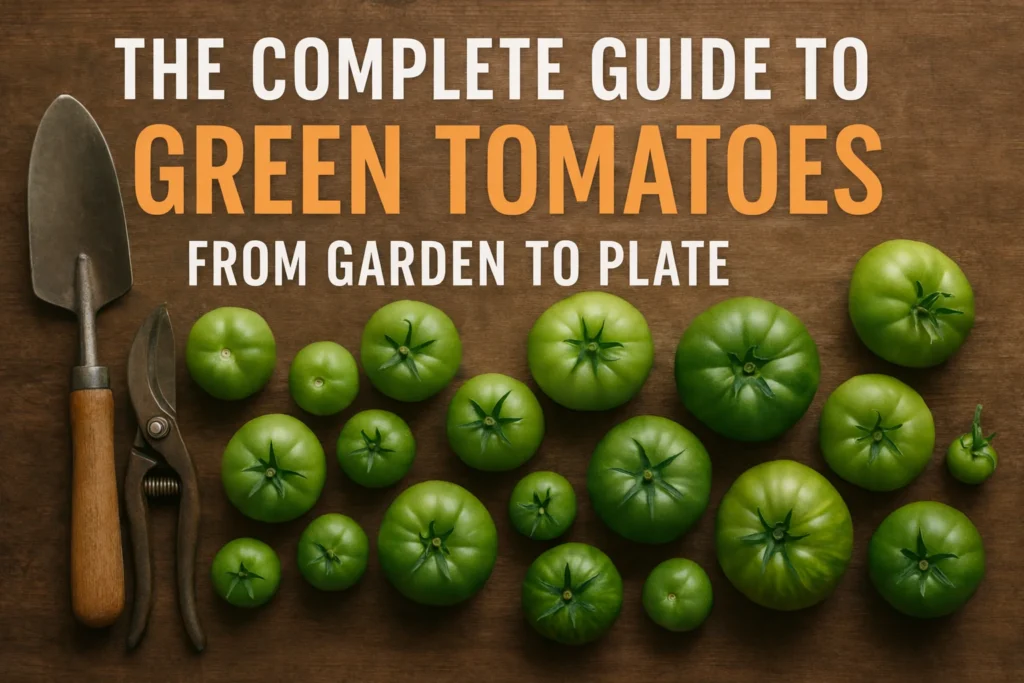
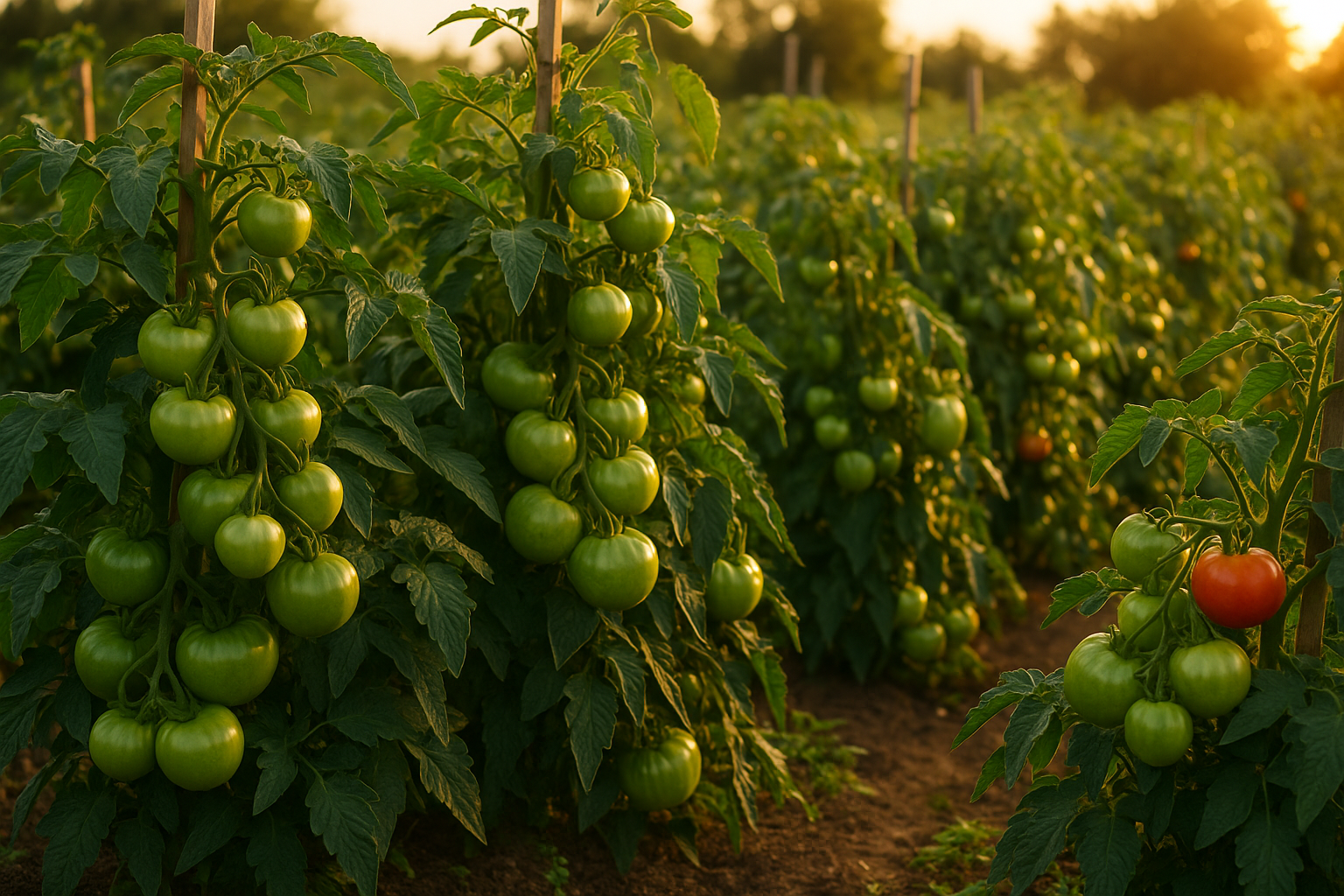
Green tomatoes are exactly what the name says — tomatoes that are still green and have not fully ripened yet.
Most people assume a green tomato is simply not ready to eat, but that is not the whole story.
Green tomatoes have their own unique taste that is tangy, slightly sour, and firm — very different from the soft, sweet flavor of a ripe red tomato.
Some people love eating them just the way they are, while others cook them, fry them, or pickle them.
If you have ever seen fried green tomatoes on a menu and wondered what all the fuss is about, now you know where it all starts.
Highlights
- Green tomatoes are highly versatile – they can be ripened indoors, cooked in numerous dishes, or preserved for winter use
- Multiple types exist – including unripe red varieties and cultivars bred to remain green when mature
- Proper harvesting timing is crucial for both ripening success and culinary quality
- Storage and ripening techniques can extend your tomato season by weeks or even months
- Nutritional benefits include high vitamin C content and unique antioxidant properties
Understanding Green Tomatoes: More Than Just Unripe Fruit
When most gardeners hear “green tomatoes,” they immediately think of unripe red tomatoes picked before frost.
While this represents the majority of green tomatoes we encounter, the world of green tomatoes is actually much more diverse and fascinating.
Types of Green Tomatoes
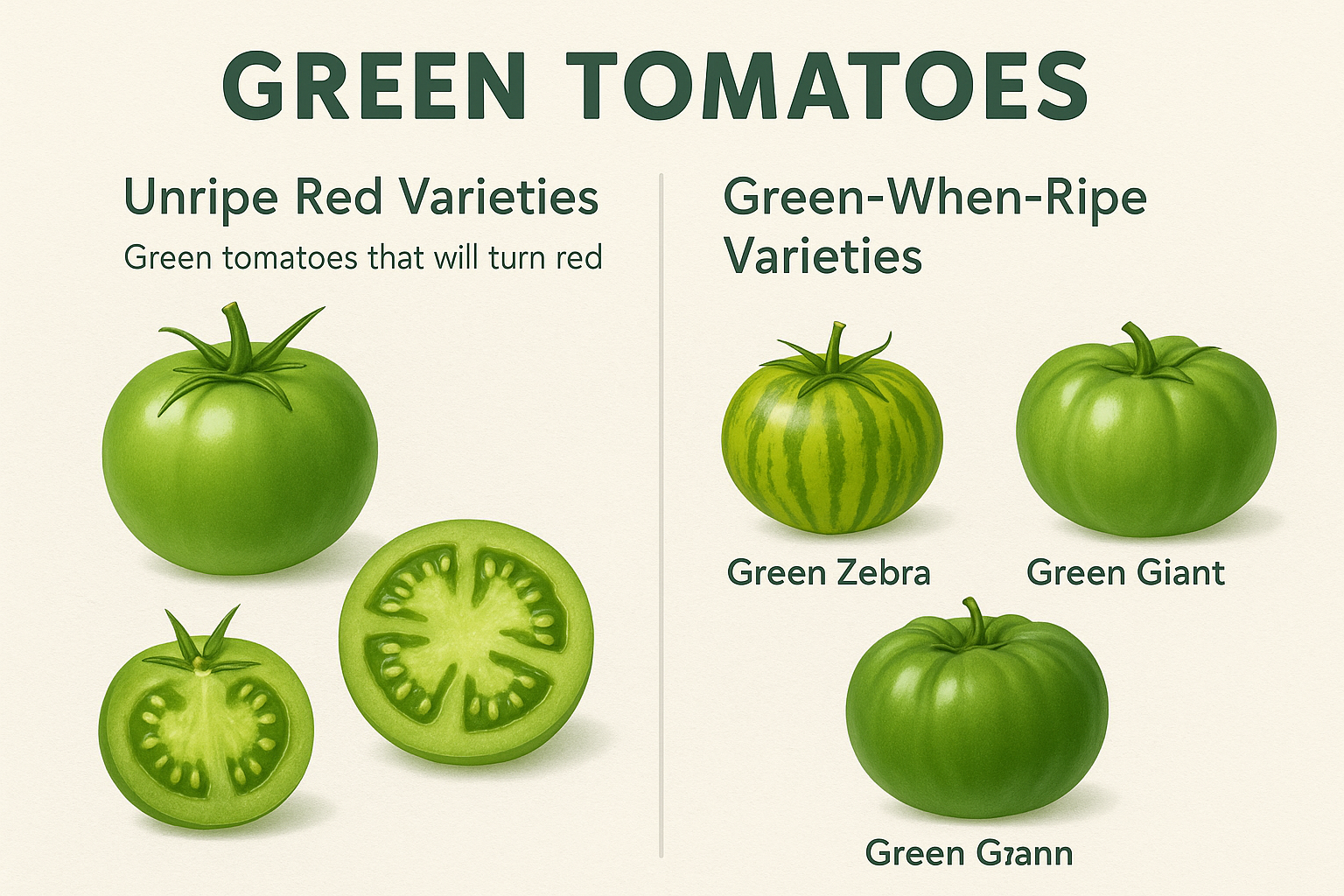
Unripe Tomatoes make up the bulk of what we call green tomatoes.
These are simply red, pink, or yellow varieties that haven’t reached maturity.
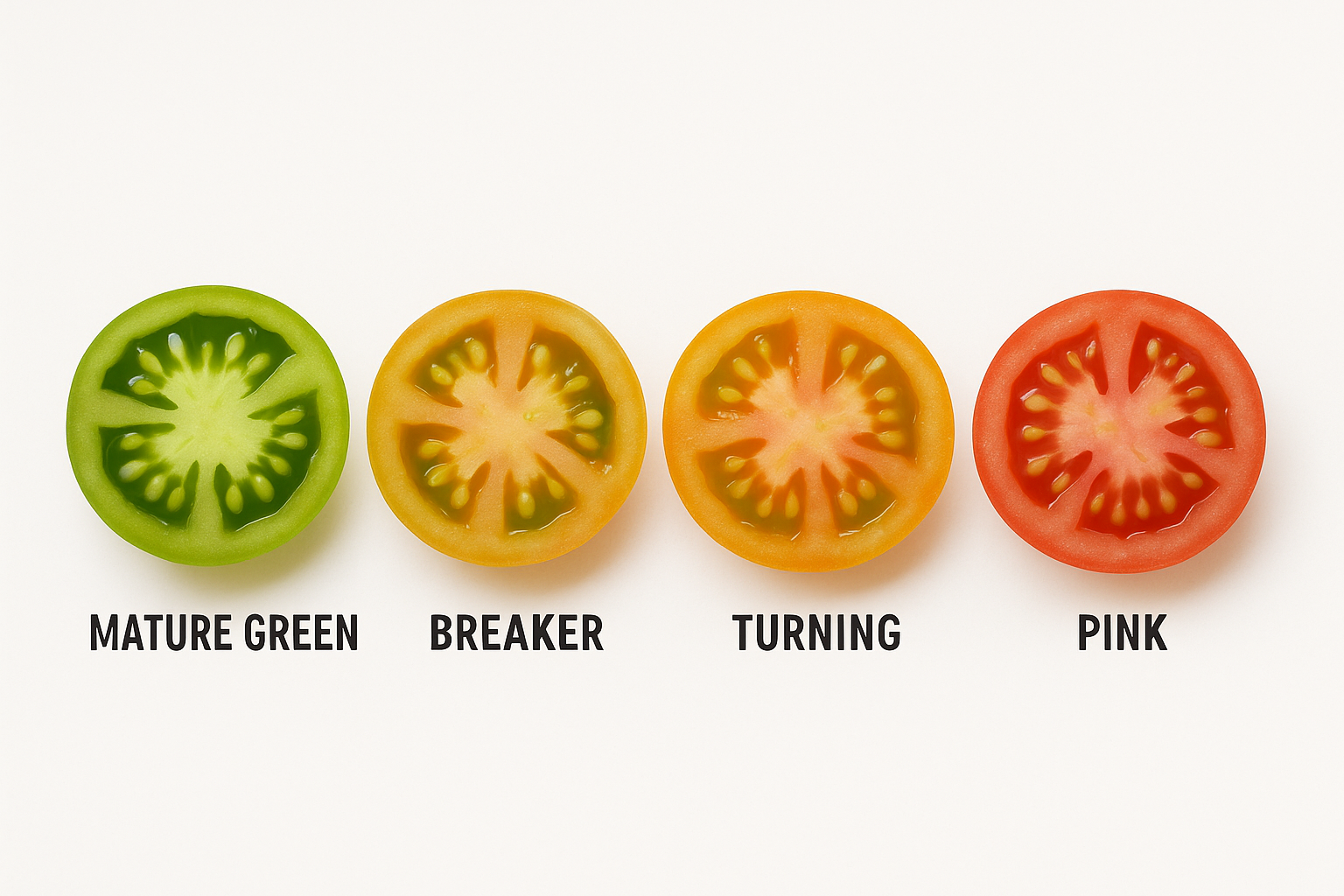
The key identifier? They’ll have a hard texture and often show a slight color change at the blossom end when they’re close to turning.
Green-When-Ripe Varieties represent a completely different category.
These cultivars are genetically programmed to remain green even when fully mature.
Popular varieties include:
- Green Zebra: Striped green with yellow undertones
- Cherokee Green: Large, beefsteak-type with complex flavors
- Green Giant: Massive fruits that can weigh over a pound
- Aunt Ruby’s German Green: Heirloom variety with pink blush
I remember the first time I grew Green Zebra tomatoes.
I kept waiting for them to turn red, convinced something was wrong with my plants.
It wasn’t until I tasted one that I understood—these varieties offer completely unique flavor profiles that you simply can’t get from traditional red tomatoes.
Nutritional Profile of Green Tomatoes
Green tomatoes pack a surprising nutritional punch that differs significantly from their red counterparts. They’re particularly rich in:
- Vitamin C: Often higher than ripe tomatoes
- Solanine: A natural alkaloid (more on this later)
- Tomatine: An antioxidant compound
- Fiber: Excellent for digestive health
- Potassium: Essential for heart health
The firm texture of green tomatoes also means they retain more of their vitamin content during cooking, making them excellent choices for preservation and cooking projects.
Growing Green Tomatoes Successfully
Choosing the Right Varieties
If you’re specifically interested in growing green tomatoes, selecting the right varieties is crucial.
For beginners, I always recommend starting with Green Zebra—it’s reliable, productive, and the striped pattern makes it easy to identify when ripe.
For those wanting larger fruits, Cherokee Green offers incredible flavor complexity.
These tomatoes can develop subtle pink undertones when fully ripe, creating a beautiful color contrast in salads and dishes.
Cultivation Requirements
Green tomatoes require the same basic growing conditions as traditional varieties:
- Full sun (6-8 hours daily)
- Well-draining soil with pH 6.0-7.0
- Consistent moisture without waterlogging
- Warm temperatures (65-85°F optimal)
However, green-when-ripe varieties often have slightly different timing.
They typically require the full growing season to develop their complex flavors, so starting seeds indoors 6-8 weeks before your last frost date is essential in shorter growing seasons.
Common Growing Challenges
One challenge I’ve encountered with green tomatoes is determining ripeness, especially with green-when-ripe varieties.
Unlike red tomatoes, you can’t rely on color change. Instead, look for:
- Slight softening at the blossom end
- Full size development for the variety
- Subtle color changes (yellowing or pink blush in some varieties)
- Easy separation from the vine when gently twisted
Harvesting Green Tomatoes: Timing Is Everything
When to Harvest Unripe Tomatoes
The decision to harvest green tomatoes often comes down to weather.
In my experience, it’s better to harvest too early than to lose everything to frost. Here’s my harvesting timeline:
6-8 weeks before first frost: Begin harvesting larger green tomatoes that show any signs of color change. These have the best chance of ripening indoors.
2-3 weeks before first frost: Harvest all mature-sized green tomatoes, regardless of color change.
Even completely green fruits can ripen if they’ve reached full size.
At first frost warning: Harvest everything! Even small green tomatoes can be used for cooking, pickling, or relishes.
Harvesting Green-When-Ripe Varieties
These varieties require a different approach. I’ve learned to rely on multiple indicators:
- Size: The fruit reaches its expected mature size
- Feel: Slight give when gently squeezed
- Stem: Begins to separate easily from the plant
- Subtle color changes: Many develop slight yellow undertones or pink blush
Proper Harvesting Techniques
Whether harvesting unripe or green-when-ripe green tomatoes, proper technique ensures better storage and ripening:
- Harvest during dry conditions when possible
- Leave stems attached to reduce entry points for bacteria
- Handle gently to avoid bruising
- Sort immediately by size and condition
Ripening Green Tomatoes Indoors
The Science Behind Ripening
Understanding how tomatoes ripen helps optimize your indoor ripening success.
Tomatoes produce ethylene gas, which triggers the ripening process.
Green tomatoes that have reached mature size contain enough stored energy to complete ripening even off the vine.
The key factors for successful ripening include:
- Temperature: 65-70°F is optimal
- Humidity: 85-90% prevents shriveling
- Air circulation: Prevents mold development
- Darkness: Light isn’t necessary for ripening
Ripening Methods That Actually Work
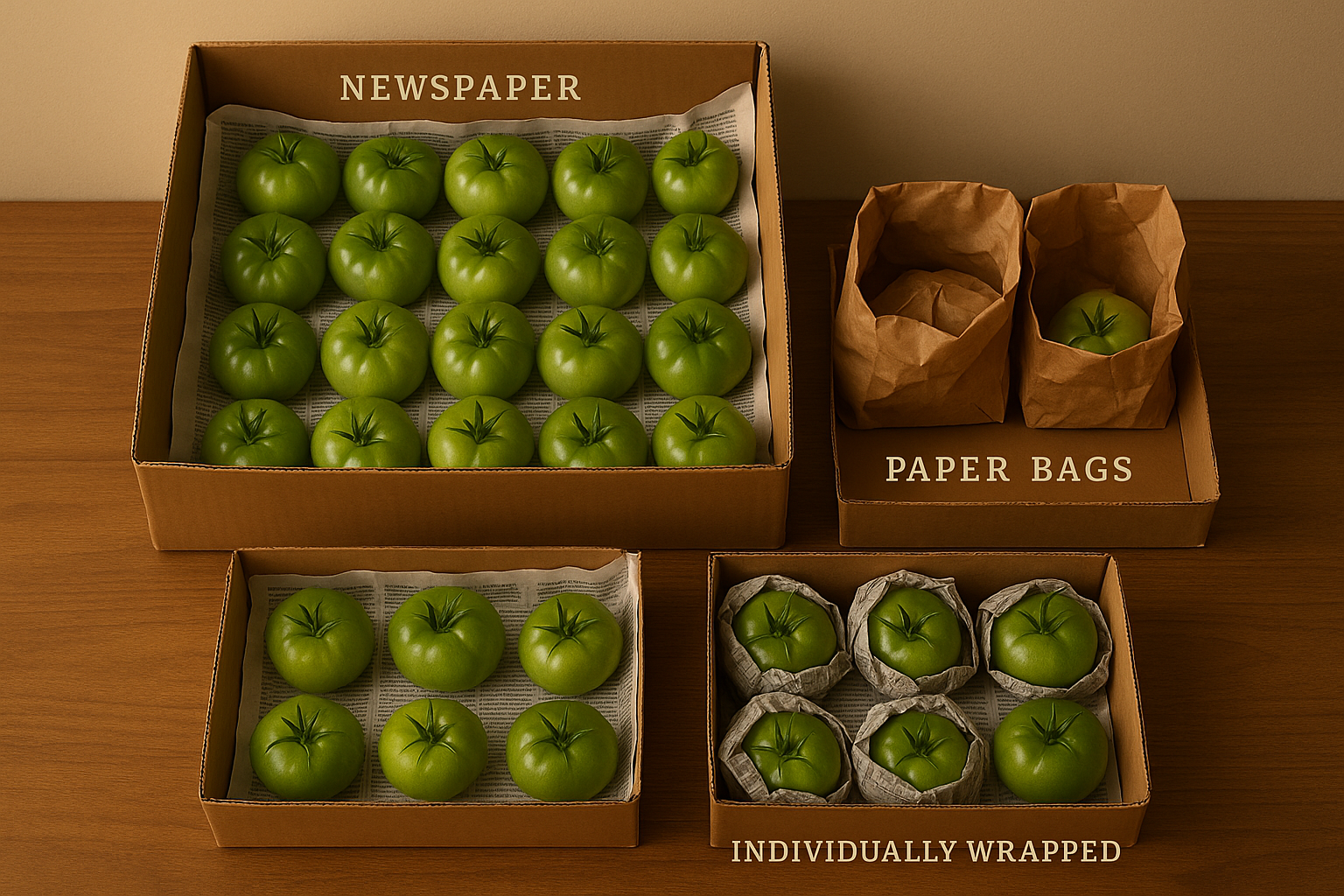
Paper Bag Method: Place 2-3 green tomatoes in a paper bag with a ripe apple or banana.
The additional ethylene gas speeds ripening. Check daily and remove ripe fruits.
Cardboard Box Method: Layer green tomatoes in cardboard boxes, separated by newspaper.
This method works well for large quantities and allows for easy monitoring.
Individual Wrapping: Wrap each green tomato in newspaper and store in a cool, dark place.
This method provides the longest storage life and prevents one bad tomato from affecting others.
I’ve had the best success with the cardboard box method for large harvests.
Last fall, I successfully ripened over 50 pounds of green tomatoes using this technique, extending our fresh tomato season well into December.
Troubleshooting Ripening Problems
Slow ripening: Usually indicates tomatoes were harvested too early or storage temperature is too cool.
Move to a warmer location and add ripe fruit for additional ethylene.
Uneven ripening: Some varieties naturally ripen unevenly. This isn’t necessarily a problem—partially ripe tomatoes are excellent for many culinary uses.
Rot before ripening: Indicates too much moisture or poor air circulation.
Improve ventilation and check stored tomatoes more frequently.
Culinary Uses for Green Tomatoes
Traditional Preparations
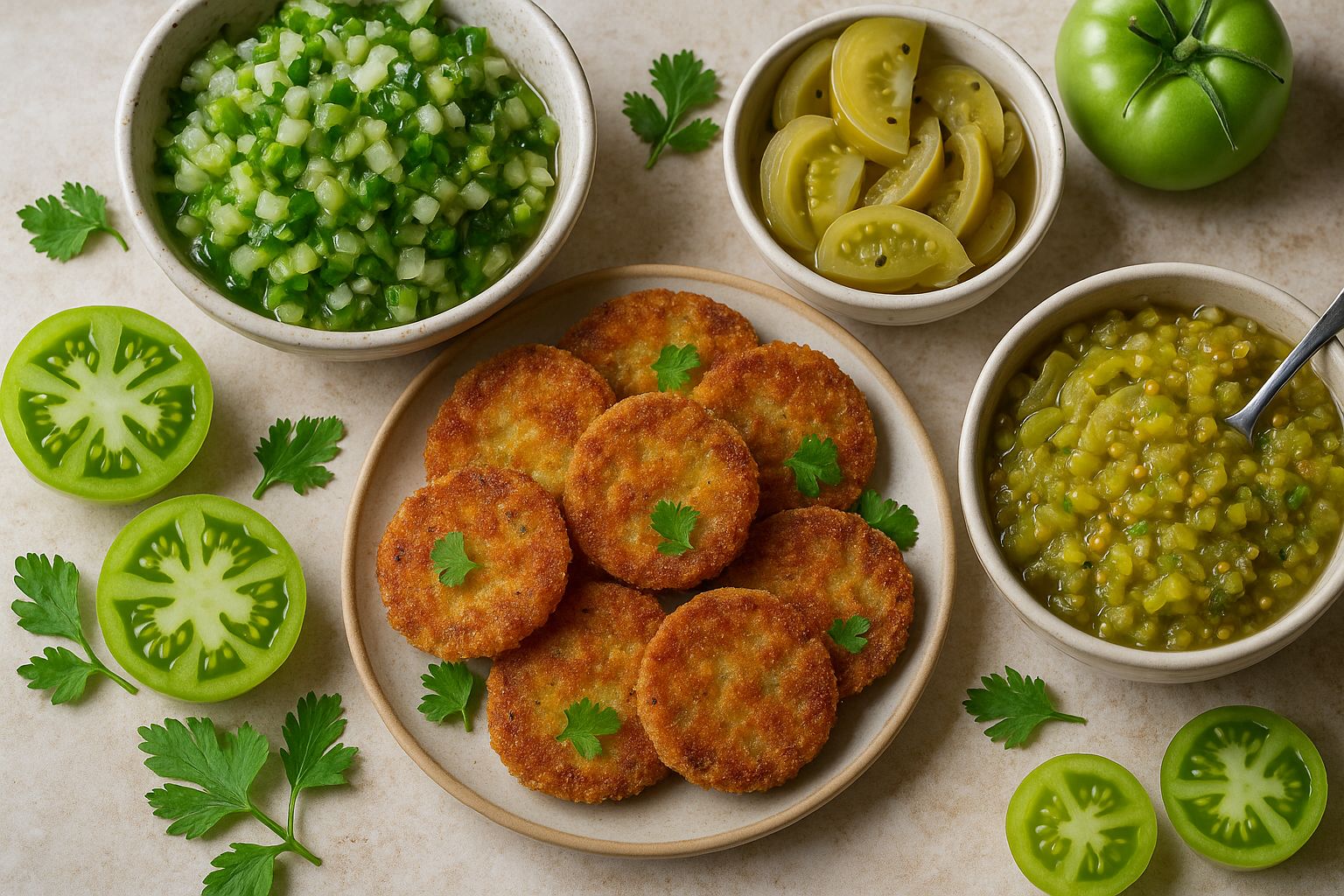
Fried Green Tomatoes remain the most famous preparation, and for good reason.
The firm texture of green tomatoes holds up beautifully to breading and frying.
My grandmother’s secret was soaking the sliced tomatoes in buttermilk for 30 minutes before breading—it reduces the tartness and helps the coating stick.
Green Tomato Relish transforms abundant harvests into shelf-stable condiments.
The natural acidity of green tomatoes makes them perfect for canning, and the firm texture provides excellent crunch in the finished product.
Pickled Green Tomatoes offer another preservation option.
I prefer using smaller, very firm green tomatoes for pickling—they maintain their texture better and absorb flavors more evenly.
Modern Culinary Applications
Today’s cooks are discovering new ways to use green tomatoes:
Green Tomato Salsa: Combines the tartness of green tomatoes with peppers, onions, and herbs for a unique twist on traditional salsa.
Roasted Green Tomatoes: High-heat roasting caramelizes the natural sugars while maintaining the firm texture.
These work beautifully in grain bowls and pasta dishes.
Green Tomato Curry: The firm texture of green tomatoes makes them excellent for slow-cooking applications where you want the tomatoes to maintain their shape.
Flavor Pairing and Cooking Tips
Green tomatoes have a distinctive tart, slightly acidic flavor that pairs beautifully with:
- Rich proteins: Bacon, pork, and aged cheeses
- Sweet elements: Caramelized onions, corn, and sweet peppers
- Herbs: Basil, oregano, and thyme complement the acidity
- Spices: Cumin, coriander, and paprika enhance the earthy notes
When cooking with green tomatoes, remember that they require longer cooking times than ripe tomatoes to break down, but they’ll never become as soft as red varieties.
Preservation and Storage Methods
Short-Term Storage
For green tomatoes you plan to use within a few weeks, proper storage extends their usability:
Refrigerator storage: Firm green tomatoes can be refrigerated for 2-3 weeks. Store in the crisper drawer in perforated plastic bags.
Counter storage: Green tomatoes at room temperature will continue ripening slowly. Use within 1-2 weeks.
Controlled ripening: Store some at room temperature for fresh eating while keeping others refrigerated to slow ripening.
Long-Term Preservation
Freezing: While the texture changes, frozen green tomatoes work excellently for cooked applications.
Slice and freeze on baking sheets before transferring to freezer bags.
Dehydrating: Green tomato chips make excellent snacks and cooking ingredients.
The concentrated flavor works well in soups and stews.
Canning: The high acidity of green tomatoes makes them safe for water bath canning.
Popular options include relishes, chutneys, and pickles.
I’ve found that a combination of preservation methods works best.
I typically ripen about half my green tomatoes for fresh eating, pickle a portion, and freeze the remainder for winter cooking projects.
Health Benefits and Nutritional Considerations
Nutritional Advantages
Green tomatoes offer several nutritional benefits that differ from ripe tomatoes:
Higher Vitamin C content: Unripe tomatoes often contain more vitamin C than their ripe counterparts, as some vitamin C breaks down during the ripening process.
Unique antioxidants: Compounds like tomatine provide antioxidant benefits and may have anti-inflammatory properties.
Lower sugar content: Green tomatoes contain less sugar than ripe ones, making them suitable for low-sugar diets.
Higher fiber content: The firm texture indicates higher fiber levels, beneficial for digestive health.
Safety Considerations
Green tomatoes contain solanine and tomatine, natural compounds that can be mildly toxic in large quantities.
However, normal culinary consumption poses no health risks for most people.
Those with nightshade sensitivities should exercise caution.
The cooking process reduces these compounds, making cooked green tomatoes even safer than raw ones.
I’ve been eating green tomatoes regularly for decades without any issues, but moderation is always wise with any food.
Digestive Benefits
The firm texture and higher fiber content of green tomatoes can aid digestion when consumed as part of a balanced diet.
The natural acidity also stimulates digestive enzymes, potentially improving nutrient absorption.
Troubleshooting Common Green Tomato Problems
Garden Issues
Tomatoes won’t ripen: This can result from temperature extremes, inconsistent watering, or nutrient imbalances.
Focus on consistent care and consider harvesting for indoor ripening if weather becomes problematic.
Cracking: Rapid water uptake causes cracking in green tomatoes.
Maintain consistent soil moisture and consider mulching to regulate water availability.
Pest problems: Green tomatoes can attract different pests than ripe ones.
Hornworms particularly love green fruit. Regular inspection and hand-picking remain the most effective control methods.
Storage and Ripening Issues
Mold development: Usually indicates too much moisture or poor air circulation. Improve ventilation and reduce humidity around stored tomatoes.
Shriveling: Indicates too-dry conditions. Increase humidity slightly or move to a more humid location.
Off flavors: Can develop from storage at incorrect temperatures.
Maintain consistent temperatures in the 65-70°F range for best flavor development.
Seasonal Planning for Green Tomato Success
Spring Planning
Variety selection: Choose a mix of traditional varieties for potential green harvest and green-when-ripe varieties for intentional green tomato production.
Succession planting: Plant tomatoes at 2-3 week intervals to extend harvest and increase chances of ripe fruit before frost.
Season extension preparation: Plan for row covers, cold frames, or other season extension tools to maximize growing time.
Summer Management
Consistent care: Maintain regular watering and fertilizing schedules to ensure healthy plant development and fruit set.
Pruning strategies: Remove lower branches and suckers to focus plant energy on fruit development.
Monitoring: Keep detailed records of varieties, planting dates, and expected harvest times to improve planning for future seasons.
Fall Harvest Strategy
Weather monitoring: Track local weather forecasts and historical frost dates to time harvests appropriately.
Staged harvesting: Begin harvesting larger green tomatoes 6-8 weeks before expected frost, continuing through the season.
Preservation planning: Prepare storage areas and preservation supplies well before harvest begins.
Advanced Techniques for Green Tomato Enthusiasts
Breeding and Selection
For gardeners interested in developing their own green tomato varieties, saving seeds from the best-performing plants creates locally adapted strains. Focus on:
- Flavor development: Select fruits with the best taste characteristics
- Disease resistance: Save seeds only from healthy plants
- Productivity: Choose plants with consistent, heavy fruit set
- Storage quality: Select fruits that store and ripen well
Companion Planting
Green tomatoes benefit from the same companion plants as traditional varieties, but some combinations work particularly well:
Basil: Improves flavor and repels pests Marigolds: Natural pest deterrent Peppers: Similar growing requirements and harvest timing Herbs: Oregano, thyme, and parsley create beneficial microclimates
Season Extension Techniques
Extending the growing season maximizes both ripe and green tomato harvests:
Row covers: Protect plants from light frosts, extending harvest by 2-4 weeks Wall o’ Water: Individual plant protection systems Cold frames: Protect smaller plants or hardening areas Greenhouse growing: Ultimate season extension for dedicated growers
I’ve successfully extended my tomato season into December using a combination of these techniques, dramatically increasing both my ripe and green tomato harvests.
Conclusion
Green tomatoes represent one of gardening’s most underappreciated treasures.
Whether you’re dealing with an unexpected early frost, exploring unique green-when-ripe varieties, or simply looking to maximize your harvest, these versatile fruits offer countless opportunities for both fresh eating and preservation.
Throughout my years of gardening, I’ve learned that green tomatoes aren’t consolation prizes—they’re ingredients with their own distinct character and culinary potential.
From the satisfying crunch of fried green tomatoes to the complex flavors of properly ripened Cherokee Greens, these fruits deserve a place in every gardener’s repertoire.
Your Next Steps
- Plan for next season by incorporating both traditional varieties for potential green harvest and green-when-ripe varieties for intentional production
- Experiment with preservation methods to find your preferred techniques for extending the tomato season
- Try new recipes beyond fried green tomatoes to discover the full culinary potential of these unique fruits
- Share your harvest with neighbors and friends who may not be familiar with green tomato possibilities
Remember, every green tomato in your garden represents potential—potential for fresh eating, cooking, preservation, or simply extending your growing season.
By understanding their unique characteristics and requirements, you can transform what many see as garden disappointments into delicious successes that carry the taste of summer well into winter.
The key is to embrace green tomatoes not as unfinished red tomatoes, but as complete ingredients in their own right.
Whether you’re ripening them on the windowsill, frying them for dinner, or preserving them for winter meals, these green gems offer flavors and textures that simply can’t be replicated by any other ingredient.
Start small, experiment with different varieties and techniques, and soon you’ll find yourself looking forward to green tomato season as much as the traditional red harvest.
After all, in gardening as in cooking, the most rewarding discoveries often come from embracing the unexpected!