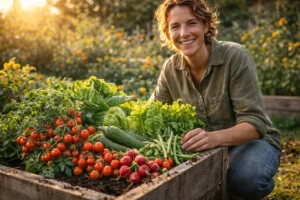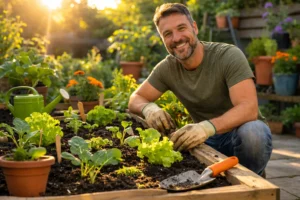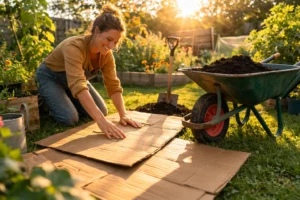
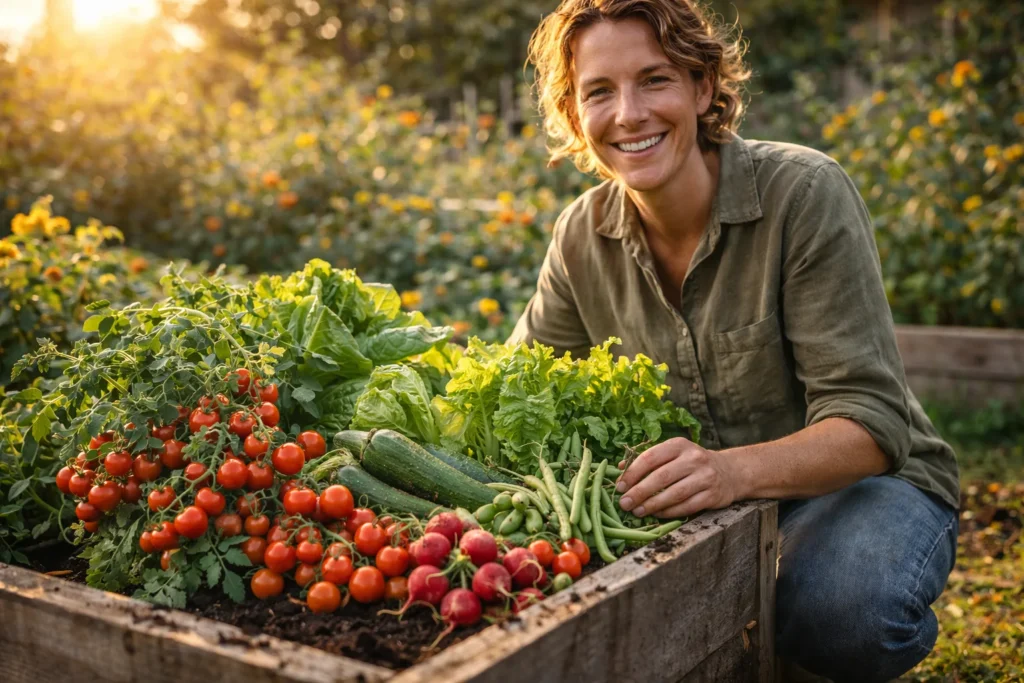
The best vegetables to grow for beginners are the ones that grow fast, forgive small mistakes, and give you something to pick before summer is half over.
At the top of that list are radishes, loose leaf lettuce, green beans, cherry tomatoes, courgette, spinach, peas, and cucumbers.
Every single one of these crops can be grown in a raised bed, a container, or directly in the ground. None of them need special equipment or years of experience.
This guide covers each one in detail — what to expect, how to grow it, and exactly why it works so well for first time gardeners.
| What Does Easy to Grow Actually Mean for Beginners?
An easy vegetable for beginners is one that germinates reliably from seed, tolerates small watering mistakes, grows quickly enough to hold your attention, and produces a harvest that makes the effort feel completely worth it. The best vegetables to grow for beginners share three things: they are fast, they are forgiving, and they reward you regularly throughout the season. Slow crops, fussy crops, and crops that need perfect conditions are not on this list. Everything here is chosen because it actually works for people who are just getting started. |
| Key Facts About Growing Vegetables for Beginners
Radishes are the fastest vegetable you can grow from seed — ready to harvest in just 20 to 30 days. (Homegrown Garden 2025) Loose leaf lettuce delivers its first harvest in 30 to 40 days and keeps producing for weeks with regular picking. (High Mowing Organic Seeds) Bush green beans are ready in 50 to 60 days and fix nitrogen in the soil, improving it for future crops. (Homegrown Garden 2025) Cherry tomatoes are more disease resistant than large varieties and are the most popular beginner tomato crop. (The Old Farmer’s Almanac) Courgette is one of the most productive vegetables in any garden — one plant can feed a family all summer. (Sow Much More) |
| Quick Summary — Best Vegetables to Grow for Beginners
Fastest crop: Radishes — harvest in 20 to 30 days from seed. Best cut and come again crop: Loose leaf lettuce — keeps producing for weeks. Most productive: Courgette — one plant feeds a family all summer long. Most exciting: Cherry tomatoes — watch fruits ripen daily and pick them warm from the vine. Best for soil: Green beans — fix nitrogen naturally and leave the soil better than they found it. Best for small spaces: Spinach, spring onions, and herbs — all grow brilliantly in containers. |
Why Choosing the Right Vegetables to Grow for Beginners Matters
The crops you pick in your first season can make or break your confidence as a gardener.
Pick the wrong ones — slow, fussy, or prone to failure — and you will feel like gardening is not for you.
Pick the right ones and you will be planning next year’s garden before this one is even finished.
In our experience, the gardeners who stick with it long term are almost always the ones who had a successful first season.
And that success nearly always comes down to choosing crops that actually work.
Seed experts at High Mowing Organic Seeds put it well: grow what you like to eat, keep the variety small, and learn as much as you can about a few crops done well rather than spreading yourself thin across too many at once.
That is advice worth taking seriously.
Start with four or five of the vegetables on this list and you will have more than enough to eat, share, and feel proud of by the end of the season.
Radishes: The Fastest Vegetables to Grow for Beginners
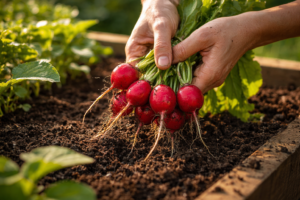
If you have never grown anything before, start with radishes.
Nothing else comes close for sheer speed and beginner satisfaction.
Most varieties go from seed in the ground to a full grown vegetable ready to pull in just 20 to 30 days.
That is three weeks from planting to your first harvest.
They grow in almost any soil, need very little attention, and their fast root growth actually helps to break up compacted ground — making your vegetable garden better for every crop that follows.
How to Grow Radishes — Best Vegetables for Beginners
- Sow seeds directly into the soil or compost. No need to start them indoors.
- Plant seeds about 2cm deep and 5cm apart in rows or scattered across a container.
- Water regularly and keep the soil moist but not waterlogged.
- Harvest as soon as the radish is about the size of a large marble. Leave them too long and they turn woody.
- Sow a new batch every two weeks throughout spring and autumn for a continuous supply.
| Beginner Tip — Radishes as Soil Markers
Mix radish seeds with carrot seeds when you sow them. The radishes germinate and mark the row within a few days, showing you exactly where the slower carrots are growing. Harvest the radishes and the carrots have room to grow into. Two crops for the effort of one sowing. |
Lettuce: The Most Rewarding Cut and Come Again Vegetables for Beginners
Loose leaf lettuce is one of the most satisfying vegetables to grow for beginners because it never really stops giving.
Pick the outer leaves and the plant grows new ones from the centre.
One sowing of lettuce can supply fresh salad leaves for four to six weeks before it needs replacing.
Gardening experts at Homegrown Garden confirm that loose leaf varieties like Oak Leaf, Buttercrunch, and Black Seed Simpson are the best choice for beginners because of their fast results and continuous harvest model — a small patch can supply fresh greens for weeks.
How to Grow Lettuce — Easy Vegetables for a Beginner Garden
- Sow seeds thinly in a 5 to 8cm wide band directly in the soil or a container. Cover lightly.
- Keep the soil moist. Lettuce is mostly water and needs consistent moisture to stay sweet and crisp.
- Start picking outer leaves as soon as they reach a usable size — usually within 30 to 40 days.
- In hot weather, lettuce bolts and turns bitter. Grow it in spring and autumn for the best results.
- Sow a new batch every two to three weeks for a continuous supply of fresh leaves through the season.
A word of warning here — lettuce hates heat. In the height of summer it runs to seed quickly and becomes bitter.
Grow it in spring and again in late summer for the sweetest results.
Green Beans: The Most Productive Vegetables to Grow for Beginners
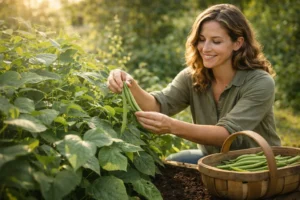
Green beans are one of those crops that make beginner gardeners feel like they actually know what they are doing.
Plant bush varieties and they grow into compact self-supporting plants with no staking needed.
They produce abundantly from around 50 to 60 days after sowing and keep going for weeks.
What most people do not know about beans is that they are also one of the best crops you can grow for your soil.
Beans fix nitrogen from the air into the ground, leaving the soil more fertile for whatever you plant there next season.
How to Grow Green Beans — Great Vegetables for the Beginner Garden
- Wait until after your last frost date. Beans hate cold soil and will simply rot if sown too early.
- Sow seeds 5cm deep and 10cm apart directly in the soil. No indoor starting needed.
- Water consistently once plants are established. Dry spells during flowering affect the harvest.
- Pick pods when they snap cleanly. Regular picking keeps the plant producing more all season.
- Bush varieties like Blue Lake 274 are the best choice for beginners — compact, reliable, and very productive.
Cherry Tomatoes: The Most Exciting Vegetables to Grow for Beginners
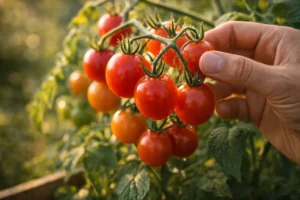
Ask any experienced gardener what crop they would recommend to a complete beginner and cherry tomatoes come up almost every time.
They are more disease resistant than large tomato varieties, they produce fruit continuously from midsummer right through to autumn, and watching those small fruits change from green to red or yellow is one of the most genuinely exciting things a beginner garden can offer.
Pick them warm off the vine on a summer afternoon and eat them straight away. There is nothing quite like it.
How to Grow Cherry Tomatoes — Favourite Vegetables for Beginners
- Start seeds indoors 6 to 8 weeks before your last frost date on a warm sunny windowsill.
- Move plants outside after the last frost when night temperatures stay above 10 degrees Celsius.
- Plant in the sunniest spot you have. Tomatoes need at least 8 hours of direct sun every day.
- Water at the base of the plant consistently. Irregular watering causes the fruits to split.
- Feed with a liquid tomato fertiliser every two weeks once the first flowers appear.
- Pick every ripe fruit promptly. Leaving ripe tomatoes on the plant slows down new fruit production.
| Best Cherry Tomato Varieties for Beginners
Gardeners Delight — classic, reliable, and produces huge trusses of sweet red fruits all summer. Sun Gold — orange cherry tomatoes with an exceptional sweet flavour. Very popular with beginners. Tumbling Tom — compact and perfect for hanging baskets or containers on a patio or balcony. Sweet Million — disease resistant and extremely productive. A brilliant first tomato for any new gardener. |
Courgette: The Most Productive Vegetables to Grow for Beginners
Courgette has a well-deserved reputation among gardeners. Plant one and you will be giving them away to neighbours by August.
One plant genuinely produces enough courgettes to keep a family supplied all summer long.
They grow fast, they are almost impossible to kill once established, and they are delicious roasted, grilled, or added to almost any dish.
The one thing to know about courgette is to check your plant every two days once it starts producing.
Leave a courgette on the plant for too long and it becomes a marrow the size of your arm.
How to Grow Courgette — Brilliant Vegetables for Beginners
- Sow seeds indoors about four weeks before your last frost date. Plant one seed per small pot on its side.
- Move plants outside after the last frost. Give each plant at least one square metre of space.
- Water well at the base. Courgette is a thirsty plant and drops its flowers in a drought.
- Harvest courgettes when they reach about 15 to 20cm long for the best flavour and texture.
- Check the plant every two days. A forgotten courgette becomes a marrow very quickly.
Spinach and Peas: More Great Vegetables to Grow for Beginners
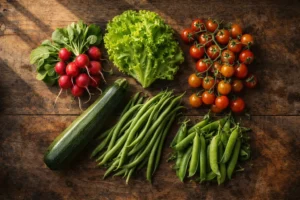
Spinach: Fast and Nutritious Vegetables for the Beginner Garden
Spinach is one of those crops that rewards you before you even feel like you have done anything.
Baby leaves are ready to pick in as little as 20 to 30 days after sowing.
Pick the outer leaves and the plant grows back from the centre, giving you a continuous supply of fresh greens for weeks.
- Sow directly in cool soil in early spring or late summer. Spinach bolts in summer heat.
- Keep the soil moist. Dry conditions cause spinach to run to seed quickly.
- Pick baby leaves young for the best flavour. Larger older leaves can be slightly bitter.
Peas: Fun and Rewarding Vegetables for Beginners
Peas are brilliant for beginner gardeners because they are genuinely fun to grow.
Watch them climb a simple stick frame or bamboo teepee and pick the sweet pods fresh from the plant.
Eaten straight from the garden a fresh pea is nothing like anything you find in a supermarket bag.
It is one of those moments that turns a casual first-time grower into a committed vegetable gardener for life.
- Sow peas directly in cool soil as early as possible in spring. They love cool conditions.
- Provide a simple support of canes, netting, or a bamboo teepee. Pea vines need something to climb.
- Pick pods regularly as soon as they fill out. Regular picking keeps the plant producing all season.
Cucumbers: Easy Vegetables Worth Growing for Beginners
Cucumbers are a little more demanding than radishes or lettuce but they reward the extra effort with a generous and satisfying harvest through the warmest months of the year.
Once the plants get going in warm weather they grow with impressive speed and produce cucumbers faster than most families can eat them.
- Start seeds indoors 3 to 4 weeks before your last frost date. Cucumbers do not like cold at all.
- Plant in the warmest sunniest spot you have. They need heat to thrive.
- Give plants a trellis or vertical support. Growing upward keeps the fruits cleaner and the plants healthier.
- Water consistently and feed with a liquid fertiliser every two weeks once fruits start to form.
- Harvest cucumbers young for the best texture. Leaving them too long makes the skin tough.
Vegetables to Avoid in Your First Beginner Garden
Just as important as knowing what to grow is knowing what not to grow in your first season.
These crops are not impossible but they are demanding enough to discourage a beginner who is still learning the basics.
| Crop | Why to Leave It for Year Two |
| Sweetcorn | Needs a large block planting to pollinate properly. Takes a lot of space for one harvest. |
| Cauliflower | Very fussy about soil, temperature, and moisture. Harder than most guides admit. |
| Celery | Needs a very long growing season and precise watering to produce a usable crop. |
| Pumpkins | Takes up a huge amount of space and only produces one or two fruits per plant. |
| Asparagus | Takes two to three years before the first usable harvest. Not a beginner first season crop. |
| Parsnips | Slow to germinate, need deep loose soil, and take up space for the entire growing season. |
Best Vegetables for Beginners in Containers and Small Spaces
Not everyone has a garden. But that does not mean you cannot grow your own vegetables.
Many of the best vegetables to grow for beginners actually do very well in pots, containers, grow bags, and window boxes.
| Vegetable | Minimum Container Size |
| Radishes | 20cm wide and 15cm deep — even a window box works well |
| Loose leaf lettuce | 20cm wide and 15cm deep — multiple plants per container |
| Spinach | 25cm wide and 15cm deep — grows brilliantly in a window box |
| Cherry tomatoes | 30cm wide and 30cm deep — Tumbling Tom is ideal for hanging baskets |
| Cucumbers | 30cm wide and 30cm deep — grow up a small trellis in a large pot |
| Green beans — bush variety | 30cm wide and 25cm deep — compact and very productive in containers |
| Herbs | 15cm wide and 15cm deep — thrive in almost any small container on a sunny windowsill |
The most important rule for container growing is to use good quality compost rather than garden soil.
Garden soil compacts in pots and does not drain well.
Fresh compost gives container vegetables the best possible start.
A Simple Planting Plan for Your First Beginner Vegetable Garden
Not sure where to begin? Here is a simple crop plan for a 4×4 foot raised bed that uses the best vegetables to grow for beginners and keeps the season interesting from spring right through to autumn.
| Time of Year | What to Plant |
| Early spring — March to April | Radishes, loose leaf lettuce, spinach, peas |
| Late spring — April to May | Green beans, courgette (after last frost) |
| Early summer — May to June | Cherry tomatoes and cucumbers outdoors after last frost |
| Late summer — August | Sow a second round of lettuce, spinach, and radishes for autumn harvest |
| Autumn — September to October | Harvest remaining crops, clear the bed, add fresh compost for next year |
| The One Rule That Changes Everything
Grow what you actually like to eat. It sounds obvious but it makes a genuine difference. You will water it more carefully, check it more often, and feel far more motivated to harvest it when the time comes. Every expert gardener gives the same advice. Grow what you love eating and the rest takes care of itself. |
Start Growing the Right Vegetables Today
You now know exactly which vegetables to grow for beginners, how to grow each one, and when to plant them for the best results across the whole season.
Start with radishes, lettuce, and one or two other crops from this list.
Keep it simple, visit your vegetable garden every day, and pick everything the moment it is ready.
By the end of your first season you will have grown your own food, learned more than you expected, and already be thinking about what to try next year.
Pick three vegetables from this list that you actually enjoy eating. Order the seeds this week.
Plant the cool season ones — radishes, lettuce, and spinach — as soon as possible.
Save the warm season ones for after your last frost date. That is your first beginner vegetable garden planned and ready to go.
Frequently Asked Questions
| Q: What is the easiest vegetable to grow for beginners?
A: Radishes are the easiest vegetable to grow for beginners by a clear margin. They germinate in just a few days, grow in almost any soil, need very little care, and are ready to harvest in 20 to 30 days from sowing. They are almost impossible to get wrong. If you have never grown anything before, start with radishes. That first pull is one of the most satisfying moments in any beginner vegetable garden. |
| Q: What vegetables grow well for beginners in containers?
A: Radishes, loose leaf lettuce, spinach, cherry tomatoes, bush green beans, cucumbers, and herbs all grow very well for beginners in containers. The key is using good quality compost rather than garden soil, choosing pots at least 30cm wide and deep for larger crops, and placing containers in a spot with at least 6 hours of direct sun each day. Many experienced gardeners say container growing is actually easier for beginners than in-ground growing because each pot is its own contained project. |
| Q: How many different vegetables should a beginner grow in their first year?
A: Four to five different vegetables is the ideal number for a first season. High Mowing Organic Seeds advises starting with just a handful of crops you really want to eat, learning as much as you can about growing them well, and building from there. Trying to grow too many different vegetables at once in your first year is one of the most common beginner mistakes. Keep it simple, grow it well, and add more variety in year two. |
| Q: What vegetables grow fastest for beginners?
A: Radishes are the fastest vegetable in any beginner garden — ready in 20 to 30 days. Loose leaf lettuce is ready for its first picking in 30 to 40 days. Baby spinach can be harvested in 20 to 30 days. Spring onions take around 20 to 30 days from bulbs. These fast crops are ideal for beginner gardeners because the quick turnaround from seed to harvest keeps motivation high and gives you a real sense of progress in the early weeks of the season. |
| Q: Which vegetables should beginners avoid growing in their first year?
A: Beginners should avoid sweetcorn, cauliflower, celery, pumpkins, asparagus, and parsnips in their first year. These crops are either too slow, too fussy, or too space-hungry to make a satisfying first season experience. Asparagus in particular takes two to three full years before it produces anything worth harvesting. Save these crops for when you have a couple of successful seasons behind you and feel confident enough to take on something more demanding. |