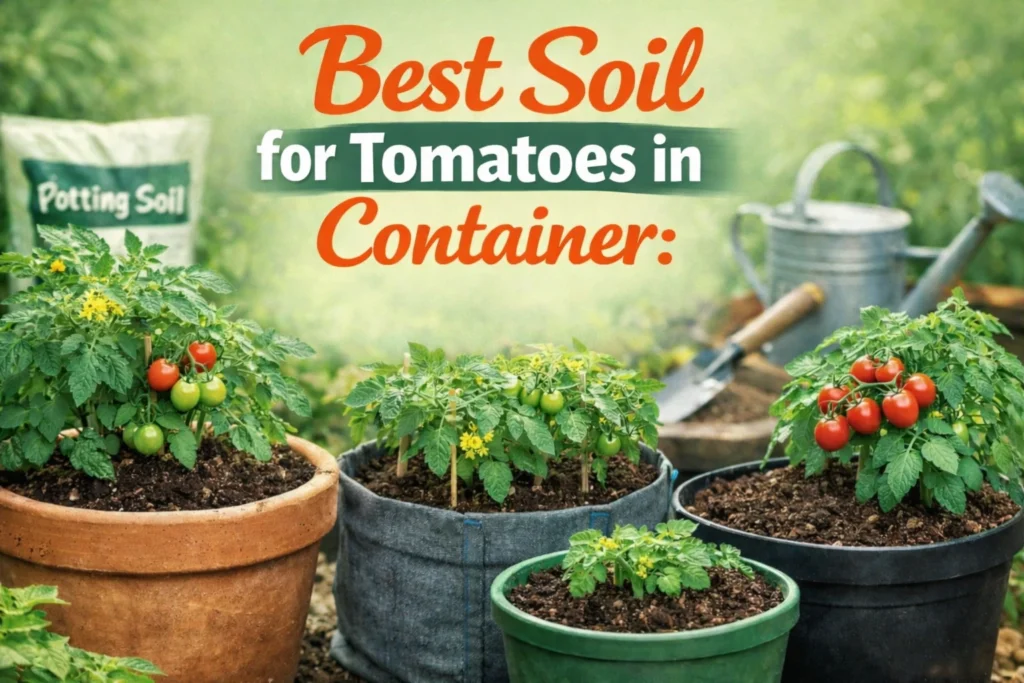
If you want strong plants, steady growth, and heavy fruit production, choosing the best soil for tomatoes in container gardens is the most important decision you’ll make.
Unlike in-ground tomatoes that can stretch their roots into native soil, container tomatoes rely entirely on what you put inside that pot.
That means drainage, nutrients, aeration, and moisture balance must all come from your soil mix.
The right best soil for tomatoes in container setup creates a healthy root system.
The wrong one leads to yellow leaves, blossom end rot, poor fruiting, and constant frustration.
Let’s break it down clearly and practically.
• Drainage is paramount – The best soil for tomatoes in container must drain well while retaining adequate moisture
• Nutrient density matters – Container tomatoes need nutrient-rich soil since they can’t access ground nutrients
• pH levels between 6.0-6.8 provide optimal nutrient uptake for container-grown tomatoes
• Organic matter content should comprise 25-30% of your soil mix for sustained plant health
• Avoid garden soil – Regular dirt compacts in containers and creates drainage nightmares
Why Container Tomatoes Need Special Soil
Container gardening presents unique challenges that don’t exist in traditional ground planting.
When growing tomatoes in pots, planters, or raised containers, the best soil for tomatoes in container setups must address several critical factors simultaneously.
Limited Root Space
Tomato roots in containers can’t spread horizontally like they would in garden beds.
This restriction means every cubic inch of soil must work harder to support plant growth.
The growing medium needs exceptional nutrient density to compensate for reduced root exploration area.
Drainage Challenges
Containers create artificial environments where water management becomes tricky.
Too much moisture leads to root rot, while insufficient water causes stress and poor fruit development.
Thebest soil for tomatoes in container gardening strikes this delicate balance through proper soil structure.
Temperature Fluctuations
Container soil experiences more dramatic temperature swings than ground soil.
Dark containers absorb heat, potentially cooking roots during summer months.
Quality potting mixes help insulate roots while maintaining consistent moisture levels.
Nutrient Depletion
Unlike garden beds that benefit from earthworm activity and natural decomposition, container soil relies entirely on what you provide.
Nutrients wash away with each watering, making nutrient-rich starting soil absolutely essential.
What Makes the Best Soil for Tomatoes in Container?
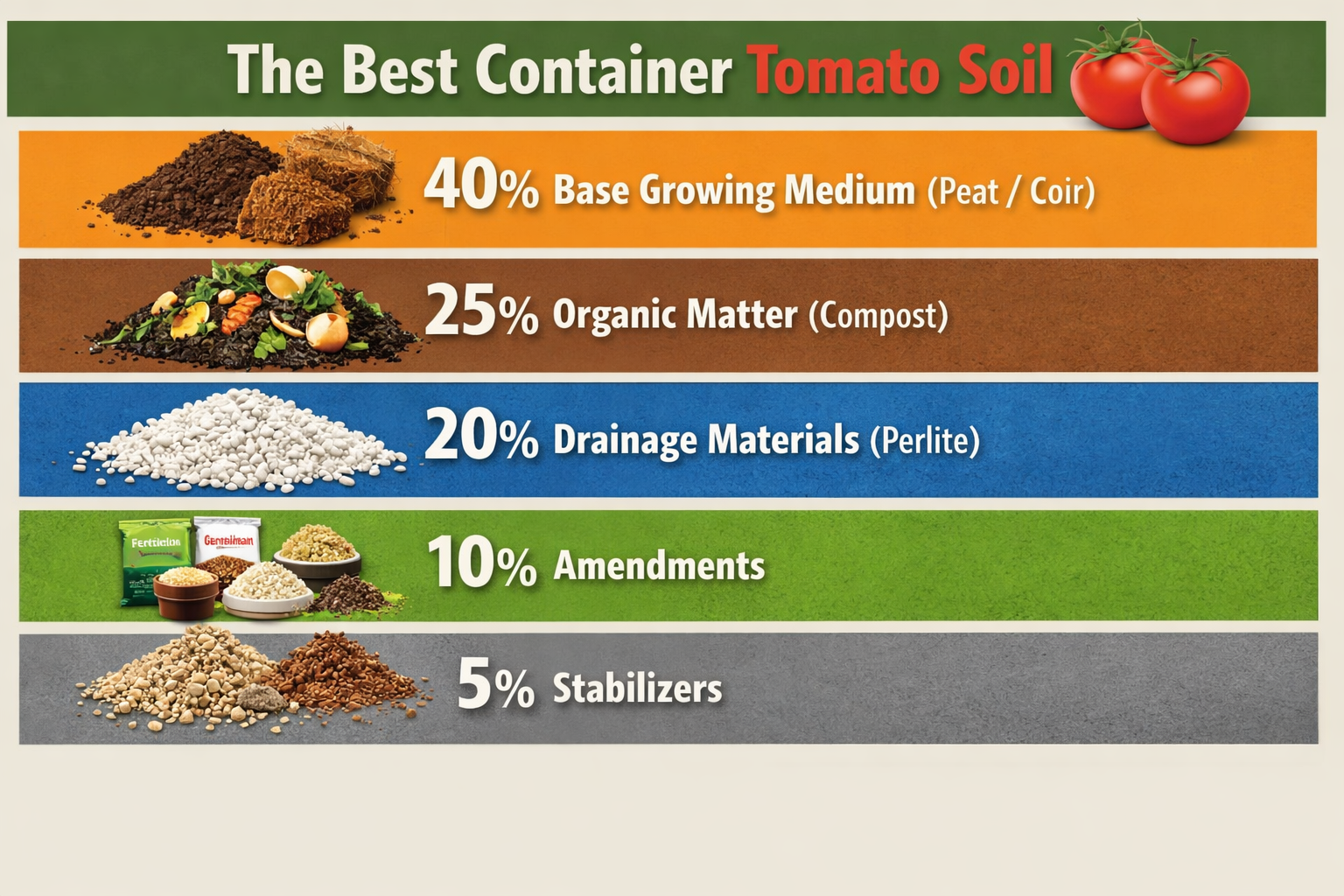
Understanding soil composition separates successful container gardeners from frustrated beginners.
The best soil for tomatoes in container growing combines multiple components, each serving specific purposes.
Essential Soil Components
Base Growing Medium (40-50%)
High-quality peat moss or coconut coir forms the foundation.
These materials retain moisture while providing excellent drainage – a seemingly contradictory but essential combination for tomato success.
Drainage Materials (20-25%)
Perlite, vermiculite, or coarse sand prevents soil compaction.
These materials create air pockets that allow roots to breathe while excess water drains away efficiently.
Organic Matter (25-30%)
Compost, aged manure, or leaf mold provides slow-release nutrients and improves soil structure.
This component distinguishes premium mixes from basic potting soils.
Stabilizing Elements (5-10%)
Small amounts of bark chips or coconut chunks help maintain soil structure throughout the growing season, preventing the dreaded soil compaction that kills container plants.
Texture and Consistency Indicators
The best soil for tomatoes in container should feel light and fluffy when dry, yet hold together when squeezed while moist.
It should never feel heavy, clay-like, or sandy.
Premium mixes have visible organic matter and varied particle sizes.
Why Container Soil Is a Different Beast Entirely
Many gardeners mistakenly assume that good garden soil automatically translates to good container soil.
This assumption leads to countless container gardening failures.
The best soil for tomatoes in container gardening operates under completely different physics and chemistry than ground soil.
Drainage Dynamics
In garden beds, excess water percolates down through soil layers and eventually reaches groundwater systems.
Containers create closed systems where water has nowhere to go except through drainage holes.
Poor-draining soil becomes waterlogged, creating anaerobic conditions that suffocate roots.
Container Soil Requirements:
- Porosity: 25-30% air space when properly moistened
- Water retention: Holds moisture without becoming soggy
- Particle size variety: Mixed sizes prevent compaction
- Organic content: Higher than typical garden soil needs
Nutrient Cycling Differences
Ground soil benefits from complex ecosystems including beneficial bacteria, fungi, earthworms, and decomposing organic matter.
Container soil lacks these natural nutrient cycling systems, making initial soil quality absolutely critical.
The best soil for tomatoes in container must provide:
- Immediate nutrients for early plant establishment
- Slow-release components for sustained feeding
- Proper pH buffering to maintain nutrient availability
- Microbial activity through quality compost inclusion
Root Environment Control
Container growing puts gardeners in complete control of root environments – both an advantage and responsibility.
Unlike garden soil that maintains relatively stable conditions, container soil responds rapidly to watering, fertilizing, and environmental changes.
What the Best Soil for Tomatoes in Container Must Include
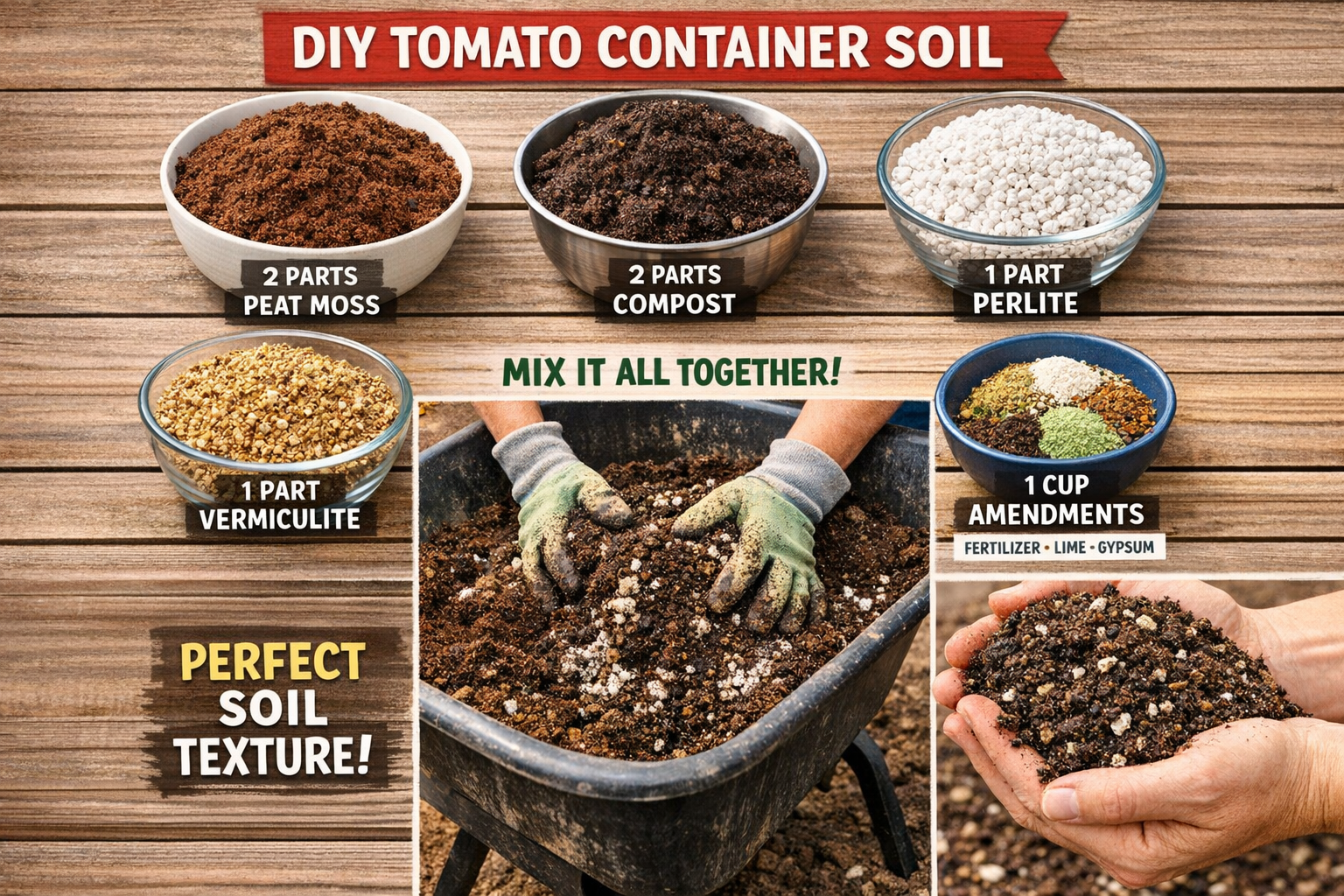
Creating or selecting the best soil for tomatoes in container requires understanding specific ingredient functions and their interactions.
Each component serves multiple purposes, and successful mixes balance these elements precisely.
Primary Base Materials
Sphagnum Peat Moss
This acidic organic material excels at moisture retention while maintaining good drainage.
Peat moss provides excellent root anchoring and slowly releases nutrients as it decomposes.
However, it requires pH adjustment since tomatoes prefer slightly acidic to neutral conditions.
Coconut Coir
Increasingly popular as a sustainable peat alternative, coir offers similar water retention with better pH neutrality.
It resists compaction better than peat and provides excellent air circulation around roots.
Premium Bark Compost
Aged bark provides structure and slow-release nutrients.
Quality bark compost improves drainage while adding organic matter that feeds beneficial microorganisms essential for healthy tomato growth.
Drainage and Aeration Additives
Perlite
These white volcanic glass particles create permanent air spaces in soil.
Perlite doesn’t break down over time, ensuring consistent drainage throughout the growing season.
The best soil for tomatoes in container typically contains 15-20% perlite.
Vermiculite
Unlike perlite, vermiculite absorbs water and nutrients, then releases them slowly to plant roots.
This mineral helps buffer against both drought stress and nutrient deficiencies.
Coarse Sand
Builder’s sand (not fine sand) improves drainage without adding nutrients.
It’s particularly useful in humid climates where other drainage materials might retain too much moisture.
Nutrient Components
Aged Compost
Quality compost provides slow-release nutrients, improves soil structure, and introduces beneficial microorganisms.
The best soil for tomatoes in container contains 25-30% well-aged compost from reliable sources.
Worm Castings
These provide gentle, slow-release nutrition that won’t burn tender roots.
Worm castings also improve soil structure and water retention while adding beneficial microbes.
Aged Manure
Well-composted cow, horse, or chicken manure adds nutrients and organic matter.
Fresh manure burns plants, so only use manure aged at least one year.
DIY Recipe: Make Your Own Best Soil for Tomatoes in Container
Creating custom soil mix ensures quality control while often saving money compared to premium commercial mixes.
This proven recipe produces the best soil for tomatoes in container growing across various climates and container types.
Basic Recipe (Makes 1 Cubic Foot)
Base Mix:
- 4 parts quality sphagnum peat moss or coconut coir
- 2 parts aged compost (homemade or purchased)
- 1 part perlite
- 1 part vermiculite
- 0.5 parts aged manure or worm castings
Amendments per Cubic Foot:
- 2 tablespoons lime (to adjust pH)
- 1 tablespoon balanced organic fertilizer (10-10-10)
- 1 tablespoon bone meal
- 1 tablespoon kelp meal
Advanced Recipe for Heavy Feeders
For indeterminate varieties and large containers, this enriched version provides extended nutrition:
Enhanced Base:
- 3 parts coconut coir
- 2 parts premium compost
- 2 parts aged bark fines
- 1 part perlite
- 1 part worm castings
- 0.5 parts coarse sand
Premium Amendments:
- 3 tablespoons organic tomato fertilizer
- 2 tablespoons bone meal
- 1 tablespoon kelp meal
- 1 tablespoon azomite (rock dust)
- 2 tablespoons dolomite lime
Mixing Instructions
- Combine dry ingredients in large tarp or wheelbarrow
- Add water gradually while mixing until evenly moist
- Test squeeze consistency – should hold together briefly when squeezed
- Age mixture 1-2 weeks before planting if possible
- Adjust pH if needed after aging period
The best soil for tomatoes in container should feel light and springy, never heavy or waterlogged.
The pH Factor: Don’t Skip This
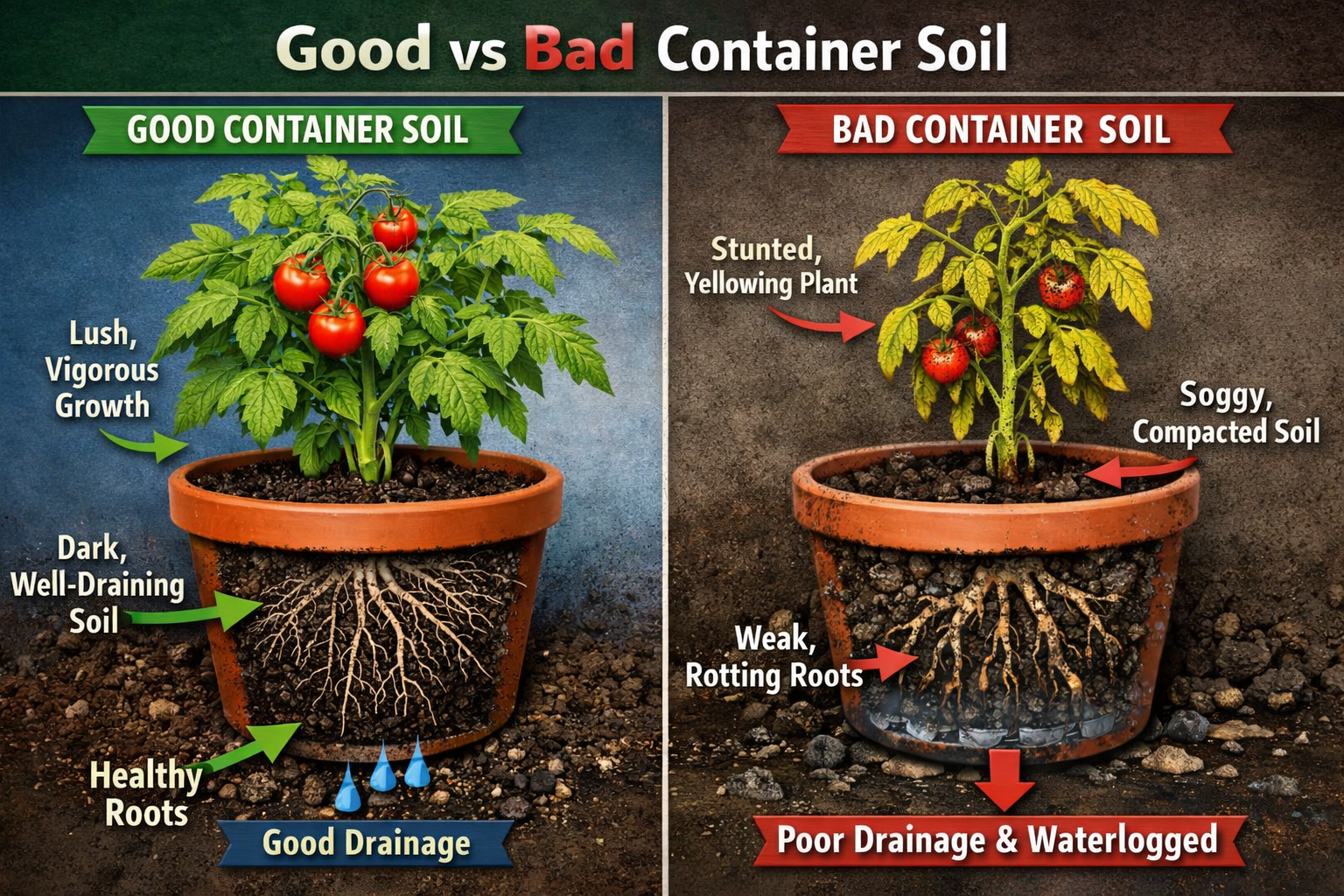
Soil pH dramatically affects nutrient availability, making it crucial for the best soil for tomatoes in container success.
Tomatoes thrive in slightly acidic to neutral soil with pH between 6.0-6.8.
Outside this range, plants can’t access nutrients effectively, regardless of soil quality.
Why pH Matters for Container Tomatoes
Nutrient Lockout Prevention
Incorrect pH prevents plants from absorbing essential nutrients like iron, phosphorus, and calcium.
Even the most nutrient-rich soil becomes useless if pH levels block uptake.
Calcium Availability
Proper pH ensures adequate calcium absorption, preventing blossom end rot – a common container tomato problem caused by calcium deficiency rather than calcium absence.
Microbial Activity
Beneficial soil bacteria and fungi function best within optimal pH ranges.
These microorganisms help break down organic matter and make nutrients available to plants.
Testing and Adjusting pH
Digital pH Meters
Provide accurate readings but require calibration and proper storage. Best for serious gardeners managing multiple containers.
pH Test Strips
Affordable and reasonably accurate for basic pH monitoring. Sufficient for most home gardeners growing a few containers.
Soil Testing Labs
Provide comprehensive analysis including pH, nutrients, and organic matter content.
Recommended for large-scale container operations.
pH Adjustment Strategies
Raising pH (Making Less Acidic):
- Add dolomite lime: 1-2 tablespoons per cubic foot
- Use wood ash sparingly: 1 teaspoon per cubic foot
- Mix in crushed eggshells for slow pH increase
Lowering pH (Making More Acidic):
- Add sulfur: 1 tablespoon per cubic foot
- Use coffee grounds: Up to 10% of soil volume
- Incorporate pine needles or oak leaves
The best soil for tomatoes in container maintains stable pH throughout the growing season through proper buffering materials.
Organic vs Synthetic: Which Is Better?
The debate between organic and synthetic approaches affects every aspect of the best soil for tomatoes in container selection.
Both methods can produce excellent results, but they operate through different mechanisms and offer distinct advantages.
Organic Soil Approach
Natural Nutrient Release
Organic materials break down slowly, providing steady nutrition throughout the growing season.
This gradual release matches tomato plants’ natural feeding patterns and reduces the risk of nutrient burn.
Soil Biology Benefits
Organic matter feeds beneficial microorganisms that improve soil structure, disease resistance, and nutrient cycling.
The best soil for tomatoes in container using organic methods creates living soil ecosystems.
Environmental Sustainability
Organic inputs often utilize recycled materials like compost and aged manures.
This approach reduces environmental impact while building soil health over time.
Long-term Soil Improvement
Organic materials continue improving soil structure and fertility even after plants are harvested.
Container soil can be reused and amended for multiple seasons.
Synthetic Soil Approach
Precise Nutrient Control
Synthetic fertilizers provide exact nutrient ratios and immediate availability.
This precision helps address specific deficiencies quickly and allows fine-tuning of plant nutrition.
Consistent Results
Synthetic inputs deliver predictable outcomes across different growing conditions. This consistency appeals to gardeners seeking reliable, repeatable results.
Space Efficiency
Synthetic nutrients require less soil volume than organic equivalents, making them suitable for small containers or limited storage situations.
Rapid Problem Correction
Nutrient deficiencies can be corrected quickly with targeted synthetic applications, potentially saving plants during critical growth periods.
Hybrid Approach: Best of Both Worlds
Many successful gardeners combine organic and synthetic methods for the best soil for tomatoes in container results:
Organic Base with Synthetic Supplements
- Use organic compost and amendments for soil foundation
- Add synthetic fertilizers for rapid nutrient boosts when needed
- Maintain soil biology while ensuring adequate nutrition
Seasonal Flexibility
- Start with organic slow-release base
- Supplement with synthetic nutrients during heavy feeding periods
- Return to organic maintenance between crops
Signs You Chose the Wrong Soil
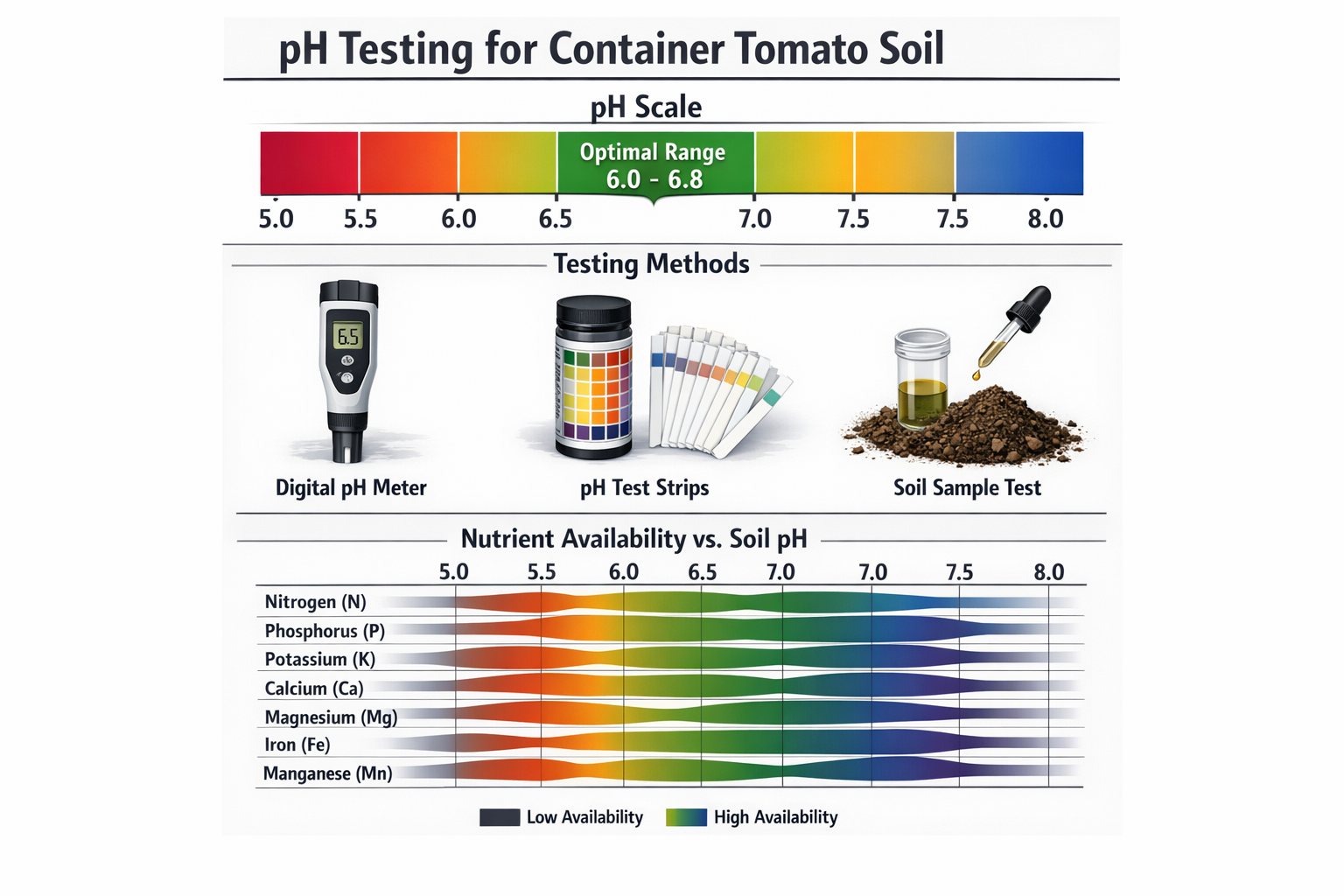
Recognizing poor soil performance early prevents total crop failure and helps improve future container gardening success.
The best soil for tomatoes in container produces vigorous, healthy plants, while inadequate soil creates obvious warning signs.
Early Warning Indicators
Poor Germination or Establishment
Seeds fail to germinate or seedlings struggle to establish strong root systems. This often indicates poor drainage, incorrect pH, or contaminated soil.
Yellowing Lower Leaves
While some lower leaf yellowing is normal, excessive yellowing early in the season suggests nutrient deficiencies or poor soil structure preventing proper root function.
Stunted Growth
Plants remain small despite adequate water and sunlight. Poor soil often lacks essential nutrients or has pH problems preventing nutrient uptake.
Water Management Issues
Soil either stays soggy for days after watering or dries out completely within hours.
The best soil for tomatoes in container maintains consistent moisture levels.
Advanced Problem Indicators
Root Problems
When repotting or checking roots, healthy soil produces white, fibrous root systems.
Brown, mushy, or sparse roots indicate soil problems.
Pest and Disease Susceptibility
Weak plants in poor soil become magnets for pests and diseases. Healthy soil supports strong plants that resist common problems.
Poor Fruit Development
Flowers drop without setting fruit, or fruits develop poorly with cracking, splitting, or blossom end rot.
These issues often trace back to soil problems affecting nutrient uptake.
Salt Buildup
White crusty deposits on soil surface or container edges indicate salt accumulation from poor-quality soil or excessive synthetic fertilizer use.
Soil Texture Problems
Compaction Issues
Soil becomes hard and difficult to penetrate with fingers.
Compacted soil prevents proper root growth and water infiltration.
Excessive Drainage
Water runs straight through without being retained. While drainage is essential, the best soil for tomatoes in container retains adequate moisture for plant needs.
Waterlogging
Soil remains saturated long after watering, often accompanied by fungal odors. This creates anaerobic conditions that kill roots and promote disease.
Common Mistakes to Avoid with Container Tomato Soil
Learning from common errors helps gardeners select and use the best soil for tomatoes in container more effectively.
These mistakes account for the majority of container tomato failures.
Soil Selection Mistakes
Using Garden Soil in Containers ❌
Garden soil compacts severely in containers, creating drainage problems and root restriction.
Even high-quality garden soil lacks the drainage properties needed for container success.
Choosing Cheap Potting Mix
Budget potting soils often contain excessive bark chips, inadequate nutrients, or poor-quality ingredients.
The best soil for tomatoes in container requires investment in quality materials.
Ignoring Ingredient Lists
Many commercial mixes contain fillers like sand or low-quality bark that don’t support healthy plant growth. Always read ingredient lists before purchasing.
Buying Pre-Fertilized Mixes for Long-Season Crops
While convenient, most pre-fertilized soils only provide 6-8 weeks of nutrition.
Tomatoes need 3-4 months of consistent feeding for optimal production.
Container Preparation Errors
Inadequate Drainage Holes
Even perfect soil becomes waterlogged in containers without proper drainage. Drill additional holes if needed – more drainage is almost always better than less.
Wrong Container Size
Small containers restrict root growth regardless of soil quality. Tomatoes need minimum 5-gallon containers, with 10+ gallons preferred for indeterminate varieties.
Skipping Drainage Layer
Adding gravel or pottery shards at container bottoms helps prevent drainage hole blockage and improves overall water management.
Poor Container Material Choice
Dark containers absorb heat and cook roots in summer.
Light-colored containers or double-walling help maintain proper root temperatures.
Soil Management Mistakes
Overwatering New Plantings
Newly transplanted tomatoes in quality soil need less water than many gardeners provide.
Overwatering prevents root establishment and promotes disease.
Failing to Monitor pH
Even the best soil for tomatoes in container can develop pH problems over time.
Regular monitoring and adjustment maintain optimal growing conditions.
Reusing Soil Without Amendment
Container soil depletes quickly and needs refreshing between seasons.
Adding compost and organic matter restores soil vitality.
Ignoring Soil Temperature
Cold soil prevents root growth and nutrient uptake. Wait until soil temperatures reach 60°F consistently before planting tomatoes.
Fertilization and Amendment Errors
Over-Fertilizing at Planting
Excessive fertilizer burns tender roots and can kill newly transplanted seedlings.
Start with light feeding and increase as plants establish.
Using Fresh Manure
Uncomposted manure burns plants and may contain harmful bacteria.
Only use manure aged at least one year for the best soil for tomatoes in container results.
Neglecting Calcium Supplementation
Container soil often lacks adequate calcium, leading to blossom end rot. Regular calcium additions prevent this common problem.
Inconsistent Feeding Schedule
Container tomatoes need regular, consistent nutrition. Sporadic feeding creates stress and reduces fruit quality and quantity.
Head-to-Head: Comparing the Best Soil for Tomatoes in Container
Here’s a quick comparison table to help you choose at a glance:
| Product | Key Ingredients | pH Range | Organic Certified | Best For | Price Range |
|---|---|---|---|---|---|
| FoxFarm Ocean Forest | Peat moss, bat guano, fish/crab meal, worm castings | 6.3–6.8 | No (natural ingredients) | Overall performance | $$$ |
| FoxFarm Happy Frog | Peat moss, forest humus, worm castings, perlite | 6.2–6.8 | No (natural ingredients) | Drainage + reuse | $$$ |
| Miracle-Gro Performance Organics | Peat moss, coco coir, perlite | 6.0–7.0 | Yes (OMRI) | Budget-friendly organic | $$ |
| Espoma Organic Mix | Peat moss, alfalfa, worm castings, Myco-tone fungi | 5.5–7.0 | Yes (OMRI) | Moisture retention | $$ |
| Sun Gro Black Gold | Loam, peat, perlite, pumice, compost | 6.0–7.0 | Yes (OMRI) | Fully organic growing | $$ |
Advanced Soil Optimization Techniques
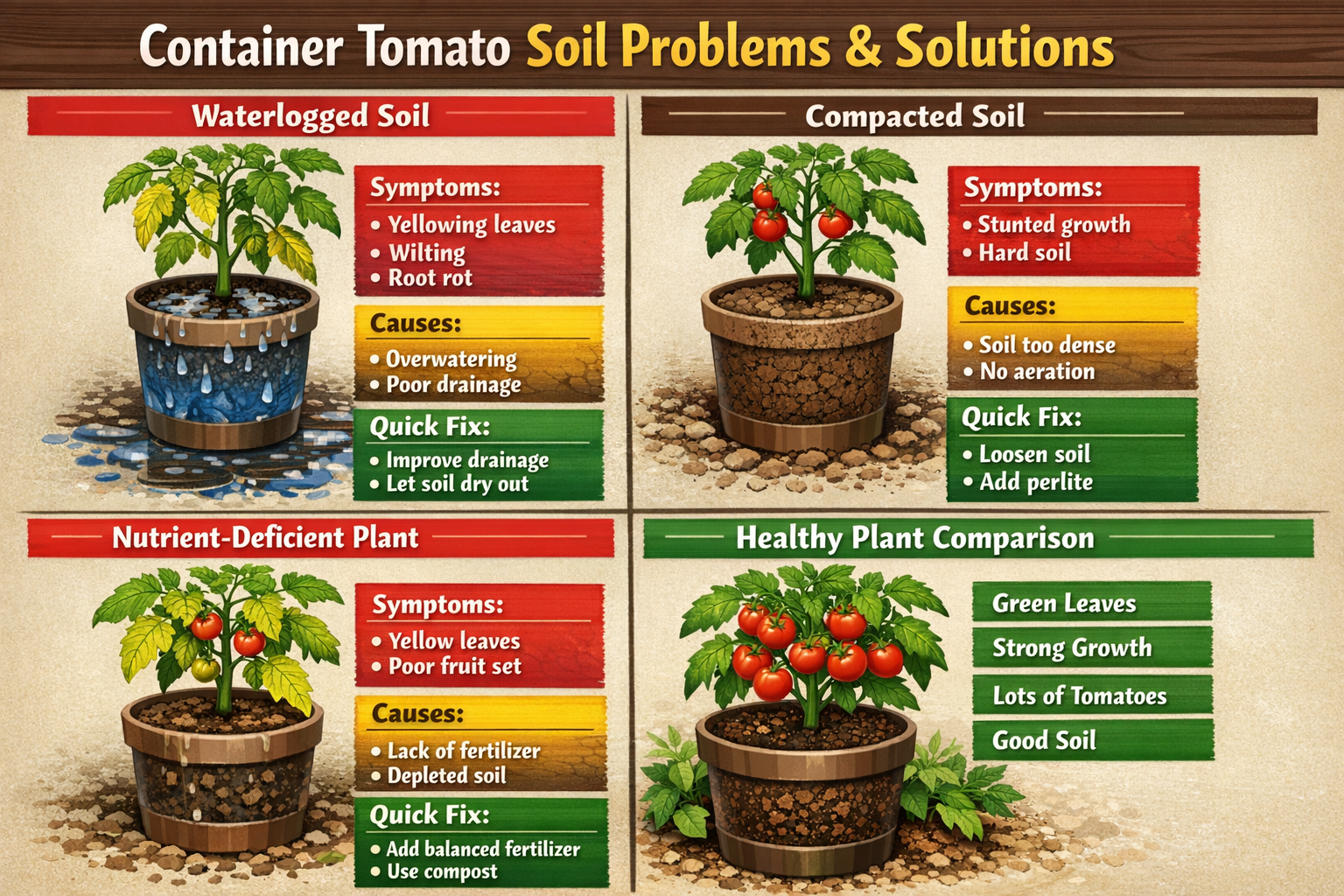
Experienced gardeners can enhance the best soil for tomatoes in container through advanced techniques that maximize plant performance and soil longevity.
Mycorrhizal Inoculation
Beneficial Fungal Networks
Mycorrhizal fungi form symbiotic relationships with tomato roots, extending nutrient and water uptake capacity.
Inoculating soil with these beneficial organisms improves plant vigor and stress tolerance.
Application Methods:
- Mix mycorrhizal powder into soil at planting time
- Apply directly to root zones during transplanting
- Use liquid mycorrhizal solutions for established plants
Biochar Integration
Carbon Sequestration and Nutrient Retention
Biochar improves soil structure while providing long-term carbon storage.
It enhances nutrient retention and creates habitat for beneficial microorganisms.
Integration Guidelines:
- Add 5-10% biochar to soil mixes
- Charge biochar with compost tea before use
- Combine with organic matter for best results
Controlled Release Technology
Polymer-Coated Fertilizers
These provide consistent nutrition over extended periods, reducing feeding frequency while maintaining optimal nutrient levels.
Particularly useful for the best soil for tomatoes in container in busy households.
Hydrogel Amendments
Water-absorbing polymers help maintain consistent soil moisture, reducing watering frequency and stress from drought conditions.
Seasonal Soil Management
Managing the best soil for tomatoes in container requires different approaches throughout the growing season to maintain optimal plant health and productivity.
Spring Preparation
Soil Warming Techniques
- Use black containers to absorb heat
- Cover soil with clear plastic 2 weeks before planting
- Add compost to generate mild heat through decomposition
Pre-Season Amendments
- Test and adjust pH levels
- Incorporate slow-release organic fertilizers
- Add fresh compost and organic matter
Summer Maintenance
Moisture Management
- Mulch soil surface to reduce evaporation
- Monitor soil moisture daily during heat waves
- Adjust watering frequency based on container size and weather
Nutrient Supplementation
- Apply liquid fertilizers every 2-3 weeks
- Side-dress with compost monthly
- Monitor for nutrient deficiency symptoms
Fall Transition
Soil Preservation
- Reduce watering as plants slow growth
- Remove diseased plant material promptly
- Prepare soil for winter storage or amendment
Season Extension
- Protect containers from freezing
- Maintain soil biology through winter months
- Plan soil improvements for next season
Troubleshooting Common Soil Problems
Even with the best soil for tomatoes in container, problems can arise that require quick identification and correction to save the growing season.
Drainage Issues
Symptoms: Standing water, fungal odors, yellowing leaves
Solutions: Add perlite or coarse sand, improve drainage holes, reduce watering frequency
Nutrient Deficiencies
Nitrogen Deficiency: Yellow lower leaves, poor growth
Phosphorus Deficiency: Purple leaf undersides, poor flowering
Potassium Deficiency: Brown leaf edges, poor fruit development
Calcium Deficiency: Blossom end rot, poor fruit quality
pH Problems
Too Acidic: Iron toxicity, poor growth, dark leaves
Too Alkaline: Iron chlorosis, yellowing between leaf veins, poor nutrient uptake
Compaction Issues
Prevention: Use quality drainage materials, avoid overwatering, don’t walk on containers
Treatment: Carefully loosen soil surface, add organic matter, improve drainage
Container Size and Soil Volume Calculations
Selecting appropriate containers ensures the best soil for tomatoes in container has adequate space for root development and nutrient storage.
Minimum Container Requirements
Determinate Varieties: 5-gallon minimum
Indeterminate Varieties: 10-gallon minimum
Cherry Tomatoes: 3-gallon minimum
Large Heirloom Varieties: 15+ gallon recommended
Soil Volume Optimization
Container Shape Considerations
- Wide, shallow containers provide better root spread
- Deep containers offer more soil volume and stability
- Square containers maximize soil volume per footprint
Multi-Plant Containers
- Allow 3-4 gallons per plant minimum
- Ensure adequate spacing for air circulation
- Consider root competition for nutrients
Top Commercial Options: The Best Soil for Tomatoes in Container Gardening
Let’s talk about what’s actually out there. There are dozens of options on the market, and the quality varies significantly.
Here are the standout performers that experienced container gardeners keep coming back to:
FoxFarm Ocean Forest — The Best Overall Pick
According to Bob Vila’s expert review, FoxFarm Ocean Forest consistently earns the top spot among commercial potting soils for tomatoes.
It’s a well-balanced blend of sphagnum peat moss, sandy loam, and forest humus, enriched with natural ingredients like bat guano, fish meal, crab meal, and earthworm castings.
Its pH is adjusted to sit between 6.3 and 6.8 — right in the sweet spot for tomatoes.
The drawback? It’s pricier than most. But experienced growers say the results justify the cost.
FoxFarm Happy Frog — Best for Drainage
Happy Frog is FoxFarm’s other heavy-hitter and is praised by gardeners at Geeky Greenhouse for its incredible drainage and moisture-retention balance.
It includes earthworm castings, forest humus, and peat moss, and can feed your tomato plants for two to three months before you need to supplement with fertilizer.
It’s also a favorite for reuse across multiple growing seasons.
Miracle-Gro Performance Organics — Best Budget-Friendly Option
For gardeners watching their spending, Miracle-Gro Performance Organics All-Purpose Container Mix is a solid choice.
Its blend of sphagnum peat moss, coconut coir, and perlite gives seedlings a strong start, and it contains a wetting agent that helps dry peat moss absorb water on first use.
It’s certified OMRI organic, widely available, and effective enough for most home growers.
Espoma Organic Potting Mix — Most Nutrient-Rich
Minnetonka Orchards highlights Espoma as the most nutrient-rich option for container tomatoes.
It contains sphagnum peat moss (35–45% of the mix), alfalfa meal, earthworm castings, yucca extract, and a proprietary blend of mycorrhizal fungi called Myco-tone, which promotes water uptake in roots and reduces drought stress.
If you live somewhere warm and tend to forget waterings, this one’s your friend.
Sun Gro Black Gold — Best Organic Option
If you’re committed to fully organic growing, Black Gold All Organic Potting Soil (OMRI certified) is worth the investment.
It blends rich loam, sphagnum peat moss, perlite, pumice, compost, earthworm castings, and forest humus — and it’s free from harmful chemicals and synthetic additives.
Conclusion
Selecting the best soil for tomatoes in container gardening represents the foundation of successful harvests.
Quality soil provides the drainage, nutrition, and root environment that container tomatoes need to thrive in artificial growing conditions.
Whether choosing commercial mixes or creating custom blends, focus on drainage, organic matter content, and proper pH levels.
The investment in premium soil pays dividends through healthier plants, better yields, and fewer problems throughout the growing season.
Remember that the best soil for tomatoes in container gardening combines multiple components working together – base materials for structure, organic matter for nutrition, and amendments for drainage and pH balance.
Action Steps for Success:
- Test your current soil pH and drainage before the next growing season
- Source quality ingredients or identify reputable commercial mixes
- Prepare containers with adequate drainage and appropriate size
- Plan your feeding schedule to supplement soil nutrition throughout the season
- Monitor plant health regularly to catch and correct soil problems early
Success with container tomatoes starts with soil selection.
Choose wisely, prepare thoroughly, and enjoy the rewards of homegrown tomatoes from your perfectly prepared growing medium.
The best soil for tomatoes in container gardening creates the foundation for seasons of delicious, fresh harvests right from your patio, deck, or balcony.