
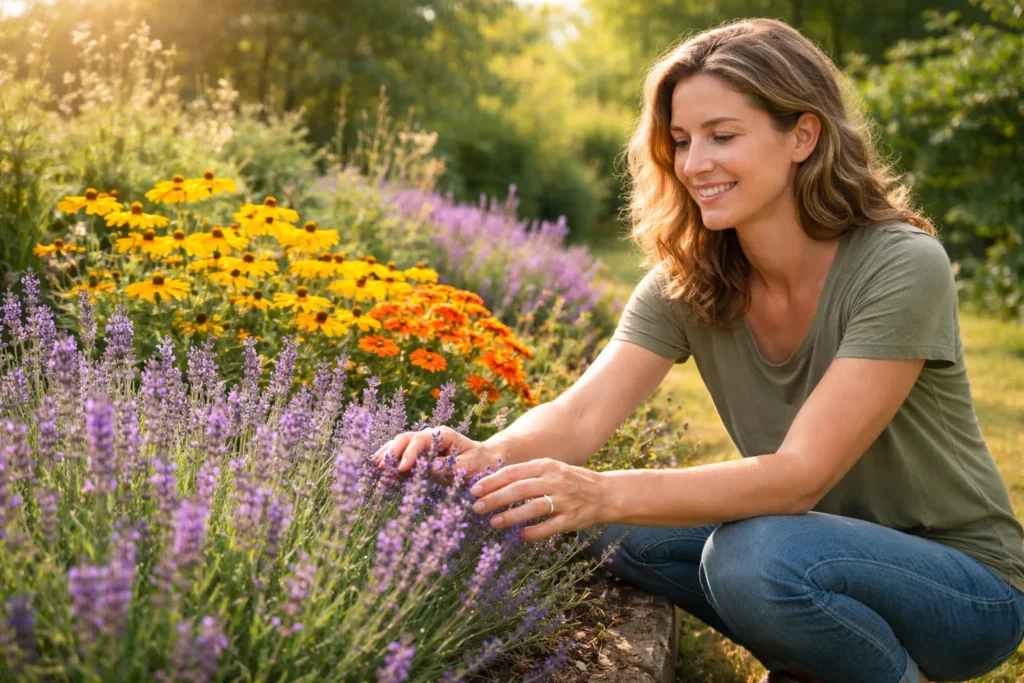
Best low maintenance plants for ADHD gardeners are perfect for anyone who wants a beautiful garden without the stress.
These plants are tough, forgiving, and don’t need daily attention.
They can handle missed waterings and still look great.
Gardening should feel calming, not overwhelming. With the right low-maintenance plants, you can enjoy color, greenery, and success—without adding more tasks to your already busy mind.
Top choices include lavender, succulents, pothos, marigolds, snake plants, echinacea, and rosemary.
In this guide, we cover the top low maintenance plants for ADHD gardeners — with verified care details, honest advice, and named sources you can check yourself.
Why Low Maintenance Plants for ADHD Gardeners Work Best
People with ADHD often forget to water plants, get distracted mid-task, or lose interest when results take too long.
Low maintenance plants for ADHD gardeners solve all three of these problems at once.
According to Healthline, a 2019 study found that plants can lead to increased productivity, attentiveness, memory retention, and alertness — making them a genuinely helpful tool for the ADHD brain.
The key is choosing plants that work with the ADHD brain, not against it.
Low maintenance plants for ADHD gardeners share four key qualities:
- They survive missed waterings — no daily checking needed to keep them alive
- They grow without complicated care — no tricky feeding schedules or specialist knowledge
- They still look great with minimal attention — rewarding even when you forget them for a few days
- They provide sensory interest — smell, texture, and colour that engages the ADHD brain naturally
Best Low Maintenance Plants for ADHD Gardeners
Here are the top low maintenance plants for ADHD gardeners, split into outdoor and indoor options.
Every plant on this list has been verified for ease of care, forgiveness of neglect, and suitability for beginners.
1. Lavender
Lavender is one of the best low maintenance plants for ADHD gardeners because of its incredible smell, beautiful purple flowers, and extremely easy care requirements.
According to Homes and Gardens, lavender is extremely drought tolerant and needs only occasional watering once established.
It is also pest resistant, deer resistant, and loved by bees and butterflies — making it a perfect plant for ADHD sensory gardens.
Low Maintenance Plant Care for Lavender
- Watering — once every 1 to 2 weeks once established — very forgiving if you forget
- Sunlight — full sun, at least 6 hours per day
- Soil — well-draining soil — does not like wet feet
- Extra care — simply deadhead spent blooms to encourage continuous flowering
- Best for ADHD because — the smell alone is calming and the plant thrives on neglect
2. Succulents
Succulents are widely recognised as some of the best low maintenance plants for ADHD gardeners and complete beginners.
Healthline, succulents are truly some of the best plants for beginners — if they are struggling, it is likely due to too little light or too much water.
Their thick leaves store water, which means they can survive weeks without being watered — perfect for ADHD gardeners who forget.
Low Maintenance Plant Care for Succulents
- Watering — once every 2 to 3 weeks indoors — less in winter
- Sunlight — bright light or a sunny windowsill — very adaptable
- Soil — well-draining cactus or succulent mix
- Extra care — almost none — remove dead leaves occasionally
- Best for ADHD because — almost impossible to kill and available in hundreds of fascinating shapes and colour.
3. Pothos – The Most Forgiving Low Maintenance Plant for ADHD
Pothos is known as devil’s ivy because it is almost impossible to kill.
Healthline, pothos can be neglected for weeks upon weeks and still bounces back with just a little water — making it one of the most forgiving low maintenance plants for ADHD gardeners.
It comes in beautiful green, golden, and marble varieties, grows in almost any light condition, and can even grow in water without soil.
Low Maintenance Plant Care for Pothos
- Watering — once every 1 to 2 weeks — let the soil dry out between waterings
- Sunlight — tolerates low light, bright indirect light, almost any indoor condition
- Soil — any standard potting mix — very adaptable
- Extra care — trim occasionally if it gets too long
- Best for ADHD because — grows fast enough to show visible progress and survives almost total neglect.
4. Snake Plant
The snake plant is one of the most recommended low maintenance plants for ADHD gardeners who want something beautiful indoors.
Greener Ideal, the snake plant does well with only some water every few days and thrives out of direct sunlight — making it almost care-free.
Its tall, striking green and yellow leaves add a strong visual element to any room, and it is one of the best plants for improving indoor air quality.
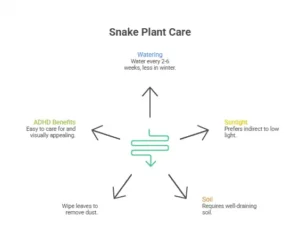
Low Maintenance Plant Care for Snake Plants
- Watering — once every 2 to 6 weeks — less in winter, very drought tolerant
- Sunlight — indirect light to low light — great for any room
- Soil — well-draining soil — does not like sitting in wet compost
- Extra care — wipe leaves occasionally to remove dust
- Best for ADHD because — virtually unkillable and looks impressive with almost zero effort.
5. Marigolds
Marigolds are one of the cheeriest and most rewarding low maintenance plants for ADHD gardeners who want colour and quick results outdoors.
They grow fast, bloom continuously throughout summer, and actually protect other plants from common pests — making them useful as well as beautiful.
HGTV, marigolds are nearly carefree plants that work hard in your garden so you do not have to.
Low Maintenance Plant Care for Marigolds
- Watering — once or twice a week — let soil dry slightly between waterings
- Sunlight — full sun — at least 6 hours per day
- Soil — almost any soil — very adaptable
- Extra care — deadhead spent flowers to encourage more blooms
- Best for ADHD because — fast growing, colourful, and they actively help the rest of your ADHD garden by deterring pests naturally.
6. Echinacea
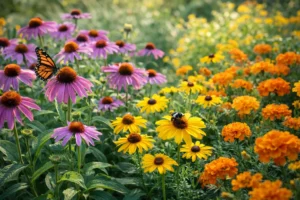
Echinacea, also known as purple coneflower, is one of the most recommended low maintenance plants for ADHD gardeners who want to attract wildlife.
American Meadows, echinacea is drought tolerant, will grow in almost any garden, and is incredibly low maintenance — it can even be left unattended after its first growing season.
Its bold purple flowers attract bees, butterflies, and birds throughout the summer — providing constant movement and activity that is genuinely engaging for the ADHD brain.
Low Maintenance Plant Care for Echinacea
- Watering — once established, survives on rainfall alone in most climates
- Sunlight — full sun to partial shade — very adaptable
- Soil — almost any well-drained soil — tolerates poor soil
- Extra care — leave seed heads over winter to feed birds — less work, more wildlife
- Best for ADHD because — the wildlife it attracts keeps the garden interesting and alive throughout summer.
7. Rosemary
Rosemary is one of the best low maintenance plants for ADHD gardeners because it combines incredible sensory properties with almost zero care requirements.
Rosemary thrives in the garden with little water and care, and is generally hardy in most temperate climates.
The strong, distinctive smell of rosemary is one of the most grounding sensory experiences available in any garden — something that many people with ADHD find calming and focusing.
Low Maintenance Plant Care for Rosemary
- Watering — once every 1 to 2 weeks — very drought tolerant once established
- Sunlight — full sun — loves a warm, sunny spot
- Soil — well-draining soil — does not like wet roots
- Extra care — light pruning after flowering keeps it bushy — use the trimmings in cooking
- Best for ADHD because — the smell engages the senses immediately, it is edible, and it thrives on neglect
8. Black-Eyed Susan
Black-eyed Susan, also known as Rudbeckia, is one of the most cheerful and easy to grow low maintenance plants for ADHD gardeners.
According to American Meadows, black-eyed Susans return dependably with more and more blooms each year and are among the easiest plants to grow — tolerating poor soil and heat with ease.
Their bright yellow flowers with dark centres bloom non-stop through the peak of summer heat, providing weeks of colour with almost no effort.
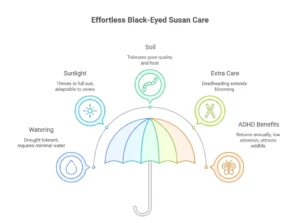
Low Maintenance Plant Care for Black-Eyed Susan
- Watering — very drought tolerant once established — needs little water
- Sunlight — full sun — grows in most zones
- Soil — tolerates poor quality soil and heat — very adaptable
- Extra care — occasional deadheading extends the blooming period
- Best for ADHD because — returns every year with more blooms, needs almost no attention, and attracts butterflies and birds.
Low Maintenance Plants for ADHD Gardeners at a Glance
Here is a simple summary of all eight low maintenance plants for ADHD gardeners:
| Plant | Best For | Care Level |
| Lavender | Sensory gardens, outdoor borders | Very easy — water every 1 to 2 weeks once established |
| Succulents | Beginners, indoor and outdoor | Very easy — water every 2 to 3 weeks |
| Pothos | Indoor growing, any light condition | Very easy — water every 1 to 2 weeks |
| Snake Plant | Indoor growing, low light rooms | Very easy — water every 2 to 6 weeks |
| Marigolds | Outdoor colour and pest control | Easy — water once or twice a week |
| Echinacea | Wildlife gardens, outdoor borders | Very easy — survives on rainfall once established |
| Rosemary | Sensory gardens, edible herbs | Very easy — water every 1 to 2 weeks |
| Black-Eyed Susan | Outdoor colour, wildlife gardens | Very easy — drought tolerant once established |
Why Low Maintenance Plants for ADHD Should Engage the Senses
The best low maintenance plants for ADHD gardeners do more than just look pretty.
They engage multiple senses — smell, touch, sight — which is particularly helpful for the ADHD brain.
According to Reema Florist, the practice of gardening naturally engages multiple senses — the feel of soil, the sight of growth, the scent of flowers — to keep a person centred and present.
This is what makes sensory plants like lavender, rosemary, and echinacea especially effective as low maintenance plants for ADHD gardeners.
| Sense | Best Low Maintenance Plants for That Sense |
| Smell | Lavender, rosemary, mint, sweet peas |
| Touch | Succulents, lamb’s ear, ornamental grasses |
| Sight | Marigolds, black-eyed Susans, echinacea, pothos |
| Sound | Ornamental grasses that rustle in the breeze |
| Taste | Rosemary, mint, chives, cherry tomatoes |
Indoor vs Outdoor Low Maintenance Plants for ADHD Gardeners
Not everyone with ADHD has an outdoor garden.
The good news is that some of the best low maintenance plants for ADHD gardeners grow perfectly well indoors.
Best Indoor Low Maintenance Plants for ADHD Gardeners
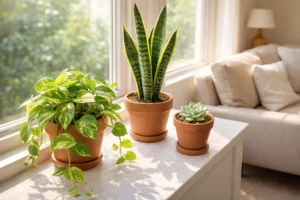
- Pothos — grows in almost any light, survives neglect, and grows visibly fast
- Snake plant — thrives in low light, needs water only every few weeks
- Succulents — perfect on a sunny windowsill, almost impossible to overwater
- Peace lily — one of the few flowering plants that thrives in low light and tells you when it needs water by drooping slightly
Best Outdoor Low Maintenance Plants for ADHD Gardeners
- Lavender — thrives in full sun, incredibly drought tolerant once established
- Marigolds — fast growing, colourful, and pest deterring
- Echinacea — survives on rainfall, attracts wildlife, comes back every year
- Black-eyed Susan — tolerates poor soil and heat, blooms all summer
- Rosemary — grows in containers or garden beds, edible and sensory
| ADHD Gardening Tip — Start Indoors
If you are new to gardening and not sure where to start, begin with one indoor low maintenance plant for ADHD gardeners. A single pothos or snake plant on a windowsill is a perfect first step. Once you feel confident caring for one plant, add another. This gradual approach prevents overwhelm and builds real confidence. |
Common Mistakes With Low Maintenance Plants for ADHD Gardeners
Even low maintenance plants for ADHD gardeners can struggle if you make a few common mistakes.
| Common Mistake | How to Avoid It |
| Overwatering low maintenance plants | Check the soil before watering — most low maintenance plants prefer dry soil between waterings |
| Putting plants in the wrong light | Check the plant label — lavender needs sun, pothos tolerates shade |
| Buying too many plants at once | Start with just one or two low maintenance plants for ADHD — add more gradually |
| Expecting no care at all | Low maintenance does not mean zero maintenance — a check every week or two is still needed |
| Planting in the wrong season | Most outdoor plants go in during spring — check before buying |
| Not labelling plants | Label everything the moment you plant it — memory is hard with ADHD |
How Low Maintenance Plants for ADHD Help the Brain
Growing plants is not just a hobby for people with ADHD — it is genuinely good for the brain.
According to research published on GetInFlow, plants have been shown to reduce psychological and physiological stress.
A verified study found that when working with plants, people experienced reduced heart rate and blood pressure — meaning gardening creates a measurable calming effect.
According to Reema Florist, the ADHD brain also responds well to novelty and immediate feedback — and noticing new leaves or signs of a plant thriving provides a natural mood boost and a satisfying way to clear the head.
This is exactly why low maintenance plants for ADHD gardeners work so well — they give your brain small, regular rewards without demanding too much of your time or attention.
Conclusion
Now you know exactly which low maintenance plants for ADHD gardeners work best — both indoors and outdoors.
You know which ones survive missed waterings, which ones engage your senses, and which ones bring wildlife and colour to your garden with almost no effort.
The most important step is to simply start. Pick one low maintenance plant for ADHD from this list and bring it home this week.
What you should do today: Choose one plant from this guide — a pothos for your windowsill, a lavender for a sunny spot, or a packet of marigold seeds for a pot on your patio.
That single plant is the beginning of a low maintenance ADHD garden that will reward you every single day.
FAQs on Low Maintenance Plants for ADHD Gardeners
| Q: What are the best low maintenance plants for ADHD gardeners who keep forgetting to water?
A: The best low maintenance plants for ADHD gardeners who forget to water are succulents, snake plants, pothos, lavender, echinacea, and rosemary. All of these plants are drought tolerant and can survive without water for at least one to two weeks — sometimes longer. Succulents and snake plants are the most forgiving of all — they can often go three to four weeks without water and still bounce back completely. |
| Q: Can I grow low maintenance plants for ADHD indoors if I have no garden?
A: Absolutely. Some of the best low maintenance plants for ADHD gardeners are indoor plants. Pothos, snake plants, succulents, and peace lilies all grow beautifully indoors with very little care. Pothos can even grow in water without soil — making it one of the simplest indoor low maintenance plants for ADHD beginners. A single plant on a windowsill is the perfect starting point. |
| Q: Do low maintenance plants for ADHD really help with focus and mood?
A: Yes — and the evidence is verified. According to a 2019 study referenced by Healthline, plants can lead to increased productivity, attentiveness, memory retention, and alertness. A separate study found that working with plants reduces heart rate and blood pressure — a measurable calming effect. Thrive UK’s 2025 survey also found that 85% of people with ADHD said gardening boosts their mood. Low maintenance plants for ADHD gardeners provide all of these benefits without demanding too much time or attention. |
| Q: How many low maintenance plants should an ADHD gardener start with?
A: Start with just one or two low maintenance plants for ADHD. Starting with too many is one of the most common mistakes new ADHD gardeners make — it quickly becomes overwhelming. Choose one indoor plant like a pothos or snake plant and one outdoor plant like lavender or marigolds. Once you feel confident caring for those two, add one more at a time. This gradual approach builds real confidence and prevents the overwhelm that can make people give up. |
| Q: What is the easiest low maintenance plant for ADHD gardeners to start with?
A: Pothos is the single easiest low maintenance plant for ADHD gardeners to start with indoors. According to Healthline, it can be neglected for weeks and still recovers with just a little water. It grows in almost any light condition, comes in beautiful varieties, and grows fast enough to show visible progress. Outdoors, marigolds are the easiest starting point — they grow quickly, bloom all summer, cost very little, and protect nearby plants from pests at the same time. |