

ADHD friendly raised bed gardening is one of the best ways to start growing your own food if you have ADHD.
A raised bed gives you a clear, contained space to work in — with better soil, faster results, and less bending than traditional gardening.
The ideal size for an ADHD friendly raised bed is 4 feet wide and 4 to 8 feet long — small enough to manage easily but big enough to grow a real variety of vegetables and herbs.
A Gardenary complete guide to raised beds confirms that raised beds increase comfort and ease when tending or harvesting — one of the biggest reasons they work so well for ADHD gardeners.
Why ADHD Friendly Raised Bed Gardening Works Better Than Traditional Gardening
Traditional in-ground gardening can feel overwhelming for ADHD gardeners — the space is undefined, the soil is often poor, and there are no clear boundaries to work within.
ADHD friendly raised bed gardening solves all of these problems in one simple structure.
A 2024 guide from Epic Gardening confirms that the benefits of raised bed gardening include greater soil control, less strain on the body, water conservation, and a longer growing season.
Here is why ADHD friendly raised bed gardening specifically suits the ADHD brain:
- Clear boundaries — the bed has defined edges, giving the ADHD brain a specific, contained task area
- Better soil from day one — you fill the bed with quality compost so plants grow faster and reward you sooner
- Less bending and kneeling — raised beds reduce physical strain so discomfort never becomes a reason to stop
- Easier to manage — a small raised bed can be cared for in just 10 minutes a day
- Looks great year round — even when nothing is growing, an ADHD friendly raised bed adds structure and beauty to any outdoor space
Research from Kuo and Taylor 2004, referenced by ADHD garden design experts, confirms that even minimal nature contact provides attention restoration effects for people with ADHD.
Ideal Size for an ADHD Friendly Raised Bed Garden
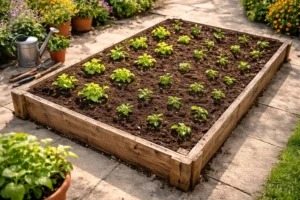
Getting the size right is one of the most important decisions in ADHD friendly raised bed gardening.
Too big and it feels overwhelming. Too small and you run out of space too quickly.
Best Width for ADHD Friendly Raised Bed Gardening
The Alabama Cooperative Extension System recommends a maximum width of 4 feet — because this allows easy reach from either side without stepping into the bed and compacting the soil.
For ADHD gardeners, a 4-foot wide bed is perfect — you can reach every plant from outside the bed without struggling or stretching.
Best Length for ADHD Friendly Raised Bed Gardening
A length of 4 to 12 feet is suitable for most home gardens.
For a first ADHD friendly raised bed, start with 4 to 6 feet long — big enough to grow a good variety but small enough to never feel too much.
Best Depth for ADHD Friendly Raised Bed Gardening
Oregon State University Extension recommends a soil depth of at least 6 to 12 inches to allow for improved drainage and healthy root development.
For most vegetables and herbs, 8 to 12 inches of soil depth is ideal in an ADHD friendly raised bed garden.
| The Perfect Starter Size for ADHD Friendly Raised Bed Gardening
Width: 4 feet — reach every plant from the side without stepping in Length: 4 to 6 feet — manageable in just 10 minutes a day Depth: 8 to 12 inches — enough for most vegetables and herbs Pathways: Leave at least 2 feet between beds for easy movement This size is verified by the Alabama Cooperative Extension System and Oregon State University. |
Best Materials for ADHD Friendly Raised Bed Gardening
Choosing the right material for your ADHD friendly raised bed is important — it affects how long the bed lasts and how safe it is for growing food.
Wood — The Most Popular Choice for ADHD Friendly Raised Beds
The Kellogg Garden raised bed guide recommends using untreated wood and checking that any reclaimed wood has been heat treated — not chemically treated — before using it for edible crops.
Cedar and pine are both excellent choices for an ADHD friendly raised bed — naturally rot resistant, widely available, and easy to work with.
What to Avoid in Wood for ADHD Friendly Raised Beds
- Pressure treated wood — chemicals can leach into soil and contaminate food crops
- Painted or varnished wood — coatings can break down and leach into the soil over time
- Unknown or unlabelled reclaimed wood — always check the source before using for food growing
Metal — A Long Lasting Alternative for ADHD Friendly Raised Beds
Galvanised steel raised beds are growing in popularity for ADHD friendly raised bed gardening because they last for decades, look clean and modern, and require almost no maintenance.
Oregon State University Extension shows examples of metal trough style beds with drainage holes as a practical alternative to traditional wood frames.
Plastic and Fabric — Budget Options for ADHD Friendly Raised Bed Gardening
Fabric grow bags and plastic raised bed kits are the most affordable way to start ADHD friendly raised bed gardening.
They are lightweight, portable, and can be moved easily — perfect for ADHD gardeners who want flexibility or who garden on a balcony or patio.
Best Soil for ADHD Friendly Raised Bed Gardening
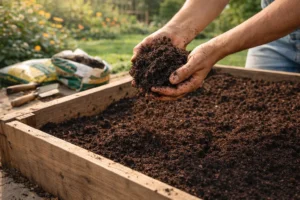
The soil you use in your ADHD friendly raised bed garden makes more difference than almost any other factor.
Good soil means faster growth, healthier plants, and quicker rewards — all essential for keeping the ADHD brain motivated.
The Best Soil Mix for ADHD Friendly Raised Bed Gardening
The Alabama Cooperative Extension System recommends a mix that includes good topsoil and lots of organic matter — such as ground pine bark, peat moss, compost, or rotted leaves — for a planting mix that drains well and is easy to work with.
The most popular and effective mix for ADHD friendly raised bed gardening is:
- 60% topsoil — provides the base structure for roots to grow into
- 30% compost — adds nutrients and improves drainage and moisture retention
- 10% horticultural grit or perlite — improves drainage and prevents soil from compacting
Ready-Made Soil Options for ADHD Friendly Raised Beds
Using a healthy soil full of composted organic matter from day one — and adding slow-release organic fertiliser between crops when succession planting.
For ADHD gardeners who want the simplest possible approach, a ready-made raised bed soil mix from a garden centre is a completely valid and highly effective option.
What to Grow in an ADHD Friendly Raised Bed Garden
Choosing the right plants is just as important as building the right bed in ADHD friendly raised bed gardening.
The best plants for an ADHD friendly raised bed grow fast, produce regularly, and keep you coming back every few days to check on them.
Best Vegetables for ADHD Friendly Raised Bed Gardening
| Vegetable | Days to Harvest | Why It Works in an ADHD Raised Bed |
| Radishes | 21 to 30 days | Fastest result — perfect first crop for any ADHD friendly raised bed |
| Lettuce (loose-leaf) | 21 to 45 days | Pick outer leaves as they grow — continuous reward from one planting |
| Spinach | 20 to 50 days | Baby leaves ready fast — pick and it grows straight back |
| Spring Onions | 20 to 30 days | Quick and satisfying to pull — very easy to grow in rows |
| Cherry Tomatoes | 55 to 70 days | Most exciting crop — daily checking as fruits change colour |
| Courgette | 45 to 60 days | Dramatically productive — produces throughout the entire summer |
| Peas | 60 to 70 days | Fun to watch climb a trellis — delicious straight from the pod |
| Cucumbers | 50 to 65 days | Grows visibly fast in warm weather — very satisfying to harvest |
Best Herbs for ADHD Friendly Raised Bed Gardening
- Mint — grows incredibly fast but keep in its own pot inside the bed so it does not spread
- Basil — loves warm weather and grows quickly — pinch off tops regularly to keep it producing
- Chives — almost impossible to kill and grows back every time you cut it
- Parsley — steady and reliable — picks regularly for months from one planting
- Coriander — fast growing and very satisfying to pick — sow new seeds every few weeks
Gardenary recommends growing things that bring you joy and that you will look forward to watering, weeding, and harvesting all season long — especially vegetables you actually enjoy eating.
How to Set Up Your ADHD Friendly Raised Bed Garden — Step by Step
Setting up an ADHD friendly raised bed garden does not have to be complicated.
Here is a simple step by step guide that covers everything you need to do from start to first harvest.
Step by Step Setup Guide for ADHD Friendly Raised Bed Gardening
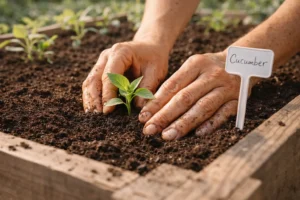
- Choose your location — find a spot that gets at least 6 hours of direct sunlight per day
- Choose your bed size — 4 feet wide by 4 to 6 feet long is the ideal starter size
- Choose your material — cedar wood, galvanised steel, or a fabric grow bag all work well
- Position it close to your back door or kitchen — the closer it is to your daily routine, the more likely you are to visit it
- Loosen the ground underneath before adding soil — this helps drainage and allows roots to grow deeper
- Fill with your soil mix — topsoil, compost, and perlite in a 60/30/10 ratio
- Water the soil before planting — it should feel moist but not waterlogged
- Plant your first seeds or seedlings — start with just two or three varieties
- Label everything the moment you plant — name and date planted on every label
- Add a bright coloured tool bucket right beside the bed — so everything is always in one place
The ADHD-friendly garden design guide from Niwa Heal recommends simplified routines with minimal decision points to improve ADHD task completion — and a step by step setup like this does exactly that.
How to Care for Your ADHD Friendly Raised Bed Garden
Once your ADHD friendly raised bed garden is planted, the daily care routine is simple and quick.
Ten minutes a morning is all it takes to keep everything healthy and growing.
Daily Care Routine for ADHD Friendly Raised Bed Gardening
- Check the soil — push your finger 2cm into the soil — water if it feels dry
- Look for changes — notice anything new growing, changing colour, or ready to pick
- Pick anything ready — harvesting regularly encourages more growth
- Remove any dead leaves — takes 30 seconds and keeps the bed looking tidy and healthy
- Do one small task — tie up a climbing plant, pull a few weeds, or thin out overcrowded seedlings
Watering Your ADHD Friendly Raised Bed Garden
Gardenary recommends placing your ADHD friendly raised bed as close to a water source as possible — near a tap, rain barrel, or irrigation connection — so watering never becomes a chore.
The best watering method for ADHD friendly raised bed gardening is drip irrigation — it waters your plants automatically and consistently without any daily action needed.
Feeding Your ADHD Friendly Raised Bed Garden
A dose of slow-release organic fertiliser between crops when succession planting to keep soil nutrients topped up throughout the season.
For ADHD gardeners, a slow-release granular fertiliser applied once at the start of each season is the simplest and most effective approach.
Common ADHD Friendly Raised Bed Gardening Mistakes to Avoid

Even ADHD friendly raised bed gardening can go wrong if you make a few common mistakes.
Knowing them before you start means you can avoid them completely.
| Common Mistake | How to Avoid It in ADHD Friendly Raised Bed Gardening |
| Building a raised bed that is too wide | Keep width to maximum 4 feet so you can reach the centre from each side without stepping in |
| Using poor quality soil | Always fill with a quality compost-rich mix — poor soil means slow growth and poor rewards |
| Planting too many varieties at once | Start with just 2 to 3 vegetables in your first ADHD friendly raised bed |
| Placing the bed too far from your house | The closer your bed is to your daily routine the more likely you are to visit it every day |
| Not labelling what you planted | Label the moment you plant — name and date on every single label |
| Watering on a fixed schedule | Check the soil every morning and water only if it feels dry |
| Not harvesting regularly | Pick everything as soon as it is ready — this encourages more growth continuously |
| Letting weeds take over | Pull weeds when small — 5 minutes a week prevents hours of work later |
ADHD Friendly Raised Bed Gardening on a Budget
You do not need to spend a lot of money to start ADHD friendly raised bed gardening.
Here is a simple cost breakdown so you know exactly what to expect:
| Item | Approximate Cost |
| Basic wooden raised bed kit (4×4 feet) | £25 to £60 |
| Bag of raised bed compost (60 litres) | £8 to £15 |
| Topsoil (per bag) | £5 to £10 |
| Perlite or horticultural grit | £5 to £10 |
| Seeds (3 varieties) | £3 to £9 |
| Plant labels and waterproof marker | £3 to £6 |
| Ergonomic hand trowel | £8 to £15 |
| Total starter estimate | £57 to £125 |
A basic ADHD friendly raised bed garden can be set up for under £60 if you use a simple wooden kit and buy just a few seed varieties to start.
Add more beds, more plants, and more tools gradually as your confidence grows.
ADHD Friendly Raised Bed Gardening With Children
Research from Coordikids confirms that gardening tasks like digging, planting, and watering involve whole-body movements that help release energy and improve focus in children with ADHD.
A raised bed at child height — or a low standard raised bed — gives children with ADHD their own defined space to grow and care for their own plants.
Tips for ADHD Friendly Raised Bed Gardening With Children
- Give each child their own section of the bed — even just one square foot creates a powerful sense of ownership
- Let them choose their own plant — children are far more motivated to tend something they chose themselves
- Keep sessions to 10 to 15 minutes — end while they are still enjoying it so they always want to come back
- Focus on fast growing crops — radishes, lettuce, and sunflowers give children quick visible rewards
- Celebrate every milestone — every germination, every first leaf, every harvest is worth celebrating
Conclusion
Now you know exactly why ADHD friendly raised bed gardening works, the ideal size to build, the best soil to use, what to grow, and how to care for it day by day.
ADHD friendly raised bed gardening gives you a clear, manageable space to grow real food — with faster results, less physical strain, and more daily satisfaction than almost any other form of gardening.
The most important step is to start. You do not need a perfect bed or a perfect plan.
FAQs About ADHD Friendly Raised Bed Gardening
| Q: What is the best size for an ADHD friendly raised bed garden?
A: The best size for an ADHD friendly raised bed is 4 feet wide by 4 to 6 feet long, with a soil depth of 8 to 12 inches. The 4-foot width is recommended by the Alabama Cooperative Extension System because it allows you to reach every plant from either side without stepping into the bed. The 4 to 6 foot length is small enough to manage in just 10 minutes a day — which is the sweet spot for ADHD gardeners who need a task that feels achievable rather than overwhelming. |
| Q: What soil should I use in my ADHD friendly raised bed?
A: The best soil mix for ADHD friendly raised bed gardening is a combination of 60% topsoil, 30% compost, and 10% perlite or horticultural grit. This mix drains well, holds enough moisture, and provides the nutrients plants need to grow quickly and produce well. The Alabama Cooperative Extension System confirms that a mix of good topsoil and plenty of organic matter is the most effective starting point for any raised bed garden. |
| Q: What is the easiest vegetable to grow in an ADHD friendly raised bed?
A: Radishes are the easiest and most immediately rewarding vegetable for an ADHD friendly raised bed garden. They are ready to harvest in just 21 to 30 days from seed — faster than almost any other outdoor vegetable. They need very little care, grow in almost any raised bed, and are almost impossible to get wrong. After radishes, loose-leaf lettuce is the next best choice — you can start picking outer leaves in as little as 21 days and the plant keeps producing for weeks. |
| Q: How much time does ADHD friendly raised bed gardening take each day?
A: An ADHD friendly raised bed garden can be fully cared for in just 10 minutes a day. A simple morning routine of checking the soil, watering if needed, picking any ripe vegetables, and removing dead leaves covers everything a small raised bed needs to stay healthy and productive. The key is visiting every day rather than spending a long time once a week — daily short visits are far more effective and far more rewarding for ADHD gardeners. |
| Q: Can I do ADHD friendly raised bed gardening on a balcony?
A: Absolutely. ADHD friendly raised bed gardening works perfectly on a balcony using a fabric grow bag, a plastic raised bed kit, or a compact wooden raised bed. Choose a spot that gets at least 4 to 6 hours of sunlight per day. Stick to smaller crops like radishes, lettuce, spring onions, herbs, and cherry tomatoes — all of which grow brilliantly in containers on a balcony. A fabric grow bag is the most affordable and lightweight option for balcony ADHD friendly raised bed gardening. |