Growing your first tomato plant feels exciting right up until you have thirty questions and no idea where to start.
Which plant do you even buy? How much water is too much? Why does the internet want you to own six different tools before you plant a single seed?
Here’s the good news: you don’t need to be an expert to grow great tomatoes. You just need to make a few smart choices early, know what “normal” looks like, and know what to do when something looks wrong.
This guide walks you through the whole journey — choosing your plant, planting it, keeping it alive, fixing problems, and picking your first ripe tomato. No fluff, no guesswork.
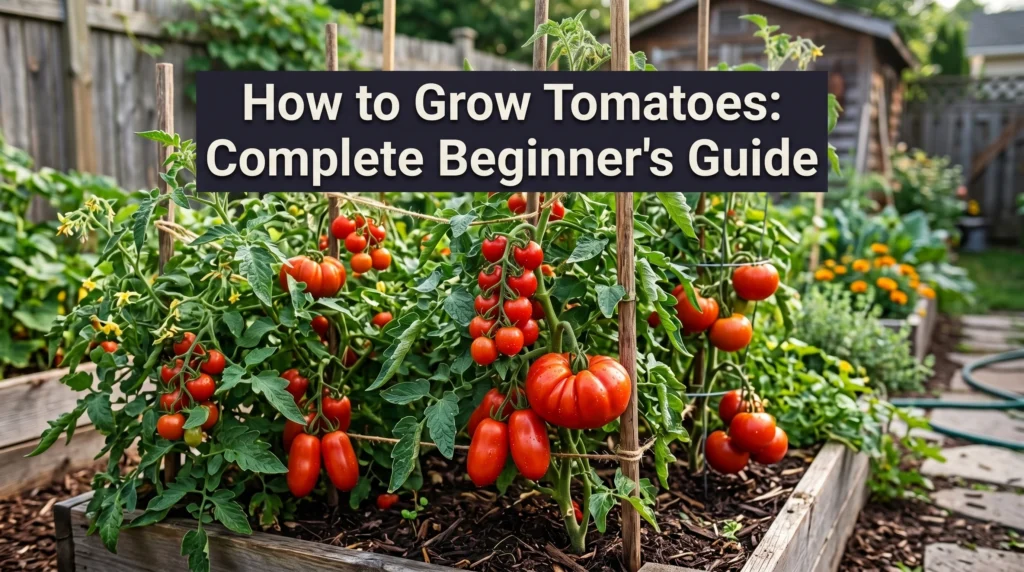
How to Grow Tomatoes: The Complete Beginner Guide
If you only read one section, read this one. Here’s the whole process in eight steps.
- Pick a variety that fits your space and your goals. A tiny balcony and a big backyard need different plants.
- Give it strong, direct sunlight. Tomatoes are sun-hungry.
- Plant at the right time for your area. Not a date on a calendar — your actual local weather.
- Use rich, well-drained soil or potting mix. Soggy roots are trouble.
- Water consistently. Not “a lot,” not “a little” — steady.
- Feed according to your soil fertility and the fertilizer’s label. Container grown tomatoes often need more regular fertilization because nutrients are limited in the growing medium, while fertile garden soil may require less. Avoid excessive nitrogen, which can encourage leafy growth at the expense of flowering and fruiting.
- Support or prune it, depending on the type you picked. Some need a cage. Some don’t.
- Harvest at the right stage, not by guessing a date on a calendar.
That’s the whole map. Now let’s slow down and cover each step properly — plus how to fix things when they go sideways, because they sometimes will.
Choose the Right Tomato Before You Plant
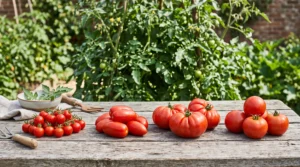
Here’s something most guides skip: not all tomatoes are the “right” tomato for you.
Most articles explain the botany — determinate versus indeterminate, cherry versus beefsteak — and then leave you to figure out what that actually means for your life. Let’s fix that.
Determinate vs. indeterminate tomatoes
Determinate (bush) tomatoes grow to a set size, produce their fruit in a shorter window, and then slow way down. They need less staking and less pruning. Great for beginners and containers.
Indeterminate (cordon) tomatoes just keep growing — and growing, and growing — all season long. They give you a longer harvest, but they need sturdy support and regular training.
Cherry, slicer, plum, and beefsteak tomatoes
These describe the fruit itself, not the plant’s growth habit.
- Cherry or cocktail tomatoes are small, sweet, and forgiving. Great for snacking and salads.
- Slicer tomatoes are medium-large, all-purpose, and good for sandwiches.
- Plum or paste tomatoes are dense and less juicy — perfect for sauce.
- Beefsteak tomatoes produce large fruits that are excellent for slicing. Some varieties take longer to mature and may need strong support because of their size and fruit load.
Heirloom vs. hybrid
Heirlooms are open-pollinated varieties that have been preserved and passed down over generations. They can offer distinctive flavors, colors and shapes, but disease resistance and performance vary widely by variety.
Hybrids are bred for reliability, disease resistance, and consistent results. For a first-timer, hybrids are usually the safer bet.
Pick your tomato based on what you actually want
Stop asking “which tomato is best.” Start asking “best for what?” Use this table:
| If you want… | Look for… |
|---|---|
| Easiest first crop | Compact/bush or productive cherry type |
| Container growing | Compact/determinate or dwarf type |
| A long harvest all season | Indeterminate/cordon |
| Sauce | Paste/plum type |
| Salads and snacking | Cherry/cocktail |
| Big slicing tomatoes | Beefsteak/slicer |
| Less pruning work | Bush/determinate |
| Maximum vertical growth | Indeterminate/cordon |
A real beginner mistake: planting a huge, vigorous indeterminate variety in a small pot.
The plant outgrows its space fast, gets stressed, and struggles to produce.
A compact cherry variety in the same pot would have given a faster, easier first harvest.
Match the plant to the space — not the other way around.
Should You Start Tomatoes From Seed or Buy Young Plants?
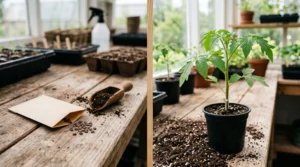
This is the decision most guides skip entirely. They jump straight into “here’s how to sow seeds” without asking whether you should sow seeds at all.
Starting from seed adds extra risk. You’re now managing light levels, watering, temperature, and timing — and any one of those going wrong can leave you with weak, leggy seedlings before you ever get a plant in the ground.
For a true beginner, buying a healthy young plant from a nursery is often the smarter first move.
Seed vs. young plant, side by side
| Start from seed | Buy a young plant |
|---|---|
| More variety choices | Faster start |
| Cheaper per plant | Less early-stage equipment |
| More control over the process | Lower beginner workload |
| Needs the right timing and light | Easier first harvest |
| Good if you want several plants | Good for first-timers |
Which one should you pick?
If this is your very first tomato plant, start with a nursery plant. You skip weeks of tricky seedling care and go straight to the fun part.
If you love the process of gardening and want to try different varieties, seeds are a great next step — just know it takes more patience and attention.
A real beginner mistake: seedlings started indoors without enough light often turn thin, pale, and “leggy” — stretching toward the nearest window instead of growing sturdy.
A healthy nursery plant skips that whole stage and goes straight into its pot ready to grow.
What Tomatoes Need to Grow Well
Before you plant anything, get these basics right. This is the foundation everything else depends on.
Sunlight: Tomatoes generally perform best with at least 6 hours of direct sunlight each day, with more light often beneficial where heat is not excessive.
Soil and growing medium: Rich, loose, well-draining soil is the goal. Heavy, waterlogged soil suffocates roots.
Temperature: Tomatoes are warm-weather plants. They don’t like frost, and they sulk in cold soil.
Check your local frost dates instead of copying someone else’s planting calendar from a different climate.
Space and airflow: Crowded plants trap moisture around the leaves, which invites disease. Give your plants room to breathe.
How to Grow Tomatoes From Seed
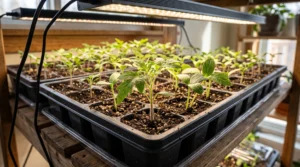
If you’ve decided to start from seed, here’s how to do it right.
What you’ll need: tomato seeds, seed-starting mix, small containers or trays, labels, and a warm, bright spot.
Time: about 15–30 minutes to sow, then regular check-ins as the seedlings grow.
- Want it simpler? Start just two or three seeds of one variety instead of a whole packet.
- Want more of a project? Start several varieties and track how each one grows.
When to sow
Count backward from your local planting-out date, not from a generic calendar. Your seed packet usually tells you how many weeks before that date to start.
How deep to plant tomato seeds
A shallow planting depth is right — seeds don’t need to go deep to sprout.
Light and warmth
Tomato seeds germinate best in warm condition. Keep the seed starting mix consistently warm according to the recommendations for your variety or seed supplier.
Potting up seedlings
As seedlings grow their first true leaves, move them into bigger pots so their roots have room to develop.
Hardening off before planting outside
Before your seedlings go into the ground, they need to toughen up. Set them outside for short periods over a week or two, slowly increasing the time, so they can adjust to real wind, sun, and temperature swings.
How to Plant Tomato Seedlings
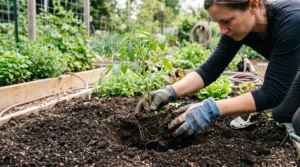
What you’ll need: a healthy seedling, good soil or potting mix, a trowel, water, and support if your variety needs it.
Time: 15–30 minutes per plant.
- Want it simpler? Just plant one tomato in its final container.
- Want more of a project? Plan out spacing and permanent supports for several plants.
Planting in the ground
Choose a sunny spot with loose, well-draining soil, and give each plant enough room to grow without crowding its neighbors.
Planting in containers
Pick a container with real drainage holes and enough room for the roots — bigger is almost always better than smaller.
How deeply to plant tomatoes
Tomatoes can be planted deeper than many other vegetables because roots can develop along the buried stem.
Remove the lower leaves and bury the stem deeply enough to leave the upper foliage above the soil.
How far apart to plant tomatoes
Give each plant enough breathing room based on how big that variety gets. Crowding invites disease and competition for light.
How to Care for Tomato Plants
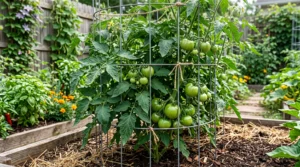
What you’ll need: water, tomato feed, mulch, and support material suited to your variety.
Time: 5–15 minutes for quick daily checks; longer on feeding, supporting, or pruning days.
- Want it simpler? Do one thorough check each week as part of your regular garden routine.
- Want more of a project? Set up drip irrigation, mulch heavily, and train your plants carefully.
How often to water tomato plants (the real answer)
Here’s the truth: “water regularly” is not actually useful advice. Weather, container size, soil, and plant size all change how much water your tomato needs. A fixed number of cups per week can’t account for all that.
Instead, use this quick test before you water:
- Check the root zone, not just the surface. The top of the soil can look dry while it’s still moist a couple inches down.
- Factor in the weather. A hot, dry stretch changes everything compared to a cool, rainy one.
- Know your setup. Containers dry out much faster than in-ground beds.
- When you do water, water deeply. A quick splash on top doesn’t reach the roots that need it.
- Avoid the wet-dry rollercoaster. Swinging between soaked and bone-dry stresses the plant and can cause fruit problems.
A real beginner mistake: seeing dry soil on the surface and watering again, even though the roots underneath are still plenty moist. Always check below the surface before you reach for the hose.
How to feed tomato plants
Once your plant is established and growing steadily, regular feeding helps fuel flowers and fruit. Follow the guidance on your fertilizer, and don’t overdo it — too much can push leafy growth at the expense of fruit.
Mulching
A layer of mulch around your plant helps hold in moisture and keeps the soil temperature steadier, which supports that all-important watering consistency.
Supporting tomato plants
Bush (determinate) varieties often need little more than a simple cage. Vigorous indeterminate varieties need sturdy stakes or a trellis, because they’ll keep climbing all season.
Pruning and removing side shoots
Some indeterminate varieties benefit from removing the small shoots that sprout between the main stem and branches, which helps the plant focus energy on fruit instead of extra foliage.
Bush varieties generally need little to no pruning.
Growing Tomatoes in Pots and Small Spaces
No yard? No problem. Tomatoes are genuinely great container plants — extension research backs this up, as long as you pick the right variety and the right size pot.
What you’ll need: a container with drainage, good potting mix, your plant, and support if needed.
Time: 20–40 minutes to set up.
- Want it simpler? One compact variety, one right-sized pot, done.
- Want more of a project? Grow a few varieties in containers and compare how they do.
Choosing the right tomato for a container
Compact, determinate, or dwarf varieties are built for pot life. A massive indeterminate variety will fight you the whole season in a small container.
Choosing a container with drainage
Drainage holes are non-negotiable. Without them, water pools at the bottom and rots the roots.
Container watering
Containers dry out much faster than garden soil, especially in hot weather, so check them more often than you’d check an in-ground plant.
Supporting container plants
Even compact varieties can get top-heavy once they’re loaded with fruit. A simple stake or small cage keeps things from tipping over.
When Will Your Tomatoes Start Producing?
There’s no single magic number of days that applies to every tomato everywhere — no matter what a headline promises.
Here’s the general path: seedling, then transplant, then flowering, then fruit set, then ripening. How fast a plant moves through those stages depends heavily on the variety you picked, your climate, and how well its basic needs are being met.
Set your expectations around your specific plant and conditions, not a generic countdown. That way you won’t panic if your neighbor’s tomatoes are ahead of yours — different variety, different timeline.
Why Tomato Plants Flower but Don’t Produce Fruit
This is one of the most frustrating beginner moments: lots of flowers, plenty of green leaves, and… no tomatoes.
Here’s what to check, in order, instead of jumping straight to fertilizer.
Temperature problems
Tomatoes are picky about temperature during flowering. Extreme heat or unexpected cold snaps can stop fruit from setting, even when everything else looks fine.
Pollination
Tomato flowers contain both male and female production parts, so they can self-pollinate. Movement from wind, insects or gently vibrating the plant can help release pollen.
Poor fruit set is often more closely associated with unsuitable temperatures and other plant stress than simply a lack of bees.
Excessive vegetative growth
A plant that’s all leaves and stems, especially after heavy feeding, can put its energy into growing bigger instead of fruiting.
Water and environmental stress
Inconsistent watering or general stress can cause a plant to drop flowers before they ever become tomatoes.
The takeaway: don’t reach for fertilizer the moment you see flowers without fruit. Work through the checklist above first.
Common Tomato Problems and How to Fix Them
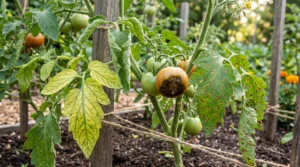
Most guides list problems one by one and expect you to already know which one you have. That’s backward. You start with a symptom, not a diagnosis. So let’s flip it.
What you’ll need: your phone camera, basic garden tools, and a reliable source to compare symptoms against.
Time: 10–20 minutes to work through a diagnosis.
- Want it simpler? Photograph the problem area and match it to a symptom below before doing anything else.
- Want more of a project? Compare against a detailed extension diagnostic guide and check nearby plants too.
Start with what you see
| What you see | Check first |
|---|---|
| Brown or black patch on the bottom of the fruit | Blossom-end rot — moisture and calcium uptake |
| Fruit splitting | Moisture fluctuations |
| Dark, spreading spots on leaves | Possible disease — identify it before treating |
| Lots of leaves, very little fruit | Variety, light, temperature, and feeding |
| Flowers but little to no fruit | Temperature or pollination issues |
| Wilting | Root moisture, heat stress, or disease |
| Thin, pale, stretched seedlings | Not enough light, or timing |
| Yellow lower leaves | Could be age, watering, nutrition, or disease |
Important: one symptom can have more than one cause. This table is your starting point for investigation, not a guaranteed diagnosis.
Blossom-end rot: the myth you need to unlearn
You may notice a dark, sunken patch developing on the bottom of a tomato.
This is called blossom-end rot. Despite what you may hear, it isn’t simply a sign that your soil is “missing calcium.”
Blossom-end rot happens when the developing fruit doesn’t receive enough calcium.
The soil may contain adequate calcium, but problems with water uptake and movement within the plant can prevent enough calcium from reaching the fruit.
Fluctuating soil moisture, drought stress, damaged roots, waterlogged soil, and rapid plant growth can all contribute.
What should you do?
Focus first on keeping soil moisture as consistent as possible.
Water deeply when the plant needs it rather than allowing the soil to become very dry and then suddenly soaking it. A layer of mulch can also help reduce moisture fluctuations.
Don’t automatically reach for a calcium supplement. If calcium is already available in the soil, adding more may not solve the problem.
If you suspect a genuine nutrient deficiency, a soil test is a better way to determine what your soil actually needs.
Remove badly affected fruit if you wish, but remember that the damaged portion will not repair itself.
Your goal is to provide stable growing conditions so new fruit has a better chance of developing normally.
Cracked tomatoes
Tomato splitting is often associated with rapid changes in water availability, such as a dry period followed by heavy rain or irrigation.
Variety, fruit growth rate and pruning can also influence susceptibility.
Yellow leaves
This one has a few possible causes: normal aging of lower leaves, watering issues, nutrient gaps, or disease. Look at the whole plant for more clues before deciding.
Wilting
Check the soil moisture first. If the soil is wet and the plant is still wilting in the heat of the day but perks back up by evening, that can be normal heat stress rather than a real problem.
Leaf spots and blight
Dark, spreading lesions can point to a few different tomato diseases, including early blight, Septoria leaf spot, or late blight.
Because these diseases can look similar at first, look closely at the pattern and how fast it’s spreading before you decide on a treatment. Late blight in particular can spread fast, so it’s worth identifying early rather than assuming it’s a nutrient issue.
Good airflow between plants and avoiding wetting the leaves when you water both help lower the risk for all three.
Pests
Check the undersides of leaves and stems regularly, since that’s where a lot of pests hide before you notice damage on top.
How and When to Harvest Tomatoes
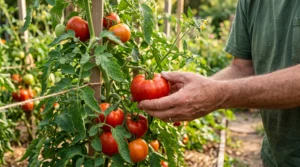
What you’ll need: clean hands or small snips, and a container to collect your harvest.
Time: 5–10 minutes per harvest session.
- Want it simpler? Check your plants once or twice a week and pick anything that’s ripe.
- Want more of a project? Harvest frequently and sort fruit by what’s ready to eat now, cook with, or store.
Signs a tomato is ready
Go by color and gentle firmness, not by a date circled on your calendar. A ripe tomato has full color for its variety and gives slightly when you press it.
Should tomatoes ripen on or off the vine?
Letting fruit ripen on the plant usually gives the best flavor.
That said, picking tomatoes at the “breaking” stage (just starting to change color) and letting them finish ripening indoors is a totally normal and useful trick, especially with heavy rain or pest pressure in the forecast.
What to do with green tomatoes at the end of the season
As the season winds down, pick the remaining green tomatoes before a hard frost hits. Many will still ripen indoors, and the ones that don’t are perfectly good for cooking.
What to Do After Your First Tomato Harvest
Getting your first ripe tomato isn’t the finish line — it’s the start of a habit you can build on.
- Keep harvesting as fruit ripens through the rest of the season.
- Clean up at the end of the season to reduce the chance of disease carrying over.
- Save seed from your favorite plants if the variety allows it.
- Write down what worked — which variety was easiest, which spot got the most sun, what problem popped up and how you fixed it.
- Plan next year’s crop using what you just learned.
That last point matters more than it sounds. Your own notes from this season are the single best guide you’ll have for next season.
The Real Secret: Match the Method to Your Situation
Here’s the mindset shift that makes tomato growing click: there’s no single “correct” way to grow tomatoes.
There’s only the way that fits your space, your climate, your time, and your goals.
Use this quick-match guide any time you’re not sure what to do next.
| Your situation | Best approach |
|---|---|
| Absolute beginner | Buy one healthy young plant instead of starting from seed |
| Very little space | Choose a compact or dwarf variety for a container |
| Want the easiest possible first harvest | Pick a productive, compact variety over a demanding beefsteak |
| Want tomatoes for salads or snacking | Choose cherry or cocktail types |
| Want to make sauce | Choose plum or paste types |
| Want a long harvest all season | Go indeterminate, with solid support |
| Only have a balcony or patio | Container growing |
| Have a full garden bed | Compare determinate and indeterminate based on your goals |
| Short on time | Buy a transplant and pick a low-maintenance variety |
| Love gardening as a hobby | Start from seed and try a few varieties |
| Live somewhere very hot | Focus on local timing and heat management, not a generic calendar |
| Plant looks unhappy | Diagnose the symptom before adding fertilizer or treatment |
| Fruit has dark patches on the bottom | Check moisture consistency and calcium uptake |
| Leaves have dark, spreading spots | Investigate for disease before assuming nutrients |
| Tomatoes keep splitting | Look at your watering consistency |
| Plant is huge with barely any fruit | Review variety, light, temperature, and feeding together |
Frequently Asked Questions About Growing Tomatoes
How long does it take to grow tomatoes? It depends heavily on the variety and your growing conditions, so there’s no single number that applies everywhere. Check your specific variety’s guidance and your local climate.
How often should I water tomato plants? Check the root zone, not just the surface, and water deeply when it’s actually needed rather than on a fixed schedule.
Do tomatoes need full sun? Yes. Tomatoes generally perform best with at least 6 hours of direct sunlight each day. More light can be beneficial, but in very hot conditions, excessive heat can cause problems with flowering and fruit set.
Can tomatoes grow in pots? Absolutely, as long as you pick a suitable variety and a container with good drainage and enough room for the roots.
What is the easiest tomato to grow? Compact, determinate varieties and productive cherry types tend to be the most forgiving for beginners.
Should I prune tomato plants? Vigorous indeterminate varieties often benefit from removing side shoots. Bush varieties generally need little to no pruning.
How deep should tomato plants be planted? Deeper than they were growing in their original pot, up to the lower leaves — this encourages extra roots along the buried stem.
Why are my tomato flowers not producing fruit? Check temperature extremes, pollination, overly leafy growth, and watering stress, in that order.
Why are my tomatoes splitting? Usually inconsistent watering, especially a dry spell followed by heavy watering or rain.
What causes blossom-end rot? Disrupted calcium uptake, which is often driven by inconsistent moisture rather than a true lack of calcium in the soil.
Can you grow tomatoes indoors? Yes, if you can give the plant strong, direct light and warm temperatures, though outdoor sun is hard to fully replace.
Conclusion
Growing tomatoes isn’t about following one perfect checklist. It’s about making a few good decisions early, watching your plant instead of the clock, and troubleshooting calmly when something looks off.
Pick the right plant for your space, keep your watering steady, and check in on your plant like you’d check in on a friend.
That’s really all it takes to get your first ripe, sun-warmed tomato.