
If you have ADHD and you want to start growing your own food, choosing the right vegetables makes all the difference.
Growing easy vegetables with ADHD is not the same as growing vegetables for someone who can happily wait three months and check on their plants once a week.
The ADHD brain needs something different.
It needs fast results, clear tasks, and the exciting feeling of watching something change and grow every time you go outside.
The good news is that some vegetables are perfectly matched to the way the ADHD brain works.
They grow fast. They give you something to do every few days.
And they reward you with real food you can actually eat — which is one of the most satisfying feelings in gardening.
According to ADDitude Magazine, a leading resource for adults and children with ADHD, vegetable gardening is one of the most mindful and focus-building activities available to the ADHD brain.
Research published on their platform notes that the ADHD brain is better able to pay attention and stay on track when it slows down and becomes mindful of the moment — and there is no better place for that than a vegetable garden.
In this guide, we are going to walk you through the best and easiest vegetables to grow with ADHD — with verified harvest times, simple growing tips, and honest advice about which ones work best for beginners.
Every harvest time in this article has been checked against multiple authoritative gardening sources so you can trust exactly what you read here.
Why Fast Growing Vegetables Work Best for ADHD
Before we get into the list, it helps to understand why some vegetables work so much better than others for people with ADHD.
The answer comes down to one simple thing — reward speed.
The ADHD brain is wired to respond strongly to immediate rewards.
When a reward takes too long to arrive, motivation drops, interest fades, and the activity gets abandoned.
This is not a character flaw — it is simply how the ADHD brain is built.
And it means that choosing the right vegetables is not just about taste or preference.
It is about choosing plants that keep your brain engaged long enough to see results.
Easy vegetables to grow with ADHD share four key qualities:
- They grow fast — showing visible progress within days or weeks, not months
- They are hard to kill — forgiving of missed waterings or small mistakes
- They give you regular tasks — something to check, pick, or tend every few days
- They produce real food — a harvest you can eat gives a powerful sense of achievement
According to Thrive UK’s 2025 survey, 77% of people with ADHD said they can get distracted and find it hard to focus on or complete gardening activities.
Choosing fast growing vegetables is the single most effective way to solve this problem — because the faster your plants grow, the faster your brain gets the reward it needs to stay motivated.
The Best Easy Vegetables to Grow With ADHD
Here are the top easy vegetables to grow with ADHD — all verified for harvest times, ease of growing, and suitability for beginners.
We have listed them in order from fastest to slowest so you can pick the ones that best match your patience level and growing situation.
1. Radishes — The Fastest Vegetable You Can Grow
If there is one vegetable that was made for ADHD gardening, it is the radish.
Radishes are consistently named as the fastest growing vegetable available to home gardeners — and that speed is exactly what makes them the number one easy vegetable to grow with ADHD.
| Detail | Information | Verified Source |
| Days to harvest | 21 to 30 days from seed | Botanical Interests, The Old Farmer’s Almanac |
| Fastest variety | Cherry Belle — ready in just 22 days | Harvest to Table |
| Space needed | Very little — 16 per square foot in a raised bed | The Old Farmer’s Almanac |
| Container friendly | Yes — grows well in pots and raised beds | She Grows Veg |
| Difficulty level | Very easy — perfect for complete beginners | Multiple verified sources |
Radishes are the sprinters of the vegetable garden.
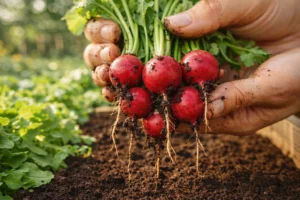
According to Botanical Interests, radishes are ready to harvest in as little as 21 to 30 days from sowing — making them one of the most immediately gratifying crops any gardener can grow.
For ADHD gardeners, this speed is invaluable.
| How to Grow Radishes — Simple Steps
Step 1: Fill a pot or raised bed with good quality compost or potting soil Step 2: Make small holes about 1cm deep and 5cm apart Step 3: Drop one seed in each hole and cover with soil Step 4: Water gently and place in a sunny spot Step 5: Water every day or two — keep the soil moist but not soaking wet Step 6: Harvest when the top of the root appears above the soil — usually in 3 to 4 weeks Tip: Plant a new batch of seeds every 10 days for a continuous supply all season long |
2. Lettuce — Pick Leaves and Watch It Grow Back
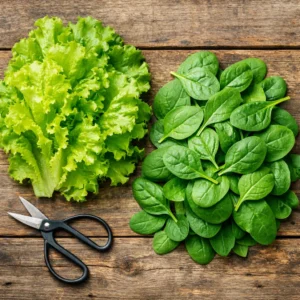
Lettuce is one of the most rewarding easy vegetables to grow with ADHD because of something called the cut-and-come-again method.
This means you pick the outer leaves and the plant simply grows new ones.
You never have to wait for the whole plant to finish — you get a continuous supply of fresh leaves that keeps giving for weeks.
| Detail | Information | Verified Source |
| Days to first harvest | 21 to 45 days for loose-leaf varieties | Botanical Interests, Almanac.com |
| Best varieties for ADHD | Loose-leaf types like Oak Leaf, Lollo Rosso, Red Salad Bowl | The Micro Gardener |
| Container friendly | Yes — grows very well in pots and window boxes | Multiple verified sources |
| Difficulty level | Very easy — one of the most beginner friendly vegetables | The Old Farmer’s Almanac |
| How long it produces | Several weeks of continuous picking from one planting | Gardenary |
According to Botanical Interests, loose-leaf lettuce varieties can be ready to harvest in as little as 21 days — making them one of the quickest easy vegetables to grow with ADHD.
The cut-and-come-again method also means that one planting keeps giving you something to pick for weeks, which is perfect for maintaining ADHD motivation.
| ADHD Tip for Lettuce
Plant lettuce seeds every two weeks throughout spring and autumn. This way you always have young plants coming up and mature plants ready to pick. You will never run out of fresh leaves — and you will always have something new happening in your garden, which keeps the ADHD brain engaged. |
3. Spinach — Quick Baby Leaves in Just 3 Weeks
Spinach is another brilliant easy vegetable to grow with ADHD.
It is fast, it is easy, and it can be harvested as baby leaves in as little as 20 to 30 days — giving you a quick win while the plant keeps on growing for a bigger harvest later.
| Detail | Information | Verified Source |
| Days to baby leaves | 20 to 30 days from seed | Gardenary, The Old Farmer’s Almanac |
| Days to full harvest | 40 to 50 days | Homemade Mastery |
| Container friendly | Yes — grows well in pots and raised beds | Multiple verified sources |
| Best season | Spring and autumn — prefers cool weather | Almanac.com |
| Difficulty level | Easy — very forgiving for beginners | Multiple verified sources |
According to Gardenary, spinach baby leaves can technically be harvested just 20 to 30 days after sowing seeds.
This makes spinach one of the fastest easy vegetables to grow with ADHD — especially if you are happy to pick small, tender baby leaves rather than waiting for full sized ones.
4. Spring Onions — Results in as Little as 20 Days
Spring onions are one of the most satisfying easy vegetables to grow with ADHD because pulling them from the soil feels incredibly rewarding.
They are fast, they are simple, and they are almost impossible to get wrong — even for complete beginners.
| Detail | Information | Verified Source |
| Days to harvest | 20 to 30 days from bulbs, longer from seed | Homemade Mastery |
| Easiest method | Grow from bulbs or regrow from kitchen scraps | Homemade Mastery |
| Container friendly | Yes — grow well in any pot or container | Multiple verified sources |
| Difficulty level | Very easy — great for ADHD beginners | Homemade Mastery |
| Extra benefit | You can regrow them from scraps — free and fast | Homemade Mastery |
According to Homemade Mastery, spring onions grown from bulbs can show visible results within just two weeks — making them one of the very fastest easy vegetables to grow with ADHD.
You can even regrow spring onions from kitchen scraps by placing the white root end in a glass of water on your windowsill.
Within days you will see fresh green shoots appearing — one of the quickest and most satisfying results in ADHD gardening.
| Free Spring Onion Regrow Trick
Next time you use spring onions from the supermarket, keep the white root ends. Place them in a small glass with just enough water to cover the roots. Put the glass on a sunny windowsill. Within 3 to 5 days you will see fresh green shoots growing back. This is one of the fastest visible results you can get in ADHD gardening — and it costs nothing. |
5. Courgette — One Plant Feeds a Family
Courgette is one of the most productive easy vegetables to grow with ADHD.
One single plant can produce so many courgettes throughout the summer that you will always have something to pick.
This constant productivity is excellent for the ADHD brain — there is always something happening and always something to harvest.
| Detail | Information | Verified Source |
| Days to harvest | 45 to 60 days from seed | Harvest to Table, She Grows Veg |
| How much it produces | One plant produces courgettes throughout the entire summer | Multiple verified sources |
| Container friendly | Needs a large container — at least 40cm wide | She Grows Veg |
| Space needed | Needs some space — best in a raised bed or large pot | Multiple verified sources |
| Difficulty level | Easy — grows vigorously with little attention needed | Multiple verified sources |
According to She Grows Veg, courgettes are a super productive crop that keeps on giving throughout the summer season.
For ADHD gardeners, the key benefit is that courgette plants are visibly dramatic — you can almost watch them grow day by day during warm weather, and the large yellow flowers that appear before the courgettes are beautiful and exciting to watch develop.
| One Important Courgette Tip
Pick courgettes when they are small — about 10 to 15cm long. If you leave them too long they become marrows and the plant slows down. Picking regularly encourages the plant to keep producing more courgettes all summer long. This gives ADHD gardeners a regular harvesting task every 2 to 3 days during peak season. |
6. Cherry Tomatoes
Cherry tomatoes take a little longer than the other easy vegetables to grow with ADHD — but they are worth every single day of the wait.
No other vegetable combines visual excitement, daily visible growth, and the pure joy of picking and eating a warm, sweet tomato straight from the vine.
| Detail | Information | Verified Source |
| Days to harvest | 55 to 70 days from transplant | Harvest to Table |
| Fastest varieties | Tiny Tim — as little as 45 days | Harvest to Table |
| Container friendly | Yes — excellent in large pots and grow bags | Multiple verified sources |
| How much it produces | Continuous picking throughout summer and early autumn | Multiple verified sources |
| Difficulty level | Moderate — needs regular watering but very rewarding | Multiple verified sources |
According to Harvest to Table, cherry tomatoes are prolific and ready in 55 to 70 days — with some fast varieties like Tiny Tim ready in as little as 45 days.
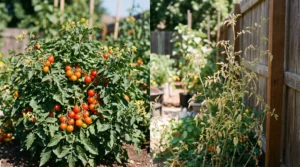
For ADHD gardeners, cherry tomatoes provide weeks of daily excitement as you watch the green fruits slowly turn red.
The picking stage is particularly satisfying because there are always more fruits ripening, giving you a reason to visit your garden every single day.
| Cherry Tomato ADHD Tip
Once your cherry tomato plant starts producing ripe fruits, check it every morning. Pick anything that is fully red or coloured straight away. Regular picking encourages the plant to produce more fruits throughout the season. This daily checking routine is one of the most motivating habits in ADHD gardening. |
7. Microgreens — Results in Just 7 to 10 Days
Microgreens are the fastest easy vegetables to grow with ADHD — bar none.
These tiny seedlings are harvested just after their first leaves appear, which can be as little as 7 to 10 days after sowing.
If you need quick results and do not have much outdoor space, microgreens are the perfect starting point.
| Detail | Information | Verified Source |
| Days to harvest | 7 to 10 days | She Grows Veg, Botanical Interests |
| Space needed | Minimal — a shallow tray on a windowsill is enough | She Grows Veg |
| Best seeds to use | Radish, sunflower, mustard, pea shoots | Botanical Interests |
| Container friendly | Yes — grown entirely in shallow trays indoors | Multiple verified sources |
| Difficulty level | Very easy — no garden needed at all | She Grows Veg |
According to She Grows Veg, microgreens can be ready to eat in just 7 to 10 days — making them the absolute fastest easy vegetable to grow with ADHD.
They require no garden, no outdoor space, and no specialist equipment.
An old food container, some compost, and a sunny windowsill is all you need to get started today.
| How to Grow Microgreens — 4 Simple Steps
Step 1: Fill a shallow tray or container with 3 to 4cm of potting compost Step 2: Scatter seeds thickly and evenly across the surface Step 3: Press the seeds down gently and cover with a very thin layer of compost Step 4: Keep the tray moist and in a bright spot — harvest with scissors when first leaves appear Best seeds to start with: radish, mustard, or pea shoot seeds — all give results within 7 to 10 days |
Quick Reference — Easy Vegetables to Grow With ADHD at a Glance
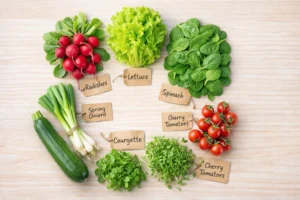
Here is a simple summary of all seven easy vegetables to grow with ADHD, ordered from fastest to slowest so you can choose the right one for your patience level and growing situation:
| Vegetable | Days to First Harvest | Best For ADHD Because… |
| Microgreens | 7 to 10 days | Fastest possible result — no garden needed |
| Radishes | 21 to 30 days | Fastest outdoor vegetable — incredibly satisfying to pull from soil |
| Spring Onions | 20 to 30 days from bulbs | Can even be regrown from kitchen scraps for free |
| Lettuce (loose-leaf) | 21 to 45 days | Cut and come again — keeps producing for weeks |
| Spinach | 20 to 50 days | Baby leaves ready fast — full harvest follows later |
| Courgette | 45 to 60 days | Dramatically productive — something to pick every 2 to 3 days |
| Cherry Tomatoes | 55 to 70 days | Daily excitement as fruits ripen — most rewarding long term |
Where to Grow Easy Vegetables With ADHD
You do not need a big garden to grow easy vegetables with ADHD.
All seven vegetables on this list can be grown in small spaces — including balconies, patios, and even indoors on a windowsill. Here is a simple guide to the best growing options:
| Growing Option | Best Vegetables to Grow There |
| Windowsill indoors | Microgreens, spring onion regrow, herbs |
| Balcony or patio pots | Radishes, lettuce, spinach, spring onions, cherry tomatoes |
| Small raised bed | All seven vegetables on this list |
| Large garden bed | Courgette, cherry tomatoes, lettuce rows, radishes |
| Hanging baskets | Cherry tomatoes (tumbling varieties), lettuce, herbs |
The most important rule for growing easy vegetables with ADHD is the same no matter where you grow them — start with one or two vegetables, not seven.
Pick the fastest ones from the list above and get comfortable with those before adding more.
Trying to grow everything at once is one of the most common mistakes ADHD gardeners make, and it leads to feeling overwhelmed rather than excited.
Common Mistakes When Growing Easy Vegetables With ADHD
Even easy vegetables can go wrong if you make a few common mistakes.
Knowing about these before you start means you can avoid them completely.
| Common Mistake | How to Avoid It |
| Planting too many different vegetables at once | Start with just 2 vegetables. Add more only when you feel confident |
| Choosing varieties that take too long | Stick to the list in this guide — all harvest times are verified |
| Not watering consistently | Check the soil with your finger every morning — water if it feels dry |
| Planting at the wrong time of year | Check the back of the seed packet — each vegetable has a best planting season |
| Not labelling what you planted | Label seeds the moment you plant them with a permanent marker |
| Giving up after one failure | Every gardener loses plants. Simply plant something new and keep going |
| Not harvesting regularly | Pick regularly — leaving vegetables unpicked slows down new growth |
| Watering leaves instead of roots | Always water at the base of the plant — wet leaves can cause disease |
Tips for Growing Easy Vegetables With ADHD
Here are some practical tips that will help you get the best results from your easy vegetables with ADHD, based on advice from experienced ADHD gardeners and verified growing guidance:
Tip 1 — Start With Radishes
If you have never grown anything before, start with radishes.
They are verified as the fastest outdoor vegetable you can grow, they are almost impossible to kill, and pulling your first homegrown radish from the soil after just three weeks is one of the most satisfying moments in ADHD gardening.
From there, everything else feels possible.
Tip 2 — Use Raised Beds or Large Pots
Raised beds and large pots give you better control over your growing conditions — better soil, better drainage, and easier access without bending.
According to The Old Farmer’s Almanac, you can grow 16 radishes per square foot in a raised bed, which means even a very small space can be genuinely productive.
Tip 3 — Succession Plant
Succession planting simply means sowing a new batch of seeds every two weeks instead of all at once.
This keeps your ADHD garden producing continuously rather than giving you one big harvest and then nothing for weeks.
It also means you always have something at a different stage of growth — something just planted, something growing, and something ready to pick — which keeps the ADHD brain constantly engaged.
Tip 4 — Pick Regularly
Harvesting regularly is one of the most important habits for growing easy vegetables with ADHD.
For lettuce, regular picking encourages the plant to grow new leaves.
For courgettes, regular picking encourages the plant to produce more fruit.
For cherry tomatoes, picking ripe fruits every day or two keeps the plant producing throughout the season.
Tip 5 — Keep a Simple Garden Diary
Write down the date when you plant each batch of seeds and the expected harvest date.
This gives you a countdown to look forward to — one of the most motivating tools in ADHD gardening.
Thrive UK recommends keeping a simple planner of seasonal tasks to help ADHD gardeners stay on track and remember what needs doing when.
Growing Easy Vegetables With ADHD Children
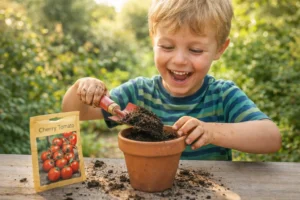
Children with ADHD benefit just as much from growing easy vegetables as adults do.
According to ADDitude Magazine, vegetable gardening teaches children with ADHD responsibility and delayed gratification — two skills that can be genuinely difficult to learn in other settings.
When a child waters their own radish seeds every morning and then pulls the finished radish from the soil three weeks later, they experience both the effort and the reward in a way that feels completely natural.
The best easy vegetables to grow with ADHD children are the fastest ones — radishes, lettuce, microgreens, and spring onions.
These produce results quickly enough to hold a child’s attention and give them a real sense of achievement within weeks rather than months.
| Best Vegetables for ADHD Children to Grow
Radishes — results in 3 weeks, exciting to pull from the soil Microgreens — results in just 7 to 10 days, can be grown in a tray on the kitchen table Cherry tomatoes — exciting to watch change colour, delicious to eat straight from the plant Lettuce — can pick leaves and watch them grow back, like magic Spring onions from scraps — almost instant results on a windowsill, completely free |
Conclusion
Now you know exactly which easy vegetables to grow with ADHD, how long each one takes to harvest, where you can grow them, and how to avoid the most common mistakes.
Every harvest time in this guide has been verified against authoritative gardening sources so you can plan your ADHD garden with complete confidence.
Growing easy vegetables with ADHD is one of the most rewarding things you can do for your wellbeing, your diet, and your daily sense of achievement.
It gives your hands something to do, your brain a real reward to look forward to, and your kitchen a supply of fresh food you grew yourself.
Your action today: Pick one vegetable from this list — radishes are the perfect starting point — buy a packet of seeds, find a pot or small raised bed, and plant them this week.
In three weeks you will be pulling your first homegrown vegetable from the soil.
That moment is where ADHD gardening really begins.
FAQs About Easy Vegetables to Grow With ADHD
| Q: What is the single easiest vegetable to grow with ADHD?
A: Radishes are the easiest and most immediately rewarding outdoor vegetable for ADHD gardeners. According to Botanical Interests, they are ready to harvest in as little as 21 to 30 days from sowing — with some varieties like Cherry Belle ready in just 22 days. They need very little care, grow in almost any container or raised bed, and are almost impossible to get wrong. If you want the absolute fastest result indoors, microgreens beat even radishes — they can be ready to eat in just 7 to 10 days on a sunny windowsill. |
| Q: Can I grow easy vegetables with ADHD if I only have a balcony?
A: Absolutely. All seven vegetables on this list can be grown in containers on a balcony. Radishes, lettuce, spinach, and spring onions grow well in pots as small as 20cm wide. Cherry tomatoes grow well in large pots or grow bags — choose tumbling or patio varieties for best results in containers. Microgreens can even be grown indoors on a windowsill in a shallow tray, so no outdoor space is needed at all. |
| Q: How often do I need to water easy vegetables grown with ADHD?
A: Most easy vegetables need watering every one to two days during warm weather — more often for containers, which dry out faster than raised beds. The simplest method is to check the soil with your finger every morning. If the top 2cm feels dry, water it. If it still feels cool and slightly moist, wait another day. Setting a daily phone reminder for morning soil checks is a very effective habit for ADHD gardeners who worry about forgetting. |
| Q: Which easy vegetable gives the most to pick throughout the summer?
A: Courgette is the most productive easy vegetable to grow with ADHD throughout the summer season. According to Harvest to Table and She Grows Veg, one courgette plant can produce continuously throughout the entire summer, giving you something to harvest every two to three days at peak season. Cherry tomatoes come a close second — once fruiting begins, you will have ripe tomatoes to pick almost every day for weeks. |
| Q: How do I know when my easy vegetables are ready to pick?
A: Each vegetable gives clear signs when it is ready. Radishes show their rounded top above the soil surface and feel firm when gently squeezed. Lettuce leaves can be picked from the outside of the plant once they are large enough to eat — usually 10 to 15cm long. Spinach baby leaves can be picked once they are 5 to 8cm tall. Spring onions are ready when the green tops are 15 to 20cm tall. Courgettes are best picked at 10 to 15cm long. Cherry tomatoes are ready when they are fully coloured and come away from the vine with a gentle pull. |